
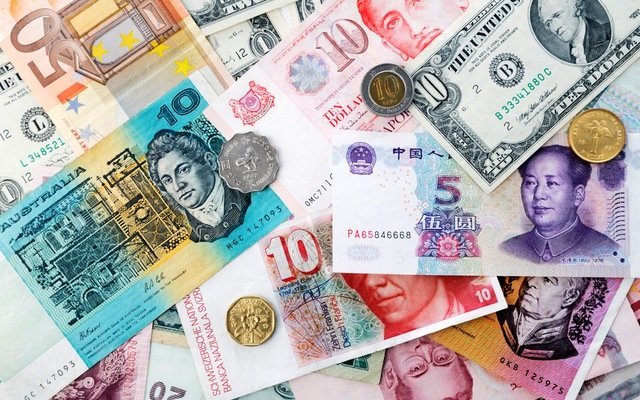
The airport exchange counter is where money goes to die politely. The rate on the board looks official, the staff are friendly, and the spread — the gap between the real exchange rate and the one you are given — can quietly reach fifteen percent, meaning fifteen dollars of every hundred evaporates before you have left the terminal. Currency exchange is one of the few areas of travel where the methods differ not by pennies but by five to ten percent of everything you spend abroad: on a $3,000 trip, the gap between the best method and the worst is $150–$300, decided in about ten minutes of setup before you leave. The methods below are ranked from best to worst, with the one golden rule that powers half of them.
First, know the real rate
Every judgment that follows hangs on one number: the mid-market rate, the rate banks use between themselves, which is the rate your method should be measured against. Check it before you travel and keep it in your phone — XE’s live currency converter shows it for any pair in seconds. With that number in hand, every offer becomes gradeable in plain terms: a method costing you within one percent of the mid-market rate is excellent, three percent is ordinary, and anything beyond five percent is a toll you are paying for convenience or inattention. Travelers who know the real rate almost never get robbed, because the bad offers announce themselves.
Method one: a credit card with no foreign transaction fee
The single highest-impact move is choosing the right card. A credit card with no foreign transaction fee spends at essentially the interbank rate with purchase protections on top, and it should carry eighty to ninety percent of your spending in most developed destinations. The cost of getting this wrong is concrete: standard cards charge around three percent on foreign purchases, which is $90 on a $3,000 trip, paid for nothing. Cards with no foreign fees exist at every tier, including no-annual-fee options, so there is no budget argument for traveling without one. This card is the foundation; everything else in the ranking is either its supporting cast or its cautionary tale.
Method two: the local ATM, with the right debit card
For cash, the best rate most travelers will ever get is a withdrawal from a local ATM using a debit card that charges no foreign fees and ideally reimburses ATM surcharges — certain online-bank checking accounts are famous for refunding ATM fees worldwide, and they turn every bank machine abroad into your home branch. You receive the interbank rate, typically within about one percent of perfect. Two disciplines protect the method. Use ATMs attached to banks, during banking hours where possible, rather than freestanding machines in convenience stores, which add their own fees and worse. And when the machine offers to convert the withdrawal into dollars for you — it will, in cheerful language — decline, every time, and let your own bank do the conversion. That offer is the golden rule’s enemy, and it deserves its own paragraph below.
Method three: cash ordered from your bank before departure
Order a small amount of foreign cash — $100 to $200 worth — from your own bank before you leave. The rate will not be the best in this ranking, but it buys the first hours of the trip: the taxi, the coffee, the small cash-only moment at midnight, without a tired negotiation at an airport counter. Think of it as insurance priced at a few dollars of spread. Order a week ahead, since many branches keep limited foreign cash on hand, and choose denominations with small notes included, because arriving with only large bills in a cash economy recreates the problem at a smaller scale.
Methods four to six: the descending staircase
Reputable exchange offices in the destination city can be fair — sometimes within a couple of percent — but only if you compare at least three and check each against the mid-market rate on your phone; the same street can hold an honest office and a trap two doors apart. Prepaid travel money cards promise certainty and deliver mediocrity: loaded rates worse than a good credit card, plus fees that surface at reloads and ATMs, in exchange for a budgeting fence some travelers genuinely value. Hotel desks and mall kiosks sell convenience at rates that drift toward the airport end of the scale. And the airport counter itself sits at the bottom for a structural reason: captive customers, high rent, no repeat business to protect. Its only legitimate use is the smallest possible amount to reach the city, and even that job belongs to the ATM beside it.
The golden rule: always choose the local currency
One sentence protects you across cards, ATMs, shops, and restaurants in every country: whenever a machine or a waiter offers to charge you in your home currency instead of the local one, decline. The practice — dynamic currency conversion — sounds like a courtesy and prices like a toll, because the conversion is done at a rate chosen by the merchant’s provider, routinely several percent worse than your bank’s, and it applies even to cards with no foreign transaction fee, slipping the fee back in through the side door. On card machines, choose the local currency. At ATMs, decline the “conversion” or “guaranteed rate” screen. In taxis and shops, the same. The screens are designed to make the expensive choice look like the safe one — “guaranteed” refers to the certainty of the provider’s profit, not yours — so treat every conversion offer as a small negotiation you win by pressing one button: the one labeled with the currency of the country you are standing in. Travelers who learn this one refusal recover more money than from any other single money habit abroad — and it pairs with the other pocket skill abroad, knowing how much to tip at restaurants when traveling abroad, so the cash you saved is handed over in the right amounts.
The same $3,000 trip, three ways
Abstractions persuade nobody, so here is one trip priced three ways. Take $3,000 of spending abroad. Handled the worst way — a card with a foreign transaction fee, cash from airport and hotel counters, and home-currency conversion accepted at shops and ATMs — the leaks stack to somewhere between $250 and $400: three percent in card fees, ten-plus percent on the cash portions, and the conversion toll sprinkled across the card spending too. Handled the average way — the right card, but cash still from convenient counters — the damage shrinks to perhaps $80–$150, nearly all of it the cash. Handled in the order ranked above — fee-free card for the bulk, bank ATMs for cash, conversion declined throughout — the total cost of exchanging $3,000 lands in the neighborhood of $10–$30, most of it the small spread on the pre-ordered arrival cash. Same trip, same hotels, same dinners. The difference is larger than most travelers’ souvenir budget, and it was decided entirely by arrangements made at a kitchen table before departure.
When it goes wrong anyway
Cards get lost, ATMs occasionally keep them, and banks occasionally freeze the wrong transaction at the wrong moment. The backup system above is the plan for that day; this is the sequence. First, the second card in the second location — this is why it exists. Second, the hidden $100 converts the emergency into an errand. Third, your bank’s app or international collect-call number, which can usually unfreeze or rush options faster than any local solution. And if you do end up at an exchange counter in a genuine emergency, use the ranking defensively: the smallest amount that reaches safety, in the city rather than the airport if the situation allows even that much choice, checked against the real rate on your phone so you at least know the size of the toll you are paying. Emergencies justify tolls. Ordinary Tuesdays do not.
The backup system, and destination notes
Carry two cards on different networks — a Visa and a Mastercard, ideally — stored in different places, because networks fail, cards get eaten by ATMs, and a single point of financial failure abroad ruins days. Hide $100 in US dollars separately from your wallet; dollars are exchangeable in a pinch in nearly every country on earth, and a bad day becomes a story instead of an emergency. Tell your bank the travel dates through its app — many banks now detect travel automatically, but the thirty-second notification is cheap insurance against a frozen card at a foreign till. Adjust for the destination: Japan remains substantially cash-based outside the big cities, so plan ATM stops (the machines in 7-Eleven stores are famously reliable with foreign cards); much of Europe and East Asia’s cities are nearly card-complete; and in genuinely cash-heavy economies, the ATM cadence — smaller amounts, more often, from bank machines — becomes the whole strategy. Ten minutes of setup: the right two cards, a small bank order, the real rate bookmarked, and the golden rule memorized. It is the best-paid ten minutes in travel.



3 Comments