
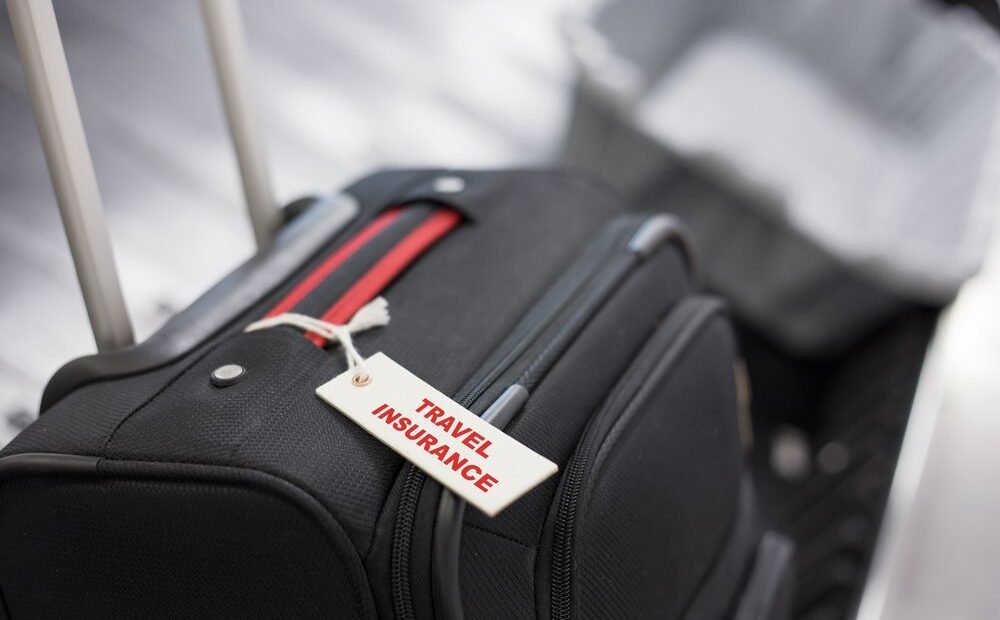
Your health insurance already works in all fifty states, your car insurance follows you on the road, and the airline will eventually get you there. So why would anyone pay extra to insure a trip inside their own country? It is a fair question with a genuinely two-sided answer. Domestic travel insurance is a waste of money on many trips — and the single smartest purchase on others, and the trips in each pile look deceptively similar at booking time. What separates them is not distance. It is how much prepaid money is at risk, how fragile the itinerary is, and what your existing coverage quietly does and does not include. Weigh the two cases properly and the verdict for any given trip usually becomes obvious.
The case for buying it
The trip is expensive and non-refundable. A $3,000 Alaska trip built on prepaid lodges and charters, or a week at a non-refundable vacation rental, puts real money in harm’s way: one illness, one family emergency, and the whole sum is gone. A policy typically costs four to eight percent of the trip — $120–$240 on that $3,000 — and that asymmetry is the entire argument. The season is dangerous. Hurricane-season travel to the Gulf or Southeast, June through November, is the classic buy: trip interruption coverage is built for the week a storm rewrites, and the premium is small against a prepaid condo and charter. Someone in the party is a health risk. Elderly parents, a pregnancy, a recent surgery, a knee that has opinions — cancellation for a covered medical reason is the claim that actually gets filed, year after year. The itinerary is complex. Multiple tight connections feeding a cruise departure are a fragility machine: miss the ship and you are buying flights to the next port at walk-up prices. The map is remote. Your health insurance works nationwide, but medical evacuation often is not fully included in it — a helicopter off a hiking trail or an air ambulance between hospitals can run $15,000–$50,000, and evacuation cover is the one part of a domestic policy almost nobody already owns.
The case against buying it
The trip is cheap and flexible. A $200 weekend built on a refundable hotel and an airline with no change fees has almost nothing to insure; your maximum loss is smaller than the shopping time a claim would take. You are driving. Road trips stack your existing coverages — auto, health, roadside assistance — over nearly every scenario a policy would name. Your credit card already bought it. This is the most commonly missed point in the whole question. Many premium travel cards, when the trip is paid for with the card, quietly include trip cancellation and interruption protection (on some cards up to $10,000), trip-delay reimbursement, and lost-luggage cover. Buying a separate policy on top of that is paying twice for the same umbrella — check the card’s benefits page before buying anything. Knowing your rights and rebooking options directly also changes the math: much of what travelers fear is covered by the airline’s own obligations, as laid out in what to do if your flight gets cancelled. The add-ons are overpriced. “Cancel for any reason” upgrades typically cost forty to fifty percent more than the base policy and still reimburse only fifty to seventy-five percent of the trip. For most domestic travel, that is expensive insurance against indecision. The destination is your own country. It sounds obvious, but it dissolves several of the fears that sell international policies: no foreign hospitals billing in another currency, no repatriation problem, no embassy dimension to a bad week — just a problem, in dollars, in a system you already know how to navigate.
How to buy it right, when you buy it
Three rules decide whether the policy you buy is the policy you think you bought. Timing: purchase within about fourteen to twenty-one days of your first trip payment, because that window is what qualifies you for the pre-existing-condition waiver — the single detail that matters most for anyone traveling with a health concern, and the one that cannot be fixed later. Source: comparison marketplaces such as SquareMouth’s travel insurance advice and its policy comparisons generally beat the policy offered at airline checkout, which is priced for convenience and bundled with coverage you may already own. Frequency: if you travel several times a year, price an annual policy — typically $150–$400 — against per-trip policies; the annual usually wins after two or three insured trips, and it removes the decision from every booking, which is worth something by itself. Read the exclusions with the same care as the benefits: named-reason policies pay for listed reasons, and the gap between the brochure’s promise and the contract’s list is where disappointment lives.
The middle ground most travelers miss
Between “full policy” and “nothing” sit two options worth knowing. The first is delay and baggage coverage on its own: the common domestic claims are not dramatic cancellations but the overnight delay that costs a hotel night and meals, and the bag that arrives two days after you do. Policies and card benefits handle these with thresholds — reimbursement typically begins after a delay of several hours — so read the trigger before assuming the 45-minute late arrival is covered. The second is the annual policy used strategically: frequent travelers often insure nothing per-trip and let one annual plan sit underneath everything, including the small trips they would never have bothered to protect individually. Against those, weigh the airline-sold plan at checkout with clear eyes: it covers only that airline’s portion of the trip, usually excludes the prepaid hotel and activities that make up most of a domestic trip’s value, and is priced at the moment of maximum traveler anxiety. It is the most convenient policy and rarely the right one.
What filing a claim actually involves
Buyers should know what they are purchasing beyond the promise: a reimbursement process, not a rescue service. When something goes wrong, the sequence is documentation — keep every receipt, every delay notice, every message from the airline or property, because claims are paid against paper, not against memory. File promptly after the trip, expect forms rather than a phone call that fixes things, and expect the review to take weeks rather than days. Two implications follow. The coverage that matters most is the coverage for expenses you can front and document — the hotel night you pay for and claim back — rather than imaginary instant assistance. And the value of the credit-card route shows again here: card travel benefits run through established claims administrators with the same paperwork logic, so the honest comparison between card cover and a bought policy is about limits and exclusions, not about one being effortless. None of this argues against buying; it argues for buying with eyes open, the policy in the same folder as the itinerary, and the documentation habit switched on from the first delay announcement.
Three trips, three answers
Watch the test work at three price points. The $300 weekend: a refundable hotel, a change-fee-free airline, a healthy traveler, a card with basic protections. Maximum realistic loss is close to zero, and a policy at four to eight percent — $12 to $24 — insures a risk that barely exists. Skip it without a second thought. The $1,800 trip: a mountain week with a mostly refundable lodge, one non-refundable guided excursion, driving part of the way. The exposed slice is a few hundred dollars; the decision turns on the travelers. With an elderly parent along, a modest policy aimed at cancellation and evacuation is defensible; without one, self-insuring the small exposed slice is equally sane. The $4,200 trip: a Gulf Coast week in September — non-refundable condo, prepaid charter, connections through a hub. At four to eight percent the policy costs roughly $170 to $335, against a realistic total loss of the entire $4,200 to one storm or one illness. That is not a close call, and it is the shape of nearly every “insurance was worth it” story ever told: boring arithmetic, done in advance, on a trip where the downside was large and the premium was not.
The verdict: a three-question test
Run any domestic trip over about $1,500 through three questions. One: if this trip collapsed the week before departure, how much prepaid money would actually be lost — not spent, lost? Two: is anyone traveling medically fragile, or is the season or itinerary fragile — hurricanes, tight cruise connections, remote terrain? Three: after checking your credit card, is the remaining risk actually uncovered? If the answers are “a lot, yes, and yes,” buy the policy and think about it no more; the four-to-eight percent is the cheapest sleep on the trip. If the loss is small, the party is sturdy, or the card already covers it, keep the money — a $300 weekend does not need a policy, and a $4,000 non-refundable family trip in hurricane season plainly does. Insure the trips that would hurt to lose. Skip the ones you can absorb. That is the whole subject, and it fits on an index card.



1 Comment