
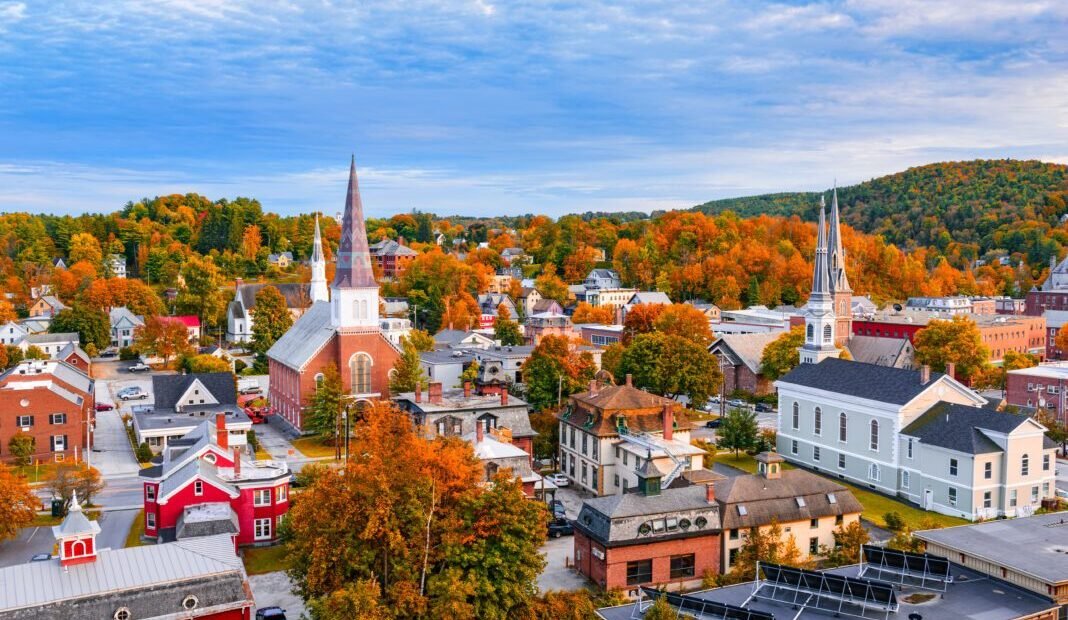
Every autumn, the same handful of famous names absorb most of New England’s leaf traffic — and visitors who pick a town by fame alone often spend their one fall weekend in traffic, photographing the same covered bridge over the same stranger’s shoulder. So which small towns should you actually choose? The short answer: pick by the trip you want, not the postcard. Woodstock, Vermont for the classic village scene; Bar Harbor, Maine for coast plus color; Portsmouth, New Hampshire for a walkable town with real restaurants; Stowe for mountains; Mystic for a gentler, warmer, later season. The longer answer below weighs the leading candidates honestly, because in October the differences between them — crowd levels, peak timing, price — matter more than the similarities.
The classic village: Woodstock, Vermont
Woodstock is the town the other towns are imitating: a covered bridge in the middle of the village, white-steepled churches, a general store, and hillsides that turn early and hard. It earns its fame, and pays for it — rooms book out months ahead for the peak weekends and prices follow. The compensation is density: within a short drive sit the Marsh-Billings-Rockefeller National Historical Park’s carriage roads, working farms, and some of the most photographed foliage roads in the state. Go midweek if you possibly can; Woodstock on a Tuesday in peak week delivers everything the Saturday crowd came for, at walking pace. The same timing logic applies across Vermont — foliage runs north to south and high to low, so a base in the middle of the state lets you drive toward the color rather than hoping it comes to you.
Coast and color: Bar Harbor and Camden, Maine
Maine adds the ingredient Vermont cannot: the sea. Bar Harbor pairs Acadia National Park’s granite and carriage roads with a harbor town full of lobster shacks and boat trips, and the sunrise from Cadillac Mountain — among the first in the nation — is a genuine event worth one early alarm. The honest cautions: Acadia’s peak weekends are busy enough to require vehicle reservations for the summit road in season, and coastal Maine peaks later than inland Vermont, typically mid-to-late October. Camden, an hour south, is the quieter connoisseur’s version: a harbor full of schooners under Mount Battie’s colored slopes, a postcard that has not yet been trampled. For trip planning in either, Visit New England’s foliage and town guides track peak reports state by state as the season moves, which matters because peak is a wave, not a date — it crosses each town in days and waits for no one’s reservation.
The livable towns: Portsmouth and Hanover, New Hampshire
Some travelers want a town that happens to have foliage; others want foliage with a town attached. Portsmouth is the answer for the first group: a real, working small city of brick streets, serious restaurants, breweries and a waterfront, where October color arrives as decoration on an already good weekend. Hanover, home to Dartmouth, offers the college-town version — bookstores, a great art museum, and the Connecticut River valley turning gold around it. Both peak slightly later than northern Vermont and both forgive a last-minute trip better than the famous villages do. From either, the White Mountains’ Kancamagus Highway makes the region’s essential foliage drive, with the standing warning that it is also everyone else’s: start it at dawn or accept the convoy.
The gentle option: Mystic, Connecticut and Newport, Rhode Island
Southern New England peaks last — late October into early November — and that lateness is a strategy, not a flaw: a Mystic or Newport weekend extends the season weeks after Vermont has gone bare. Mystic is maritime and mellow, with its seaport museum, drawbridge and aquarium, in a town small enough to cross on foot. Newport trades quaint for grand: cliff walks between the Atlantic and the Gilded Age mansions, with maples turning over the lawns. Neither delivers the sugar-maple explosion of the north; both deliver a relaxed, warmer, cheaper weekend with color as a backdrop rather than the main event. For travelers whose fall calendar is crowded, this southern second season is the difference between seeing foliage and missing it entirely.
The mountain candidate: Stowe, Vermont
Stowe is the connoisseur’s argument with Woodstock: a ski town in its other life, with the state’s tallest peak behind it, a white church steeple in front of a wall of color, and a recreation path that winds through meadows under Mount Mansfield. It peaks early — late September into early October — and books accordingly. What Stowe offers that the valley villages cannot is altitude as a tool: when the village color fades, the gondola and the toll road climb into it, and when the summit goes bare, the valleys are peaking below. The honest debits are price — Stowe in foliage season knows what it has — and the funnel of traffic on its single main road at peak weekends. Travelers who want Vermont’s mountains without Vermont’s most famous village queues split the difference here; travelers who want the postcard village accept Woodstock’s crowds as the admission fee. Either is defensible. Drifting between both in one weekend, relocating nightly, is the only wrong answer in northern Vermont.
Getting the timing right
Peak foliage is a wave moving south and downhill over roughly five weeks, and the entire trip-design game is meeting it. Northern Vermont, the White Mountains and inland Maine crest first, around the start of October; the Maine coast, the Berkshires and New Hampshire’s lakes follow in the middle of the month; Connecticut and Rhode Island close the season toward its end. Elevation shifts a town’s date by days, so a flexible traveler with a car can chase: if your base town has gone past peak, drive up in elevation or north; if it has not yet turned, drop down or south. State foliage reports, published weekly in season, exist precisely for this adjustment and are worth checking the night before departure rather than the month before. Weather in the preceding weeks sets the year’s quality — a dry late summer mutes color, an even, moist one with cool nights sharpens it — which is one more reason the livable and southern towns deserve their place in the plan: they forgive a trip booked for life reasons rather than leaf reasons.
What to actually do in a foliage town
Leaves are scenery, not an itinerary, and the towns above reward people who schedule around them. The recurring winners: a farm stand with cider donuts eaten warm; one real hike of two to three hours — Mount Major over Lake Winnipesaukee, Mount Battie in Camden, or Acadia’s carriage roads — because foliage is best experienced inside it, not photographed through a windshield; a covered-bridge loop in the late afternoon when the light goes sideways and golden; and a harbor or lake boat trip in Bar Harbor or on Squam Lake, where the color doubles in the reflection. Book the special meals, not just the rooms: in peak weeks the good restaurants in small towns fill by reservation days ahead. And pack for weather that cannot decide — October in New England can swing from 65 degrees to frost in a single weekend, and the layering discipline in what to pack for a winter trip to Colorado applies here in miniature: a warm layer, a waterproof shell and real shoes turn a cold snap from a ruined weekend into a brisk one.
A note on crowds: the two-wave strategy
Peak foliage weekends in the famous towns can feel less like a retreat than a festival with parking problems, and the crowd has a rhythm worth exploiting. The first wave arrives for the famous view at the famous hour — the covered bridge at noon, the summit road at eleven. The second, quieter New England runs on offset hours: the same bridge at seven in the morning, in mist, with the light raking sideways; the same summit as an evening walk while the day-trippers queue for dinner. Restaurants invert too — the beloved farmhouse café with a two-hour brunch line serves a walk-in breakfast at eight and a peaceful late lunch at two. Building the day on the offset — dawn viewpoint, mid-morning back roads, late lunch, golden-hour drive — recovers most of what the crowds came for and skips most of the queuing. Add one weekday to the weekend if life allows, and the strategy strengthens: Friday and Monday in foliage country are different countries from Saturday.
Questions every fall traveler asks
When is peak, exactly? There is no exact date — peak moves with weather, arriving earliest in northern Vermont, New Hampshire’s mountains and inland Maine around the start of October, crossing the coast and Massachusetts mid-month, and reaching Connecticut and Rhode Island toward the end. In any given town it lasts about a week. How far ahead should I book? For famous villages on peak weekends, three to six months is realistic; for the livable and southern towns, a few weeks can still work, especially midweek. Is one town enough? Yes — pick one base and day-trip. Relocating nightly in peak season wastes the golden hours in checkout lines. What if I miss peak? Late color plus bare branches still frames beautiful towns, rates drop, and the cider is the same. The only true failure is staying home because the calendar said perfect had passed.




1 Comment