
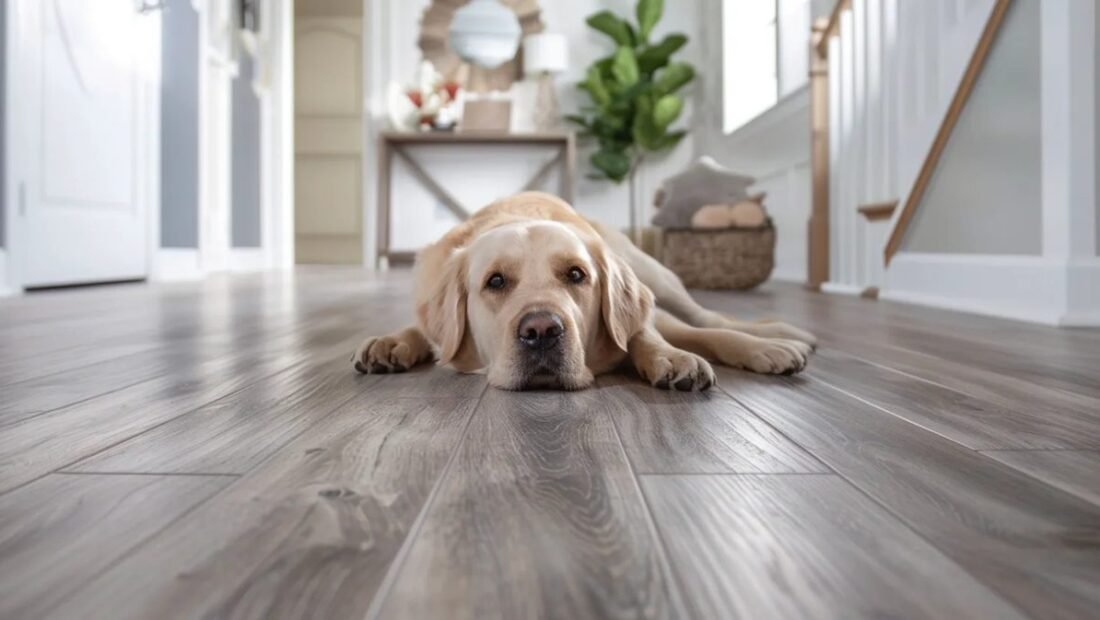
Our 70-pound lab has tested every flooring material known to humanity, mostly by sprinting across it with untrimmed nails after a bath. I have replaced carpet twice and refinished oak once, all in the name of learning what actually survives dogs. Consider this the report from the front lines.
What is the best flooring for homes with dogs? The shortlist: luxury vinyl plank, tile, and laminate, in that order for most families. Here is the honest breakdown of everything.
What Is the Best Flooring for Homes With Dogs?
Luxury vinyl plank (LVP) is the consensus winner among dog owners, and our house now proves why. It is waterproof, scratch-resistant enough for nails, comfortable underfoot, and convincing enough that guests ask if it is hardwood. Quality LVP runs $3 to $7 per square foot installed, and the wear layer matters: look for 20 mil or thicker for big dogs. It handles accidents, muddy paws, and water bowls without damage, which eliminates 90% of dog-related flooring anxiety.
Tile is the durability champion but the comfort loser. Porcelain tile shrugs off everything: scratches, water, accidents, all of it. It is the best flooring for homes with dogs if your priority is indestructibility and you live somewhere warm. The downsides are real though: it is hard and cold, slippery when wet, and unforgiving for older dogs’ joints. Area rugs solve the comfort problem but reintroduce the cleaning problem. I recommend tile for entries, mudrooms, and kitchens, the dog’s highway system, rather than whole-house.
- Luxury vinyl plank. Waterproof, scratch-resistant, comfortable, affordable. The all-around winner for dog homes.
- Porcelain tile. Indestructible and waterproof. Best for entries and kitchens; cold and hard for living areas.
- Laminate. Good scratch resistance and budget-friendly, but vulnerable to water damage at seams. Fine for low-moisture areas.
- Engineered hardwood. Beautiful and refinishable, but scratches show and water is the enemy. Only for dog owners committed to nail trims and quick cleanups.
- Cork. Surprisingly good: soft, warm, naturally antimicrobial, and scratches blend in. Needs sealing against moisture.
- Carpet tiles. The only carpet worth considering: replace individual stained tiles instead of the whole room. Still the hardest to truly clean.
- Skip these: solid hardwood in high-traffic dog zones, cheap sheet vinyl, and looped-fiber carpet that snags nails.
Whatever you choose, the supporting habits matter as much as the material. Keep nails trimmed (the single highest-impact thing), put mats at every door, wipe paws in muddy season, and use washable runners in the dog’s main traffic lanes. The best flooring for homes with dogs plus basic maintenance beats the perfect floor with neglected nails every time.
What About Hardwood? The Honest Answer
Dog owners ask about hardwood more than anything else, so here it is straight: solid hardwood and big dogs are a difficult marriage. Nails scratch the finish, accidents stain if not caught fast, and refinishing every few years gets expensive. If your heart is set on wood, choose a harder species (hickory over pine), a distressed or wire-brushed finish that hides wear, site-finished for maximum durability, and accept the patina. Many dog owners love their scratched hardwood; the floors tell the family’s story. Just go in with eyes open.
Engineered hardwood with a thick wear layer is the compromise: real wood look and feel, more stable than solid, refinishable once or twice. It scratches like solid but costs less to install.
Quick Answers to Common Questions
Is luxury vinyl plank really waterproof?
Quality LVP is waterproof in the sense that surface water will not damage it. It is not a submarine; standing water can still seep at seams and edges over time. For dog accidents and water bowls, it is effectively worry-free.
What flooring is best for older dogs?
Cork or LVP with area rugs. Older dogs need traction and cushioning for joints. Avoid slippery tile and hardwood in their main paths; add runners wherever they walk.
How do I protect hardwood floors from dog nails?
Trim nails every 2-3 weeks, use paw wax for traction, place runners in traffic lanes, and clean accidents immediately. Accept that some wear is inevitable and choose finishes that hide it.
Is carpet ever okay with dogs?
Low-pile, stain-resistant carpet tiles are the workable option. Wall-to-wall carpet with dogs is a cleaning burden and a replacement cycle; tiles let you swap only the casualties.
My Dog-Flooring Checklist
- Choose LVP with 20+ mil wear layer. The sweet spot of durability, comfort, and price.
- Tile the dog highways. Entries, mudrooms, kitchens: porcelain where paws are wettest.
- Trim nails every 2-3 weeks. The cheapest floor protection ever invented.
- Mat every door, runner every hallway. Catch dirt before it travels.
- Keep enzyme cleaner on hand. For accidents: blot, enzyme cleaner, done.
What I Would Do Next
Two years into our LVP floors with a 70-pound lab and a mud season that lasts four months, I can report: the floors look new, the anxiety is gone, and I wish we had done it before replacing the carpet twice. The right floor does not just survive the dog; it removes the dog from your list of household worries.
What is the best flooring for homes with dogs? Luxury vinyl plank for most of the house, tile for the wet zones, and realistic expectations everywhere. Pair it with trimmed nails and door mats.
Choose the floor for the life you have, not the showroom you visited. The dog is not going anywhere, and neither should your peace of mind.
A word on transitions: where your dog-friendly floor meets other flooring, use proper transition strips rather than leaving raw edges. Dogs catch nails on unfinished transitions, and the strips protect both the floor edge and the paws. It is a $15 detail that prevents injuries and keeps the installation looking professional.
Related reading: How Do I Fix a Door That Will Not Latch Properly.
Related reading: What Is the Cheapest Way to Heat a Garage in Winter.
Related reading: What Are the Best Small Towns to Visit in New England in Fall.
For official guidance, check out Family Handyman project walkthroughs and EPA guidance on indoor air quality.




2 Comments