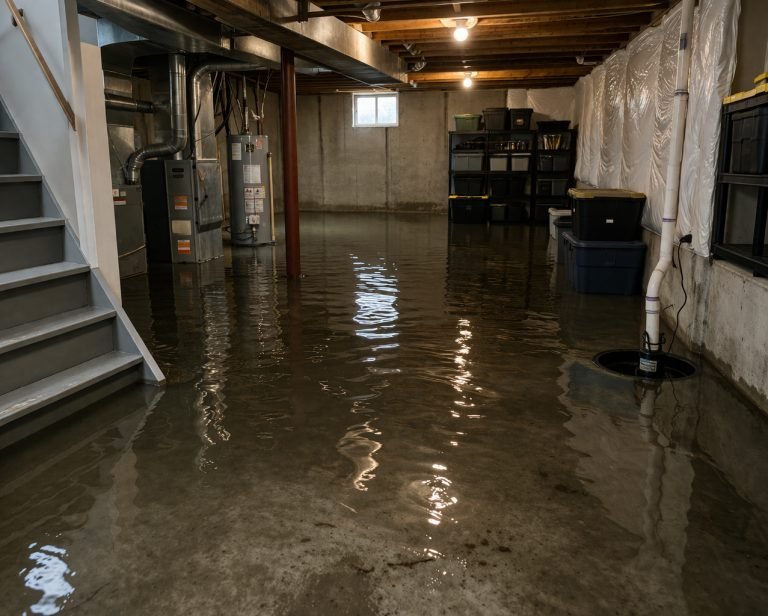
The storm is over, the power is back, and the basement has two inches of water standing wall to wall. What separates a miserable weekend of cleanup from a five-figure catastrophe is not the water itself — it is the clock. Mold starts growing within 24 to 48 hours. Drywall drinks water upward like a wick. The steps that matter most are boring, sequential, and heavily front-loaded: nearly everything critical happens in the first day, and the order matters because some steps make others dangerous or useless. This is the whole job laid out as a timeline, from the first hour to the following week.
Hour one: safety before property
Before wading in, think about electricity. Water and live circuits are the one genuinely dangerous combination in a flooded basement. If water has reached outlets, the furnace, the water heater, or the electrical panel, do not enter — call the utility or an electrician and let them cut power safely. If the water is shallow and clearly below every electrical fixture, shut off the circuits serving the basement at the panel with dry hands standing on a dry surface. Photograph everything before touching it: the water line, the soaked belongings, the source if you can see it. Insurance claims live on early photographs, and nobody remembers to take them once the pumping starts. Then find the source. A burst pipe gets its valve closed. Rain-driven water gets noted — window well, stairwell drain, foundation crack — because the source decides the prevention work later.
Hours two to six: get the water out
Extraction within the first 24 hours is the single most valuable deadline in the whole event. For an inch or less, a wet/dry vacuum, emptied often, handles it. For deeper water, rent a submersible pump from a tool rental shop and discharge it well away from the house — pumping floodwater into the flower bed beside the foundation just recycles it. A professional extraction service runs about $500 to $1,500 for major floods and brings truck-mounted capacity that clears in an hour what a shop vac does in a day; for anything over a few inches, that math often favors the call. Work from the shallow end, keep the pump intake screen clear, and once standing water is gone, squeegee and mop the film that remains. Speed here is not tidiness — it is the difference between drying a basement and gut-remediating one.
Hours six to twenty-four: remove what water ruins
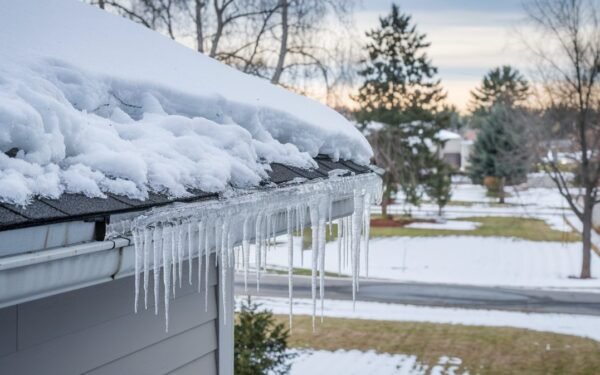
Some materials cannot be saved and only delay drying while they feed mold. Carpet padding is almost never salvageable; pull it out even if the carpet itself might be cleaned. Wet drywall that has wicked water more than a few inches should be cut at least a foot above the water line so the wall cavity can dry — leaving it sealed and wet is how a flood becomes a mold colony. Cardboard boxes, upholstered furniture that sat in water, and mattresses are losses; bag them and get them out. Hard furniture, metal, and plastics can be washed and dried. Anything porous that you intend to keep needs to be dry within the 24-to-48-hour window or it joins the loss list. Be unsentimental now and the week goes better. It also helps to remember where the water came from: much basement flooding is roof water delivered to the foundation by failed drainage, which is why the best way to clean gutters safely and correctly aimed downspouts rank as flood prevention, not cosmetics.
Know which water you are standing in
Not all floodwater is equal, and the type changes both the health rules and the insurance rules. Clean rainwater that came through a window well or foundation crack is a mess; water that arrived through a sewer or drain backup is a contamination event, carrying bacteria that change how cleanup should be handled — gloves and boots at minimum, porous materials treated as unsalvageable by default, and a much lower threshold for calling professionals. It also changes the paperwork: standard homeowners policies commonly exclude groundwater and surface flooding entirely, while sewer backup is often covered only through the specific rider described below. That distinction — how the water entered — is one of the first things an insurer will ask, and the photographs from hour one are how you answer it accurately. Do not let urgency skip the classification step; it decides who pays for the week.
Days one to five: dry aggressively, verify honestly
Drying is a machine problem. Run fans to move air across every wet surface and dehumidifiers continuously — three to seven days of aggressive drying is typical — emptying them or, better, running their drain hoses to a floor drain so they never pause. Surfaces lie: drywall and framing can feel dry to the touch while the inside is still wet, so verify with a moisture meter (about $30) before closing anything up or replacing flooring. Readings should return to normal household levels, roughly what the same materials measure on an upper floor. Only then do repairs, repainting with mold-resistant paint, and re-carpeting make sense. And while the fans run, get multiple quotes for any professional remediation: emergency pricing in the first 48 hours is the most expensive pricing there is, and a day of comparison while your own drying proceeds can save 30 percent or more on the restoration bill.
The documentation file: boring now, decisive later
While the basement dries, build the paper record in one sitting, because claims and contractor disputes are both won with documents created during the event rather than reconstructed after it. The file needs: the hour-one photographs and any from during extraction; a written log with dates and times (rainfall, discovery, when pumping started and finished); receipts for the pump rental, the moisture meter, fans, and any professional invoices; a list of discarded items with rough ages and replacement values, made while you can still see them in the trash pile rather than from memory in three weeks; and the insurer’s claim number with the name of everyone you speak to. Households that keep this file routinely recover meaningfully more of their loss, simply because nothing has to be argued from recollection. It takes an hour during a week when you are home anyway, listening to fans. Spend it.
Before the next storm: close the doors the water used
Prevention follows a hierarchy, and it is mostly exterior work. Regrade soil so it slopes away from the foundation — about 6 inches of drop over the first 10 feet. Extend downspouts at least 4 feet from the house. Keep gutters clear so water reaches those downspouts in the first place. Then the mechanical layer: a sump pump where the water table demands one, and — the highest-value purchase in this entire article — a battery backup for it, about $200 to $400, because power fails during exactly the storms that flood basements. Check your insurance while you are at it: standard policies often exclude groundwater flooding, and the sewer-and-sump backup rider, around $50 to $100 a year, is some of the cheapest valuable coverage in homeownership. Ready.gov’s flood safety and recovery guidance covers the official version of both the response and the preparation.
What to save, what to let go: the triage rules
Hour six decisions are easier with rules settled in advance. Save without hesitation: metal, glass, hard plastics, sealed appliances once cleaned and dried, solid wood furniture that did not sit long in water, and documents or photographs that can be freeze-dried or at least separated and dried flat. Judge by the clock: books, particleboard furniture (which swells and fails structurally even when it looks intact), and upholstered pieces — these survive only if drying began inside the first day and the water was clean rain. Let go immediately: mattresses, pillows, stuffed toys, carpet padding, and any food the water touched, including sealed-looking cans whose seams it reached. Sentimental value is the trap category: a child’s drawings are paper, and paper that dries within hours survives; the same drawings found on day three are a mold culture with a memory attached. The rule that cuts through every argument is the 24-to-48-hour line: what is dry by then is saved; what is still wet is, with very few exceptions, already lost, and keeping it costs the rest of the room.
A word, too, for the people doing this work at 2 a.m. rather than in a planned morning: fatigue makes every step above worse. Pumps get placed badly, cables get dragged through water a tired person would have routed dry, and the triage decisions get sentimental in exactly the wrong direction. If the water is out and the fans are running, the event is stable — sleep, even badly, and do the documentation and the phone calls with a working brain. Basements forgive a night’s pause once they are dry and ventilated; they do not forgive the hours before the water came out. Spend your alertness where the clock is real, and let the drying days be the slow ones they are designed to be.
The timeline, compressed
Hour one: power safe, photos taken, source stopped. First day: water out, unsalvageable materials out, fans and dehumidifiers running. First week: verified dry before anything is closed or replaced, quotes compared before anyone is hired. Then one dry weekend spent on grading, downspouts, and the pump backup. The flood itself is an afternoon of weather. Everything after is a choice about how fast you move — and now the sequence is written down before you need it.