
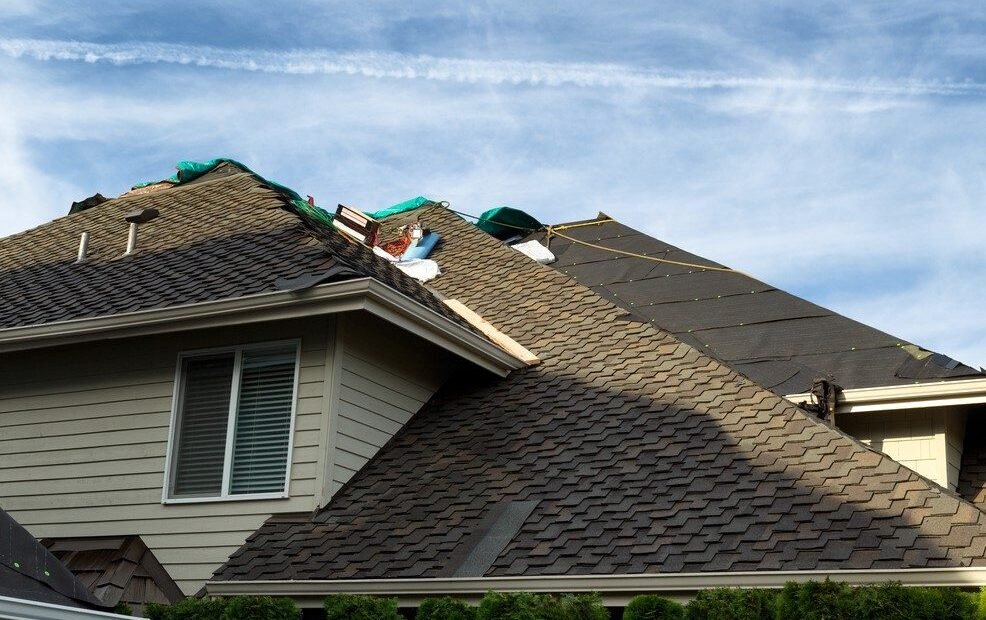
Ask three roofers what a new roof costs on the same small house and you can collect three numbers that barely resemble each other: $7,500, $11,000, $18,000. Homeowners usually assume two of the three are lying. Often, none of them are — they are pricing different jobs under the same name. One included the tear-off, the decking repairs, and the flashing; another quietly assumed a clean deck and one layer; the third priced metal when you asked for shingles. The way to read any roof quote is to know what the job is actually made of. This breakdown does that, option by option, so the numbers stop being mysterious.
The baseline: what a typical small house costs
For a typical small home, the realistic range for architectural asphalt shingles — the standard choice on most American houses — is $8,000 to $15,000, or roughly $5 to $12 per square foot of roof area. Roofers price by the “square,” meaning 100 square feet of roof. Architectural shingles run $450 to $700 per square installed, including tear-off and materials. A small house with about 1,500 square feet of roof area (roof area is always larger than floor area, because of the pitch) therefore lands around $7,000 to $11,000 before complications. That word — complications — is where the $18,000 quotes live, and understanding them is the whole game.
Option one: three-tab shingles, the budget floor
Three-tab shingles cost $350 to $500 per square installed, the cheapest legitimate way to put a new roof on. They are thinner, flatter in appearance, and shorter-lived than architectural shingles, and most contractors now steer homeowners to architectural as the value baseline for good reason: the price gap has narrowed while the durability gap has not. Three-tab makes sense mainly when the budget is hard-capped or the house will be sold soon and the roof simply needs to be new and warrantied. Every other situation usually argues for spending the modest difference.
Option two: architectural shingles, the standard
Architectural (dimensional) shingles are the default recommendation because they balance everything: $450 to $700 per square installed, a 20- to 30-year working life, better wind resistance, and a thicker look that suits most house styles. On a small house this is the $8,000 to $15,000 band. The warranty picture matters here: the manufacturer covers the materials (often 20 to 50 years on paper), while the contractor covers workmanship, typically 5 to 10 years. A cheap quote with a one-year workmanship warranty is telling you something about the installer. Expect a deposit of 10 to 20 percent, with the balance on completion — and be suspicious of anyone asking for half up front.
Option three: metal, the long game
Metal roofing runs $800 to $1,400 per square installed, which sounds punishing until the lifespan enters the calculation: 40 to 70 years, against 20 to 30 for shingles. A metal roof installed at 45 may be the last roof the owner ever buys. It also sheds snow, resists fire, and can lower cooling costs slightly through reflectivity. The honest cons are the upfront price, rain noise on some assemblies (largely solved by modern underlayment and decking), and a look that suits some houses and fights others. As a pure per-year-of-service comparison, metal is competitive; as a check to write this spring, it is the big one.
The multipliers that blow up a quote
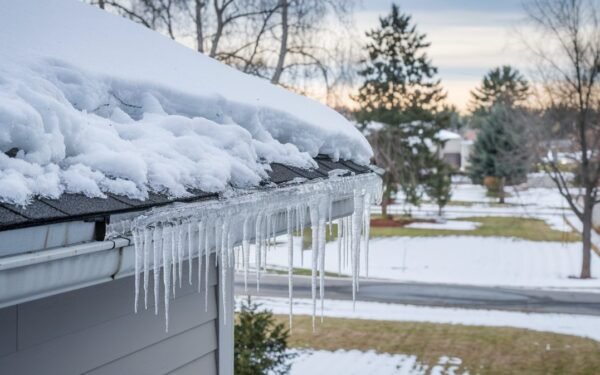
Four factors swing a small-house quote by 50 percent or more. Pitch: steep roofs cost 20 to 50 percent more because the work is slower and the safety rigging heavier. Layers: tearing off two old layers doubles disposal labor; some jurisdictions allow laying one new layer over one old, saving $1,000 to $2,000, but an overlay hides the deck, and hidden decks are where surprises live. Decking: rotted sheathing is replaced by the sheet at $50 to $75 per sheet, and a roof that has leaked for years can need a dozen. Complexity: valleys, dormers, chimneys and skylights all eat flashing labor. Notice that every multiplier is visible from the ground or the attic — a contractor who prices them after inspection is being careful, not greedy. And since a cold, poorly sealed attic is what grows the icicles that tear roofs apart in winter, it is worth reading up on how to prevent ice dams on your roof in winter before the new shingles ever meet snow.
How to read a quote line by line
A trustworthy quote is an itemized document, and reading it properly takes ten minutes. It should state the square count it is pricing (ask how it was measured — satellite measurement is standard and usually accurate), whether tear-off of the existing roof is included and how many layers that covers, the underlayment type, whether ice-and-water shield is included at the eaves (essential in cold climates, and cheap insurance), the flashing plan for chimneys, valleys, and vents, the decking clause with its per-sheet price ($50 to $75 is the normal band), ventilation changes if any, disposal and dump fees, and the permit. A quote that is one round number on a business card is not a quote; it is a down payment on an argument. The deposit norm is 10 to 20 percent, the crew timeline for a small house is one to three days, and the warranty splits in two — manufacturer on materials, contractor on workmanship — and both numbers should appear in writing. When two quotes differ by $4,000, the itemization almost always shows why: one of them is missing a line the other includes, and the missing line is never free, just deferred.
Tear-off versus overlay: the $1,500 question
Where local code allows it, laying new shingles over one existing layer saves $1,000 to $2,000 in tear-off labor and disposal, and it is the single most debated shortcut in roofing. The honest case for overlay: the deck was inspected from the attic and is sound, the old layer is flat and healthy, and the budget is genuinely tight. The honest case against: the deck — the one component whose failure ruins everything above it — goes unexamined; the new roof’s life shortens because the old layer holds heat and telegraphs its bumps through; and the next replacement pays double tear-off with interest. On a house you plan to keep, full tear-off is the defensible default. Overlay is a financial instrument, not a roofing improvement, and should be chosen with eyes open on those terms.
Repair instead: the honest alternative
Replacement is not always the answer. Repair makes sense when the damage is localized — a few blown-off shingles, one leaking valley, a failed pipe boot — when the roof is under about 15 years old, and when the decking underneath is sound. A targeted repair at a few hundred dollars can buy five more years from a healthy roof. Replacement is the call when leaks appear in multiple places, shingles are curling or shedding granules across whole slopes, or the roof is simply at the end of its rated life and repairs have become a subscription. For current regional pricing on each material, HomeAdvisor’s roofing cost data is a useful cross-check against any single quote.
Timing and region: the two quiet price factors
Two influences on price have nothing to do with the roof itself. The first is the calendar: roofers are busiest in late summer and autumn, and in storm regions prices firm up and schedules stretch for weeks after a major hail or wind event — a roof replaced in a quiet March often prices kinder than the same roof in a frantic October. The second is geography: labor markets move the installed price per square by hundreds of dollars between regions, disposal fees vary by municipality, and cold-climate builds need ice-and-water shield at the eaves that warm-climate builds skip. Neither factor is negotiable, but both are knowable: ask the contractor which of your quote’s lines are seasonal or regional, and you will learn whether the number can move or simply is what your town costs. A homeowner who understands that a quote is weather, geography, materials, and labor — in that order of controllability — stops shopping for the cheapest number and starts shopping for the most honest one, which is where the savings in roofing actually live.
One last piece of the estimate deserves attention because homeowners routinely misread it: the difference between roof area and house area. A 1,200-square-foot house with a moderately pitched roof, overhangs included, can easily carry 1,500 square feet of roofing, and a steep or complex plan carries more. Every per-square number in a quote multiplies against the roof’s area, not the floor plan’s, which is how a “small house” produces a mid-sized bill without anyone padding anything. When a contractor’s square count surprises you, the check is simple: the measurement includes pitch and overhang, it is usually generated by satellite tools the whole industry uses, and a second quote will almost always land within a square or two of the first. Disagreement between quotes lives in scope and materials, almost never in the measuring.
The verdict
For most small houses, architectural shingles at $8,000 to $15,000 are the sweet spot: durable, fairly priced, and warrantied by everyone. Go three-tab only when the budget truly forces it, and metal only when you plan to stay long enough to collect the lifespan. Get three quotes, insist each one itemizes tear-off, decking, underlayment, flashing and disposal, and compare the jobs rather than the totals. A typical small-house replacement takes one to three days with an experienced crew — the decision takes longer than the work, which is exactly why it deserves the arithmetic above.


1 comment