
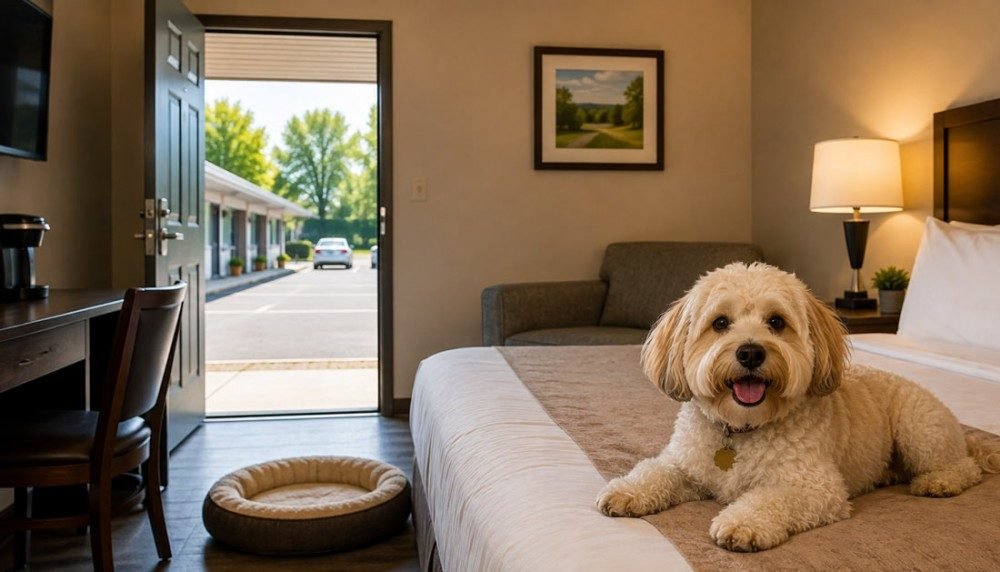
“Pet-friendly” is the least standardized phrase in travel. On one listing it means the dog is a welcome guest with a bed, bowls and no fee; on another it means the dog is tolerated, in four designated rooms by the ice machine, for $150, provided it weighs less than the cat it is traveling with. The policy that governs your night is written at the individual property — not the brand website, not the booking app — so finding a genuinely pet-friendly hotel is a verification exercise, not a search exercise. Work the checklist below in order and a road trip with a dog stops being a gamble at every exit.
The checklist, in order
- Fee structure first: is the pet fee zero, per stay, or per night — and is any of it refundable?
- Weight and breed limits: many properties cap dogs at 25 to 50 pounds, and some exclude breeds by name; a large dog fails both tests silently until check-in.
- Number of pets: most properties allow one or two; three is a negotiation.
- Which rooms: are pet rooms ground-floor near an exit, or scattered? Ground floor beside a door is worth real money at 11 p.m.
- Relief area: is there grass, bags and lighting, or a gravel patch across a parking lot?
- Left-alone rules: may the dog stay in the room unattended, crated or not? Many properties forbid it outright.
- Restaurants and lobby: can the dog join you anywhere on site, or is the room its whole world?
- Paperwork: some properties ask for vaccination records; carry a photo of them on your phone regardless.
Any listing that cannot answer the first three items clearly has not earned a booking yet. The generic tactics in how to find affordable hotels in expensive cities still apply — book refundable, compare the all-in price — but with a dog, the all-in price must include the pet fee, which listing sites love to add last.
Where to search, and what the chains really offer
Start the search on a pet-specific database rather than a general one: BringFido’s pet-friendly hotel listings track fees and policies property by property and are usually current in a way brand pages are not. Then cross-check against the chains with reputations to protect. Kimpton hotels are the famous case — pets of any size stay free, with amenities provided — and several mid-range brands (many La Quinta, Red Roof and Motel 6 locations) built followings on low or zero pet fees, while full-service brands more often charge $75 to $150 per stay. Treat every brand claim as a lead, not a promise: franchise properties set their own terms, and the same logo can mean free in one town and $100 in the next. Independent motels along road-trip routes are the quiet opportunity — many welcome dogs for a modest fee and offer the ground-floor, park-at-your-door layout that suits a dog best.
The fee math nobody shows you
Pet fees range from zero to $150 and beyond, and the structure matters more than the number. A $25-per-stay fee and a $75-per-night fee differ by $200 across a four-night trip, and multi-stop road trips multiply per-stay fees at every property — five one-night stops at $50 each is $250 in fees on a trip where a $0-fee chain would have charged nothing. Working rules of thumb: under $50 per stay is fair; $50 to $100 per stay is acceptable for a hotel you actually want; anything above $50 per night needs to be an exceptional property or a desperate hour. Beware the two silent add-ons — a “pet cleaning fee” that appears only in confirmation fine print, and premium pricing on the designated pet rooms themselves. When comparing two hotels for a road trip, compare fee-inclusive totals for the whole route, not nightly rates; dogs make the cheapest-looking itinerary expensive one property at a time.
The phone call that settles it
Before any non-refundable booking, call the property itself — the front desk, not the brand’s call center — and ask four questions: What is the total pet fee for my dates? Is my dog’s size and breed acceptable? Which floor and how near an exit are the pet rooms? May the dog be left alone in the room? Front-desk staff answer these daily, know the exceptions, and can note your booking in ways a call center cannot. If the answers contradict the website, believe the desk and get the agent’s name. This call also surfaces the unadvertised goods: the property with a fenced dog run out back, the one whose pet rooms open onto a quiet side lawn, the one that waives fees for stays of three nights or more. Five minutes on the phone is the difference between a policy and a welcome.
Setting up the room and the night
Arrive with the dog’s routine packed, not just the dog. A familiar blanket or bed carries the smell of home into a strange room and settles most dogs faster than anything sold for the purpose. Bring more waste bags than seems rational, a water bowl for the car, food pre-portioned by meal, and a spare leash. At the property, walk the relief area in daylight so the midnight version is familiar, keep the dog leashed everywhere on site, and never let it onto the bed unless the property’s rules — and your conscience about the next guest — allow it. If the dog must be left briefly and the policy permits it, leave a phone number at the desk, the television on low for company noise, and a hard limit on the absence; a barking complaint is how ordinary stays become fee disputes. Tired dogs are good hotel guests, so the last walk of the day should be a real one.
Planning the route around the dog
A pet-friendly hotel only solves the night; the driving day needs its own design. Dogs travel best on a rhythm of stops every two to three hours — water, a short walk, a chance to relieve themselves — which conveniently matches good human driving practice and turns fuel stops into dog stops rather than adding new ones. Book each night’s hotel before that day’s drive begins, with the fee-inclusive total confirmed, because “we will find something with the dog” at 9 p.m. in an unfamiliar town is how travelers meet the $150 pet fee with no leverage to refuse it. The standing safety rule admits no exceptions: a dog never waits in a parked car in warm weather, because cabin temperatures climb to dangerous levels in minutes even with windows cracked — if the dog cannot come in, one person stays with the car and the air conditioning, or the stop does not happen. Pack the car accordingly: water and a bowl reachable without unpacking, a familiar blanket on the back seat, and any medication in the cabin bag rather than the luggage. Routes with dog-welcoming towns at half-day intervals beat marginally shorter routes through pet deserts; on a road trip with a dog, the map is partly a directory of places the dog is allowed to sleep.
Longer stays and second dogs: negotiating the policy
Two situations reward a conversation rather than a booking. Staying three nights or more gives you standing to ask whether the per-stay fee is truly per stay or quietly resets — and some properties waive or halve the fee for longer stays, for loyalty members, or for a refundable pet deposit in place of a non-refundable fee, none of which appears on any website. The second dog is similar: policies priced for one dog sometimes double the fee for two, sometimes include the second, and occasionally a manager will cap the total for a polite caller with a well-reviewed booking history. The rules of the negotiation are honesty in both directions: disclose the dogs’ real sizes and breeds when booking, because the discovery of an undisclosed 90-pound dog at check-in converts a waivable fee into a non-negotiable one — or a refusal. Properties forgive almost any fee for guests whose dogs behave; they forgive almost nothing for surprises. Build the reputation deliberately across a trip: leave each room cleaner than the policy requires, and the next call gets easier.
When the plan fails
Sometimes the booked hotel falls through — a policy changed, a room category sold out, a fee that doubles at the desk. The fallbacks, in order: ask the desk for the nearest property they send overflow pet guests to (they know); check the pet-specific databases for same-night availability along your route rather than in your destination town; and remember that one night in a basic, genuinely dog-welcoming motel beats a beautiful property where the dog is a problem to be managed. On long routes, pre-identify one backup town per driving day — somewhere with two or three pet-accepting properties — so a failure is a detour rather than a crisis. The trip is for both of you. Booked with the checklist, verified with one phone call and priced with the fees included, “pet-friendly” stops being advertising and becomes an accurate description of the night ahead.



6 Comments