
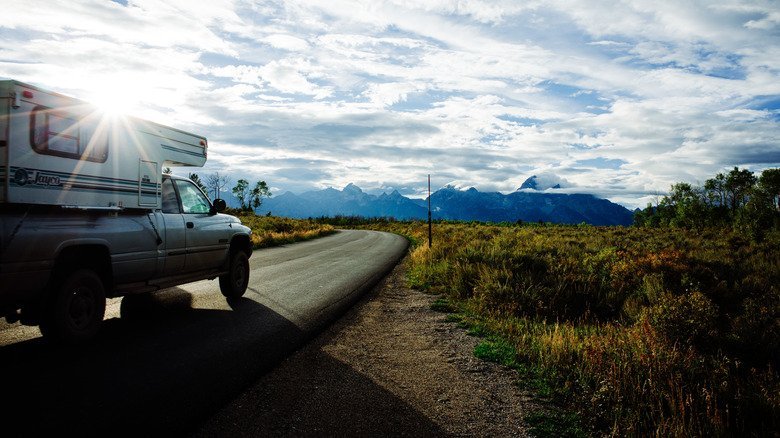
Can you really road-trip America’s national parks on a budget? Yes — and the honest number for two people, camping and cooking most meals, is roughly $60–$90 a day, against $300 or more a day for the lodge-and-restaurants version of the same parks, the same trails, and the same sunsets. No category of American travel has a wider gap between what it can cost and what it must cost, because the product itself — the canyon, the geyser, the granite — is public, spectacular, and priced at the cost of entry. Everything else is logistics, and logistics is where the money leaks. This guide plugs the leaks in order of size: the pass, the calendar, the bed, the cooler, and the fuel tank.
The pass: the best $80 in American travel
Start with the single easiest saving in the entire trip. A single national park entry typically costs about $35 per vehicle; the America the Beautiful pass costs $80 and covers entry to every federal recreation site in the country for a year, for everyone in the car. The arithmetic completes itself at the third park: visit three parks in a year — one road trip can do that in a week — and the pass is ahead, with every subsequent entry free. Buy it at the first park gate or in advance, sign it, and keep it with the car’s documents rather than in a wallet that changes vehicles. The details and the (several) discount categories — seniors, military, fourth-graders’ families — live on the National Park Service’s passes page, and it is worth ten minutes there before deciding, because a meaningful slice of travelers qualifies for a cheaper or free version and never learns it. The one piece of pass discipline that matters: do not skip it to “save $80” and then pay $35 three times at three gates, which is the same money with none of the freedom.
The calendar: shoulder season is the second pass
Timing saves money the way the pass does — structurally, before you spend anything. The weeks just outside peak season bring the same parks with cheaper gateway lodging, available campsites, cooler hiking weather, and trails you share with dozens rather than thousands. Late spring and early autumn are the great windows for most of the system, adjusted by latitude and altitude — desert parks argue for winter and early spring, high mountain parks keep their season short and late. Shoulder season also changes what must be booked: the campsite that vanishes in eleven minutes in July may sit available for weeks in September. And there is a subtler budget effect: in the calm months you simply do more of the free things — longer trails, ranger programs, dawn at the viewpoint — and less of the paid compensations for crowds and heat.
Sleep cheap: the $20 bed versus the $250 bed
Lodging is where the tiers truly split, and camping is the budget superpower. Park campgrounds typically run $20–$35 a night against $150–$300 for gateway-town hotels; a basic tent setup costing around $200 pays for itself in two nights and then keeps paying for years. Reserve sites the moment the booking windows open — the popular parks release sites months ahead on Recreation.gov and the best loops go quickly even so. Beyond the campgrounds lies the connoisseur’s option: dispersed camping on national forest land near many parks is free, legal, and often beautiful, in exchange for no facilities and a duty to leave no trace. Motel travelers have levers too — gateway towns one ring further out price noticeably lower, and anyone traveling with animals will find the practical guidance in how to find pet-friendly hotels for a road trip directly on point, since pet fees are their own little budget ambush. Whichever bed you choose, book the scarce nights first and build the route around them; on a parks trip, beds are the fixed points and everything else is flexible.
The cooler strategy: food at a third of the price
Food is the quiet budget-killer of road trips, three restaurant meals a day compounding invisibly. The cooler strategy cuts it roughly by two-thirds: a $50 grocery run covers two people for three to four days of breakfasts and lunches — eggs, tortillas, cheese, fruit, sandwich makings, snacks that are actually food — and a camp stove costing about $30 turns that inventory into hot breakfasts and simple dinners that taste better at a picnic table than most roadside cooking has any right to. Reserve restaurants for one or two deliberate occasions in gateway towns rather than the default of exhaustion. Restock in real towns, not at the last store before the park gate, whose prices are a tax on geography. And keep the tank discipline that pairs with the cooler: use a fuel-price app to buy gas where it is cheap, cluster parks geographically so the route minimizes backtracking days, and never let the tank drop below half in remote country — the most expensive gallon in America is the one sold, at whatever price it pleases, to the only station for ninety miles.
Gear without the gear-store ambush
The two-hundred-dollar setup figure assumes a discipline worth stating: for a first trip, buy nothing premium. The core kit is a tent, two sleeping pads (pads matter more than bags in summer — the ground steals more heat and comfort than the air), and whatever cooking gear the cooler strategy requires, and every element of it can be borrowed from the friend who owns camping gear and never uses it, rented from outdoor outfitters near the parks for the trip’s duration, or bought secondhand and resold after. The upgrade path, if the trip converts you — and parks trips convert people at a suspicious rate — is to replace one piece at a time with the good version, informed by what actually annoyed you. The budget failure mode is the pre-trip shopping spree that outfits a beginner like an expedition. The parks do not grade your equipment. They barely notice you, and that is rather the point of them.
Permits, reservations, and the flexible day
Two modern wrinkles belong in the budget plan because they punish improvisation. Several marquee parks now run timed-entry reservation systems in peak season — small fees, but hard gates — and some famous trails allocate access by lottery, applied for months ahead. Check every park on your route for its current system when you book the campsites, because the cost of learning at the entrance is a day of the trip, which is the most expensive currency you carry. Then build the itinerary with one flexible day held in reserve: weather closes roads, smoke drifts in from fires two states away, a trail shuts for rockfall, and the trip with a spare day absorbs all of it as a rearrangement, while the trip scheduled to the hour pays for the disruption in missed reservations. Flexibility is the budget traveler’s insurance policy, and unlike the pass, it costs nothing at all.
A worked week, and the free stuff
Assemble it: seven days, two people, three parks. Pass, $80 (and it serves the rest of the year). Six campground nights at $25 average, $150. Groceries and cooler food, about $130, plus two restaurant dinners at $60 each. Fuel for roughly 900 clustered miles, around $120. Total near $600 — call it $85 a day — for a week that includes sunrise at a canyon rim and a ranger-led walk under some of the darkest skies on the continent. The free inventory deserves the last word in the accounting: ranger programs, talks, and guided walks are included with entry and staffed by people who chose the park as a life’s work; they are, hour for hour, the best-value entertainment in American travel, and the budget traveler who builds days around them is not settling for less of the parks. They are getting more of them.
Quick questions
Is the pass worth it for just one or two parks? At $35 a vehicle entry, the $80 pass needs three entries to win on arithmetic alone — but entries are counted per visit, not per park, so a week that enters two parks on different days can reach three entries quickly. Under that line, pay per entry without regret.
How early do campsites really book out? For the famous parks in peak season, effectively at the moment the reservation window opens, months ahead. The release of cancelled sites in the final two weeks is the budget traveler’s second chance — check back often in the fortnight before the trip.
What is the one splurge worth making? One night somewhere with a real bed and a long shower in the middle of a long camping trip. Morale is a budget line too, and it prices far below a abandoned itinerary.
Can the trip work without camping at all? Yes, at the middle tier: gateway motels in the outer ring of towns, the cooler strategy for breakfasts and lunches, and the pass doing its work bring most routes in around $150–$200 a day for two — still well under the lodge version, and a perfectly honorable way to see the parks.

4 comments