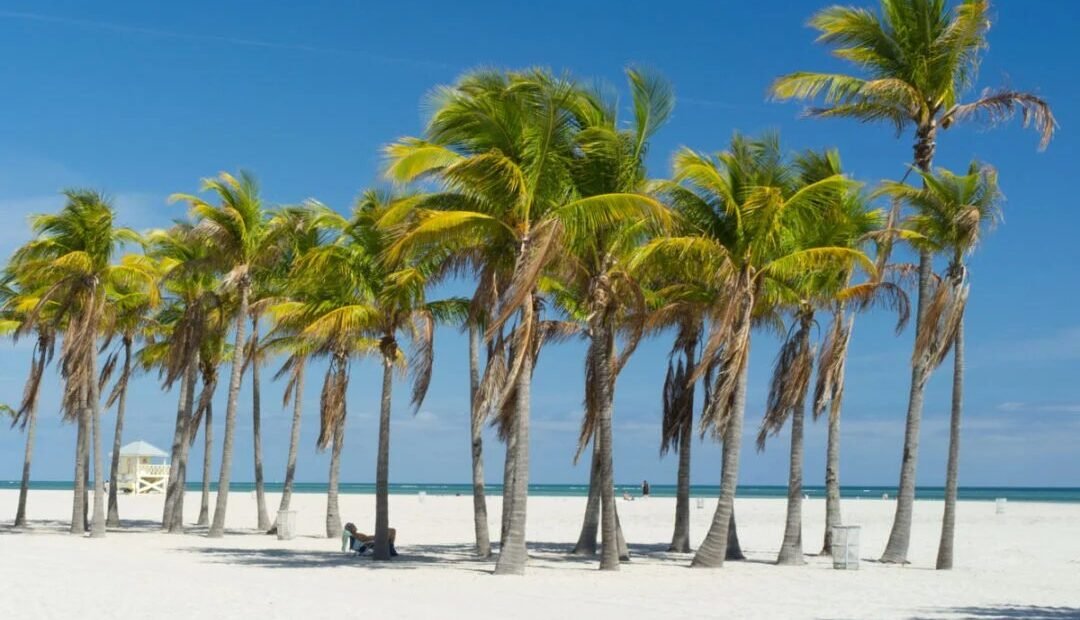
Ask when Florida is at its best and you will get a confident answer that is only right for one-third of the state. The Keys in February, the Panhandle in July, and Orlando in October are three different trips wearing the same name. Florida runs more than 800 miles from Pensacola to Key West, crosses two climate behaviors, and hosts two entirely different crowd calendars — snowbirds in winter, families in summer. Pick the month before you pick the town, and match both to what you actually want to do, because the gap between the best and worst version of the same Florida trip is enormous: same beach, same hotel, half the price and a third of the people.
Two Floridas, two calendars
The peninsula’s south — Miami, Fort Lauderdale, the Keys, Naples, Fort Myers — is tropical in everything but name. Winter there is dry, sunny, and in the high 70s, and summer is a wall of humidity broken by afternoon storms. The Panhandle and the north — Pensacola, Destin, Jacksonville, St. Augustine — behave more like the Deep South: January can be genuinely chilly, with highs in the 50s and 60s, while summer is hot and the beaches are at their best. Central Florida — Orlando, Tampa, the Space Coast — sits between the two, milder in winter than the Panhandle and slightly less swampy in summer than Miami. Any month-by-month advice that ignores this split is selling you somebody else’s trip, so hold the region in mind through everything below.
Peak winter: December to April
This is Florida doing its famous impression: dry air, blue skies, highs in the 70s and low 80s in the south, and the sea warm enough to swim without thinking about it. It is also the most expensive Florida there is. Hotels surge 50–100 percent over their annual average, snowbirds fill the condos from January onward, rental cars get scarce, and the good beachfront rooms in the Keys and on the Gulf coast can vanish months out. Book 3–6 months ahead for winter trips; last-minute winter Florida is punishingly expensive because you are bidding against half the Midwest. March deserves its own warning: spring break turns beach towns like Fort Lauderdale, Panama City Beach, and Daytona into chaos for several weeks, with prices at annual highs and a party crowd that many travelers did not sign up for. If your winter trip can land in early December or late April instead of mid-March, you keep most of the weather and dodge the worst of both the prices and the crowds.
The shoulder months: May, and October to mid-November
These are the windows locals recommend to people they like. May and late October through November bring temperatures in the 80s — properly warm beach weather — with the worst humidity either not yet arrived or recently departed. Crowds thin dramatically: the snowbirds have gone, the school-holiday families have not yet come, and prices drop 30–40 percent from peak. For beach towns and the Keys, the shoulder season delivers most of the peak experience at well over half the cost, and restaurants that needed a reservation in February will seat you at the door. The honest caveats: May warms up fast toward the end of the month, the rainy season typically starts around late May or June, and October still sits inside hurricane season, which runs June 1 to November 30 — late-season storms are rarer than August and September ones but not unheard of. Flexible cancellation terms matter more for an October trip than a February one, and travel insurance stops being a formality.
Summer: June to September
Summer is the cheapest Florida and the most demanding. Hotels drop 40–60 percent from peak, theme park tickets are easier to get, and the ocean is bathtub warm. The price is the weather: mid-90s heat, humidity that makes a twenty-minute walk feel like a workout, a near-daily afternoon thunderstorm, and the heart of hurricane season in August and September. Summer Florida is also family Florida — school is out, so Orlando and the popular beaches are busy even while hotel prices sag, an odd combination that rewards planning. The rhythm that works: start outdoor activities at sunrise, retreat to water, shade, or air conditioning by early afternoon, let the storm pass, and go back out for the evening. The Panhandle and north Florida beaches handle summer best, with slightly more bearable nights, while South Florida in August is a test of commitment. If a named storm threatens your dates, the only correct move is to reschedule — no deal is good enough to argue with a hurricane.
Match the month to the mission
Different trips crown different months. For pure beach weather with nobody around: late October or early November in the south, May in the Panhandle. For theme parks with tolerable lines and temperatures: late January and February, avoiding holiday weekends, or mid-September if you accept the storm risk. For the Keys specifically: March and April offer the classic combination of dry weather and warm water, priced accordingly; November is the value pick. For wildlife, the calendar sharpens further — manatees gather at warm springs like Crystal River and Blue Spring in the coldest months, roughly November through March, while sea turtle nesting season runs March through October on Atlantic beaches. For fishing and boating, summer’s calmer seas are a real advantage despite the heat. And if your trip involves children and sand, the month matters less than the beach itself: gentle surf, lifeguards, and shallow entries are worth more than a famous name, which is why it pays to check the most family-friendly beaches in the US before locking in a town.
The event calendar that quietly sets prices
Months are only half the story; specific weeks can override everything above. Early December brings Art Basel to Miami and some of the highest hotel rates of the year to South Beach, even as the rest of the state stays calm. February and March fill the Gulf coast around Fort Myers and the Tampa Bay area with baseball spring training, which packs out mid-range hotels that would otherwise sit in the shoulder-season bargain bin. Daytona’s Bike Week in March, the boat shows, the January and February festival weekends in the Keys — each creates a local price spike invisible to anyone looking only at monthly averages. The flip side is just as useful: the week after a major event ends often dips below the seasonal norm, because hotels would rather fill rooms cheaply than leave them empty. Before booking, spend two minutes checking what is on in your specific town during your specific dates. Florida rewards that check more than almost any other state.
Water temperature: the number nobody checks
Air temperature gets all the attention, but for a beach trip the water matters just as much, and Florida’s two coasts differ here too. Gulf water in the south stays swimmable for most people nearly year-round, dipping into the high 60s in mid-winter — cool but manageable for a quick dip, pleasant by March. Atlantic water off Jacksonville and St. Augustine can drop into the high 50s in January and February, which turns a “winter beach trip” into a walk-on-the-sand trip unless you pack a wetsuit top. By May, both coasts are in the comfortable 70s and 80s, and by August the Gulf can hit the high 80s — genuinely bath-like, which delights some swimmers and disappoints those who wanted refreshment. Match your expectations to the thermometer: a family planning to live in the ocean should aim for April through November in the south and May through October in the north, while winter travelers who mainly want sun, sand, and a heated pool have far more freedom.
Orlando plays by its own rules
The theme-park capital deserves separate treatment because its calendar is set by school holidays rather than weather. Orlando is at its most pleasant and least crowded in late January and February (skipping the holiday weekends), when daytime highs sit in the low 70s and ride queues shrink to their annual minimum. Mid-September is the other insider window — parks are quiet, Halloween events are running, and hotel rates fall — but it is also peak hurricane season, so build flexibility into the booking. Summer in Orlando is the most physically demanding version: lines at their longest, heat at its fiercest, and a thunderstorm most afternoons, though the water parks are then at their best. December splits in two — the first half is mild and comparatively calm, the week between Christmas and New Year is the single busiest of the year. Whenever you go, Orlando rewards the same tactic as the beaches: aim for the weeks immediately before or after the school-holiday crush, not the crush itself.
The practical calendar, compressed
If you want one paragraph to plan by, take this one. December to February: the best weather in the south, the highest prices everywhere, book far ahead. March: glorious and chaotic in equal measure — spring break rules the beaches. April: peak quality, slightly gentler crowds after Easter, still premium priced. May: the first great value window, warm and quiet. June to August: cheap, hot, wet in the afternoons, family-heavy, hurricane-aware. September: the cheapest month and the riskiest weather of the year. October to mid-November: the second great value window, cooling down and drying out. Before booking any of it, glance at the official resources on Visit Florida, the state’s official tourism site, which tracks seasonal events and regional conditions. The travelers who love Florida most are rarely the ones who went in the famous months — they are the ones who went in the shoulder weeks, paid noticeably less, and had the beach, the springs, and the seafood shacks mostly to themselves.