
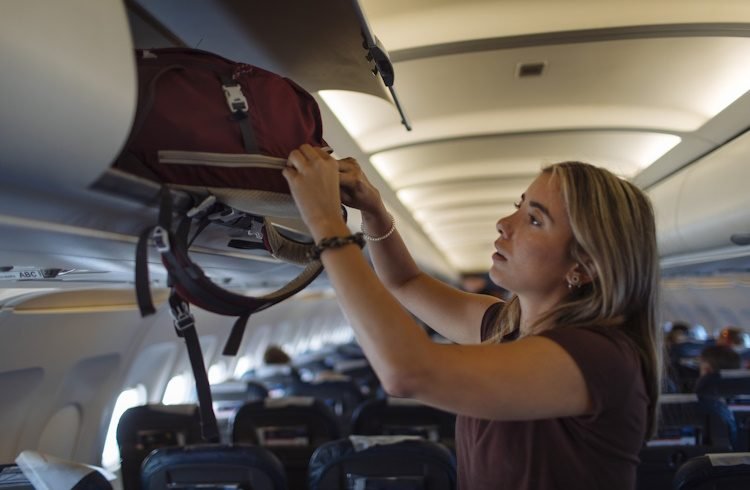
I once paid $89 in baggage fees on a $49 Spirit flight, which is the budget-airline equivalent of buying a cheap printer and discovering the ink costs more than the machine. The base fare is the advertisement; the fees are the business model. But the fees are also almost entirely optional if you know the system.
Here is how to avoid baggage fees on budget airlines, from packing strategies to the fare classes and credit cards that make the fees vanish.
How Do I Avoid Baggage Fees on Budget Airlines?
Understand the game first. Budget airlines like Spirit and Frontier charge for everything beyond a personal item: carry-on bags ($40 to $70+ when bought in advance, more at the gate), checked bags ($40 to $75+), seat selection, even water. The fees rise the closer to departure you buy them, so the cardinal rule is to decide your bag strategy at booking, not at the airport. Gate-checked bags cost the most, sometimes double the advance price, which is how $49 fares become $150 trips.
The most powerful strategy is the personal-item-only trip. Budget airlines allow one free personal item, roughly 18x14x8 inches, and a well-packed personal item holds far more than people think. How do I avoid baggage fees on budget airlines for a long weekend? With a personal-item bag packed like a puzzle: wear your bulkiest items, use packing cubes, roll everything, and do laundry if the trip exceeds four days. I have done five-day trips on a personal item alone, and the freedom of skipping baggage claim is its own reward.
- Buy bags at booking, never at the gate. Fees nearly double at the airport. Decide at checkout and commit.
- Get the airline’s credit card if you fly them often. Free checked bags for you and companions on every flight usually pays for the card in two trips.
- Check the fare bundles. Sometimes the bundle with a checked bag and seat selection costs less than adding them separately. Do the math at checkout.
- Wear your bulkiest layers. Boots, jacket, sweater on your body, not in your bag. This alone frees up shocking space.
- Use a personal-item-sized backpack strategically. A 25-liter backpack packed with cubes fits the free allowance and holds a long weekend of clothes.
- Ship or buy at your destination. For heavy items like toiletries or gear, shipping ahead or buying travel sizes there can beat bag fees.
- Join the free loyalty program. Members sometimes get discounted bag fees or waived fees on promotions. It costs nothing to join.
- Weigh and measure at home. Oversize and overweight penalties are brutal. A $15 luggage scale pays for itself on the first trip.
One more angle people miss: compare the all-in price, not the base fare. A $49 fare plus $65 in bags is $114, while the legacy carrier’s $129 fare includes a carry-on and a drink. Budget airlines win on short personal-item trips and lose the moment you add bags. Run the full math every time.
The Credit Card Shortcut
If you fly one budget airline even three times a year, their co-branded card usually pays for itself. Free checked bags typically extend to companions on the same reservation, priority boarding helps you actually fit your carry-on, and the signup bonus alone often covers a year of fees. Just remember the standing rule of travel cards: pay in full every month, or the interest dwarfs every fee you saved.
For infrequent flyers, a general travel card with airline incidental credits can offset bag fees across any airline. It is less direct but more flexible, which suits people who chase the cheapest fare regardless of carrier.
Quick Answers to Common Questions
How strict are budget airlines about personal item size?
Increasingly strict. Sizers at the gate are real, and an oversized personal item gets charged as a carry-on at gate prices. Measure your bag and pack to the published dimensions.
Is it cheaper to check a bag or bring a carry-on?
Usually checked is slightly cheaper than carry-on on ultra-low-cost carriers when bought in advance. But carry-on saves baggage-claim time and eliminates lost-bag risk, which has its own value.
Can I avoid fees by shipping my luggage?
For long trips or heavy gear, sometimes. Compare shipping costs against bag fees; for a week-plus trip, shipping a box ahead can be cheaper and far more convenient.
Do kids get free baggage allowances?
Lap infants typically do not include a bag allowance on budget carriers. Children’s tickets include the same allowances as adults, which still means fees for bags beyond the personal item.
My Pre-Trip Checklist
- Decide your bag plan at booking. Fees double at the gate. Commit early.
- Measure your personal item. Pack to the published dimensions, not your hopes.
- Wear the bulky stuff. Boots and jackets on your body, not in the bag.
- Compare all-in prices. $49 + $65 in fees vs $129 all-inclusive. Do the math.
- Get the card if you fly them 3+ times a year. Free bags pay for the annual fee fast.
What I Would Do Next
I still fly budget airlines regularly, and I still love them for what they are: cheap transportation for light packers. The fees only feel like a scam when they surprise you. Once you know the system, a $49 fare with a personal item is one of the great deals in travel. Pack light, decide early, and keep your money.
How to avoid baggage fees on budget airlines comes down to deciding at booking, packing to the free allowance, and running honest all-in price comparisons. The fees are optional for prepared travelers and punishing for surprised ones.
Be the prepared traveler. Your wallet will feel the difference on every single trip.
Related reading: How Much Does It Cost to Replace Carpet with Hardwood Floors.
Related reading: How Do I Find Good Local Restaurants While Traveling.
Related reading: How Do I Choose the Right Size Air Conditioner for My Home.
For official guidance, check out Amtrak route guides and the U.S. Department of State travel guidance.




1 Comment