
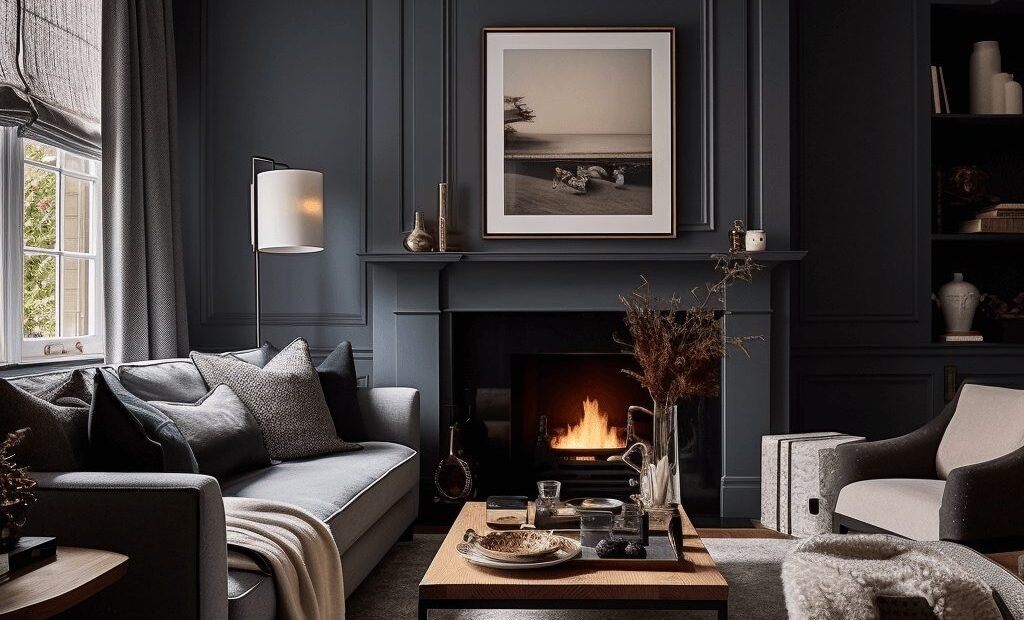
Our living room is 11 by 13 feet with one north-facing window, which is a polite way of saying it is a cave. I painted it three times before I learned the truth: the best paint color for a small dark living room is not just white, and the paint matters less than what you do around it.
Here is what actually works, from the colors to the tricks that multiply whatever light you have.
What Is the Best Paint Color for a Small Dark Living Room?
Let me kill the biggest myth first: stark white is often the worst choice for a dark room. Without enough light, pure white looks gray, dingy, and flat. What you want are warm whites and light colors with reflective depth: warm white with creamy undertones, pale greige, soft warm gray, or light sage. These bounce the available light around without the cold, shadowy effect of stark white. Paint with a higher Light Reflectance Value, the LRV number on the color chip, reflects more light; aim for LRV 70+ for dark rooms.
The finish matters as much as the color. What is the best paint color for a small dark living room in a satin or eggshell finish? Any light color, because flat paint absorbs light while satin and eggshell bounce it. Bathrooms and kitchens already use this trick. In a dark living room, an eggshell or satin finish on the walls can make a visible difference, especially opposite the window. And consider painting the ceiling a bright white in a flat finish; ceilings in dark rooms are light thieves, and a fresh bright ceiling lifts the whole space.
- Sample on the darkest wall, not the brightest. Paint large test swatches and live with them for three days, checking morning, afternoon, and lamplight. Colors shift dramatically in low light.
- Go warm, not cool. Warm undertones (creamy, buttery, warm greige) flatter low light. Cool grays and blues turn gloomy in dark rooms.
- Consider painting trim the same color as walls. Same-color trim in a slightly higher sheen blurs the room’s edges, which makes walls feel farther away. The contrast of white trim chops small rooms into pieces.
- Use mirrors strategically. A large mirror opposite or adjacent to the window doubles your light. This single addition outperforms any paint color.
- Layer your lighting. Overhead light alone creates harsh shadows. Add floor lamps, table lamps, and warm LED strips. Three light sources at different heights beat one bright ceiling fixture.
- Keep furniture and textiles light. Dark paint can work in small rooms, but only with light furniture, light rugs, and strong lighting. If the room must stay dark-walled, go all-in: moody, saturated color with excellent lamps is better than timid beige.
- Do not forget the ceiling. Bright white flat ceiling paint is the cheapest brightness upgrade in the room.
The bold alternative deserves mention: some designers argue the best paint color for a small dark living room is actually a deep, saturated color, charcoal, forest green, navy, done confidently with great lighting. The logic is sound: a small dark room will never feel bright, so make it feel intentional and cozy instead of apologetically dim. I have seen this work beautifully. It fails only when done halfway, dark walls with weak lighting and heavy furniture is just a cave.
The Lighting Fix That Matters More Than Paint
If I could only change one thing in a dark living room, I would not repaint. I would fix the lighting. Most dark rooms have a single overhead fixture with a cool-white bulb, which is the worst possible setup. Replace it with warm-white bulbs (2700K), add two lamps at seating height, and put the brightest light source where it washes a wall rather than pointing down. Wall-washing makes the room feel larger; downlighting makes it feel like an interrogation.
Also check the window itself. Heavy curtains, dirty glass, and exterior obstructions like overgrown bushes steal shocking amounts of light. Sheer curtains, clean windows, and trimmed hedges are free brightness.
Quick Answers to Common Questions
Should I paint a small dark room white?
Warm white, yes; stark white, usually no. In low light, pure white reads gray and flat. Choose a warm white with creamy undertones and an LRV above 70 for the brightest warm effect.
Does dark paint make a small room look smaller?
Not necessarily. Dark saturated colors blur corners and can make walls recede, especially with good lighting and light furnishings. Timid mid-tone colors are what make rooms feel small and murky.
What sheen is best for dark rooms?
Eggshell or satin on walls to reflect light, flat on ceilings. Avoid high gloss on walls unless the surface is perfect; it shows every flaw.
How many lamps does a dark living room need?
At minimum three light sources at different heights: overhead, a floor or table lamp, and an accent light. Dark rooms need layered light more than bright light.
My Small Dark Room Checklist
- Test warm whites with LRV 70+. Large swatches, three days, all light conditions.
- Choose eggshell or satin finish. Reflective sheen multiplies your light.
- Paint the ceiling bright white. Ceilings steal light. Reclaim it.
- Add mirrors and layered lamps. These outperform any paint color.
- Check the window. Sheers, clean glass, trimmed bushes. Free brightness.
What I Would Do Next
Our cave is now a warm pale greige with an eggshell finish, same-color trim, a big mirror opposite the window, and three lamps. It will never be a sunroom, but it is now the room everyone gravitates to. The paint helped. Everything around the paint helped more.
The best paint color for a small dark living room is a warm, light color with high reflectance in an eggshell finish, but the paint is only half the answer. Mirrors, layered warm lighting, and a bright ceiling do as much as any color.
Sample patiently, light generously, and remember: cozy beats bright when bright is not an option.
Related reading: How Do I Avoid Baggage Fees on Budget Airlines.
Related reading: What Is the Best Way to Get Rid of Ants in the Kitchen.
Related reading: How Do I Paint Kitchen Cabinets without Sanding.
For official guidance, check out Family Handyman project walkthroughs and This Old House how-to articles.




1 Comment