How often should you bathe your dog? For most dogs, every four to eight weeks is the right range. That answer holds in Texas too, but only if you adjust for coat, heat, allergies, and how you wash. Bathe much more often than that without a reason and you strip the oils that keep skin calm. Bathe much less and dirt, pollen, and loose hair build up until the coat looks dull and the dog starts to scratch for a different reason.
The four-to-eight-week window is a starting point, not a rule for every dog. A short-coated dog who naps on tile needs a different schedule from a long-coated dog who tangles easily, or a wrinkly dog whose folds stay damp in August. The bath method matters as much as the calendar: warm water, the right shampoo, conditioner every time, and a long rinse do more for dry skin than any special product bought after the damage is done.
Start With Coat Type, Not the Calendar
Coat decides how fast a dog gets dirty, how fast oils travel down the hair, and how obvious dryness becomes. Use these ranges as your base, then shift them for lifestyle.
Short, smooth coats — dogs like Labradors, Boxers, and pit bull types — usually do well every six to eight weeks. Their hair is simple to brush, sheds steadily, and shows flakes fast if you wash too often. If the dog smells a bit like the yard between baths, brushing and a damp wipe-down handle it without a full wash.
Double coats — Huskies, German Shepherds, Golden Retrievers, and similar breeds — also sit at six to eight weeks. The thick undercoat is not clutter. It helps insulate against heat as well as cold, which is why shaving it for summer backfires and leaves skin exposed to sun. What these dogs need between baths is steady undercoat brushing. That pulls out dead hair, spreads natural oil, and prevents the packed, felted layer that traps heat and moisture near the skin.
Long, silky coats — Shih Tzus, Maltese, Yorkies, and other fine-haired breeds — need baths more often, about every three to four weeks. Their hair picks up dust, tangles around the legs and ears, and mats if shampoo and conditioner skip a cycle. Conditioner is not optional here. It keeps the hair from knotting while it is still wet and makes the next week of brushing much easier.
Oily and wrinkle-prone breeds — Basset Hounds, Bulldogs, Shar-Peis — also land near every three to four weeks. They produce more oil and odor, and their folds need direct attention. Wash the folds, then dry them fully. Leaving a fold damp in Texas humidity invites yeast and a sour smell that a stronger shampoo will not fix.
Hairless breeds are the exception. Dogs with little or no coat often need weekly washing plus moisturizer, because there is no fur to carry oil away from the skin. If you own one, follow a skin routine closer to human skin care and ask your vet which products suit your dog.
How Texas Changes the Timing
Swimming is the clearest example. Pool chlorine and lake water both dry the coat, but they do not call for a full shampoo bath every time. Rinse the dog with clean fresh water after a swim, dry the ears and folds, and save the shampoo for the regular bath day. A dog who swims twice a week and gets shampooed twice a week will be itchy within a month, even with a gentle formula.
Allergy season pulls the other way. Ragweed, mountain cedar, and grass pollens settle in fur and sit against the skin. During a bad flare, a vet may actually want baths every one to two weeks with a gentle hypoallergenic or oatmeal shampoo, because washing pollen off early can calm the reaction. That is a medical plan for a set period, not a new permanent habit. Pair those baths with conditioner or a leave-in moisturizer, and stop and reassess when the flare eases.
Working and outdoor dogs get genuinely dirty in a way house dogs do not. Mud, dust, and barn grime need removal, but water alone does most of that work. A plain rinse between shampoo baths keeps the dog clean without stripping oil each time. Save the full wash for when a rinse no longer gets the coat clean or the smell stays after drying.
Hard water is quieter but constant. Mineral residue left after each bath can make a coat feel rough and look flat. A very diluted apple cider vinegar final rinse — one tablespoon per quart of water, as a rinse aid — or a simple shower filter can reduce that buildup. If you try the vinegar rinse, keep it off broken skin and out of the eyes, and skip it if your dog hates the smell enough to fight the bath.
Cleaning paws at the door cuts down tracked-in pollen, and leash manners help too — how to teach your dog to walk on a leash without pulling covers that training in a way that makes daily walks calmer for both of you.
The Warm-Water Method That Protects Skin
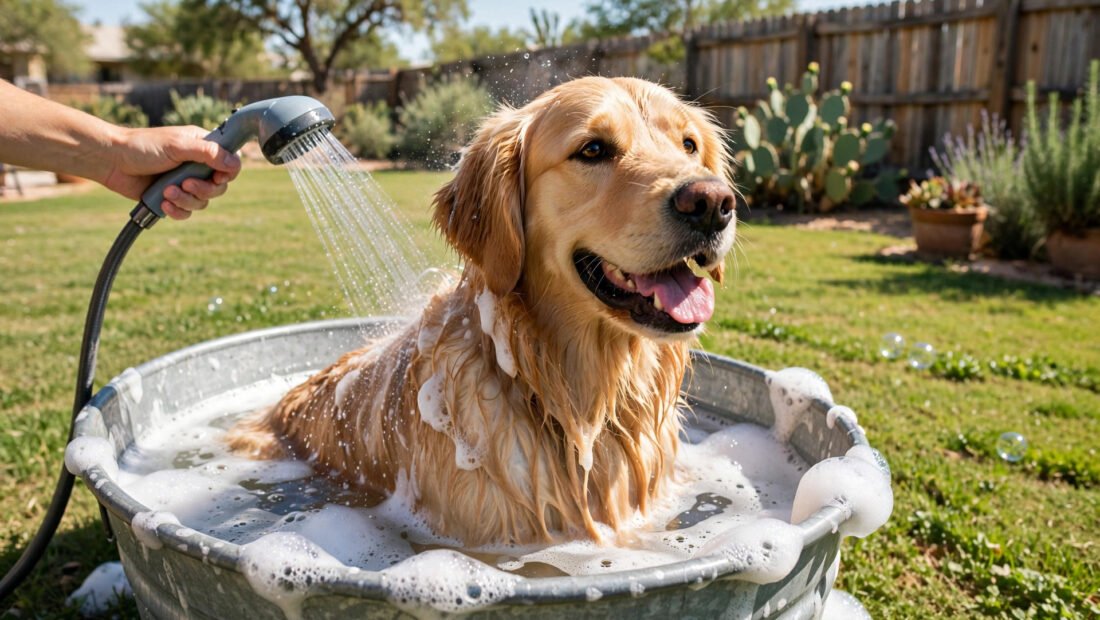
Use lukewarm water from start to finish. Hot water feels efficient, but it lifts oil off the skin fast and leaves the coat squeaky in the wrong way. Test the water on your inner wrist the way you would for a baby bottle. If it feels hot to you, it is too hot for a full dog bath.
Use shampoo made for dogs. Human shampoo is made for more acidic human skin, and regular use dries dog skin out. Look for a soap-free, moisturizing, or oatmeal-based dog shampoo for routine baths. Medicated and antifungal shampoos are stronger and meant for a named problem, so ask the vet first if you suspect yeast or infection.
Dilute the shampoo in a cup of water before you put it on the coat. It spreads farther, lathers with less scrubbing, and rinses out cleaner. Work it in with your fingers, not harsh rubbing, and pay attention to the belly, armpits, and behind the ears, where dirt collects but skin is thin.
Conditioner comes next, every bath, not only when the coat looks dry. This is the step Texas owners skip most and need most. Conditioner puts moisture back after shampoo has done its cleaning, reduces static and tangles, and helps the coat shed water and dust better in the days after. A leave-in spray can help long coats or dogs who will not stand for a second full rinse cycle, but do not use a leave-in to skip rinsing out shampoo.
Rinse longer than feels necessary. Then rinse a little more. Leftover shampoo is one of the most common causes of an itch that starts right after a bath and gets blamed on allergies. Run your hand through the coat while rinsing. If the hair still feels slick or soapy, keep going, especially in thick double coats where residue hides near the skin.
Dry fully but gently. Towel first, then a dryer on low heat if the dog accepts it. Do not leave a thick-coated dog damp in humid air; trapped moisture can lead to hot spots and yeast. For a nervous dog, drying in stages beats one long noisy session.
What to Do Between Baths
Brush weekly at minimum, with the brush that fits the coat. Brushing spreads oil down the hair shaft, lifts dust and loose hair out, and lets you feel for lumps, ticks, or sore spots early. Double coats need a slower session that reaches the undercoat; long coats need gentle work through tangles before they mat.
Use waterless foam or pet wipes for small jobs: muddy paws, a dusty back after a walk, a spot where the dog rolled. They are not a bath substitute for a dog who truly needs washing, but they prevent a lot of unnecessary full baths.
Ask your vet about omega fatty acid supplements if dryness keeps coming back. Fish oil at a vet-approved dose can support the skin barrier from the inside. Do not guess the dose.
In peak air-conditioning months, a humidifier where the dog sleeps can also help skin that flakes mainly in summer.
When Itching Means a Vet Visit, Not Another Bath
Some dry skin is a schedule problem. Some is a medical problem wearing the same costume. Book a vet visit if you see scratching that does not ease after you fix the bath routine, red or thickened skin, a strong odor that returns within days, patches of hair loss, scabs, sores, or repeated ear infections alongside the skin trouble.
Texas dogs deal often with environmental allergies and yeast overgrowth in humid weather, and both can look like simple dryness at first. Thyroid problems and other hormone conditions can also change the coat and skin in ways no shampoo will correct. Bathing more to chase those symptoms only dries the skin further and delays the real fix.
For which skin signs need prompt care, the AVMA’s pet care resources are a solid place to check. Bring notes to the appointment: bath frequency, products used, when the itch is worst, and whether it tracks with pollen, swimming, or a new food.
Short Answers
Can I bathe my dog every week in summer?
For most dogs, no. Weekly shampooing strips oil faster than skin replaces it. Rinse with water alone between full baths, use conditioner when you do shampoo, and reserve weekly baths for a vet-directed allergy plan or a hairless breed.
Why is my dog itchy right after a bath?
The usual causes are leftover shampoo, water that was too hot, or a fragranced product the skin dislikes. Rinse twice as long, switch to a gentle soap-free oatmeal formula, keep the water lukewarm, and always condition.
Is human shampoo okay once in a while?
Once in a true pinch is unlikely to cause lasting harm, but it is the wrong pH for regular use and dries dog skin over time. Keep an inexpensive bottle of dog shampoo on hand so the pinch does not become a habit.
Should I use conditioner every time?
Yes, especially in Texas heat and hard water. Conditioner restores moisture after shampooing, cuts tangles and static, and helps you go longer between baths without dryness.
A house dog bathed calmly every six weeks, brushed weekly, and rinsed plainly after swims will almost always have better skin than a dog scrubbed weekly. Watch the coat for two cycles: less flaking and scratching tell you the new rhythm fits.