Yes, for a healthy adult dog, eight hours alone can work — but only with the right setup around it. For a puppy, a senior dog, or a dog with separation anxiety, eight hours is too long, and no amount of toys changes that. The difference is not whether you work full time. The difference is the dog’s age and health, what happens before you leave and after you get home, and whether someone or something breaks up the day.
Why a settled adult dog can manage the workday
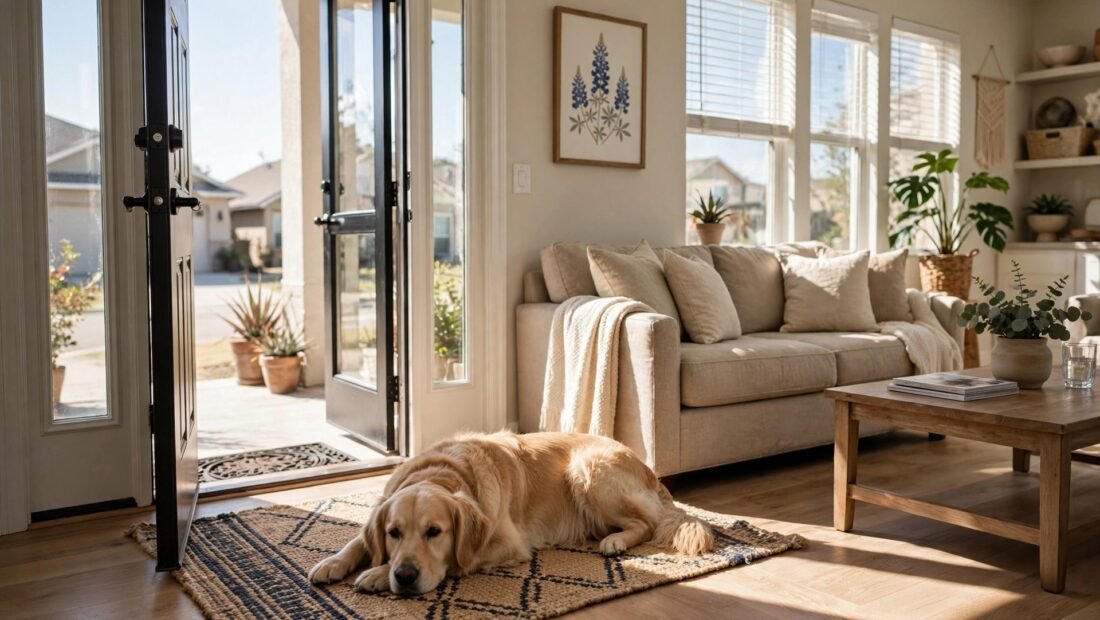
Adult dogs sleep a lot. A healthy adult sleeps about 12 to 14 hours a day, spread across the night and long naps during the day. A settled adult who gets a proper walk and some play in the morning will often do exactly what you would hope during your shift: find a favorite spot, sleep, get up for water, look out of a window for a while, and sleep again.
That pattern only holds if the hours at either end of the day are real. A dog who is let out for two minutes, fed, and left again has not had its needs met. A dog who gets exercise, attention, and a calm routine before you leave, and then gets exercise and company in the evening, experiences the alone time as a rest period in the middle of a full day. The bookends matter as much as the empty hours between them.
For more detail, see the American Kennel Club’s advice on leaving a dog home alone. The broad picture there is consistent: most healthy adults can cope with a normal workday if their needs are met outside it.
The bladder limit is the hard limit
Sleep is not the only issue. Eight hours is close to the comfortable holding limit for most adult dogs. Some can hold a little longer on an odd day. That does not make nine or ten hours a fair daily routine. A dog who has to hold on every single day may drink less to cope, may have accidents and feel stressed about them, or may develop discomfort over time.
This is why a midday break changes the whole picture so much. A visit at lunch cuts the day into two stretches of about four hours. Four hours is well within what an adult dog can handle without strain. It also gives the dog water, a short walk, and a bit of human contact. If you can arrange only one upgrade to a long workday, that midday break is the one to choose.
Puppies are a different case entirely
A puppy cannot do what an adult can do, and the math is simple. A young puppy can hold its bladder for roughly one hour for each month of age. A three-month-old puppy needs a break about every three hours. A five-month-old puppy needs one about every five hours. An eight-hour stretch asks for something the puppy’s body cannot give.
When a puppy is left too long, the accident is not bad behavior. The puppy had no other option. Repeated accidents in the sleeping area can also slow house training, because puppies learn to keep their space clean only when given a fair chance. For the first months, plan on a midday visitor as a necessity, not a luxury.
Senior dogs need shorter windows too
At the other end of life, the window shrinks again. Older dogs often need to go out more often. They may drink more water because of age or because of conditions such as kidney problems or diabetes. Many take medication on a schedule that does not line up neatly with a long absence. Stiff joints can also make it harder for a senior dog to get up, move around, and get comfortable again after lying still for hours.
A senior who managed eight hours at age seven may not manage it at age twelve. New accidents, restlessness, or soreness in the evening are worth a vet visit and a schedule change.
Boredom is not the same as separation anxiety
Two very different problems get mixed up under the heading of a dog who struggles alone. The first is boredom. A bored dog chews, digs at doors or carpets, empties trash cans, or rearranges the house out of frustration and stored energy. That behavior links closely to why your dog chews everything when left alone, and it often improves with more exercise, better enrichment, and a safer space.
The second problem is separation anxiety, and it is panic, not mischief. Signs often start within the first 30 minutes after you leave: drooling, howling or barking that does not settle, scratching at doors and windows, escape attempts, and sometimes self-injury. A dog in that state is not learning to be independent. The dog is frightened, and the fear can get worse if the long absences keep repeating without help.
The two problems need different responses. Boredom responds well to routine, activity, and puzzle toys. True anxiety usually needs a gradual training plan, sometimes with help from a vet or a qualified behavior professional, and shorter absences while that work is done. Leaving an anxious dog alone for eight hours to get used to it rarely works and can make the panic stronger.
The Texas heat risk is the serious one
In Texas, the biggest danger in an eight-hour day is not loneliness. It is heat. For months of the year, your air conditioning is the safety system that keeps your dog alive while you are out. If the power goes out or the unit fails on a hot morning, indoor temperatures can climb fast, and a dog alone has no way to call for help or get out.
Take three precautions in summer. Keep the thermostat at 78 degrees or below while you are away. Set up a smart temperature alert for your phone. And make sure a neighbor or nearby friend has a key and knows to check on the dog if you cannot get home quickly.
A setup that gives an adult dog a fair day
Start the day with a genuine session, not a quick trip to the curb. Aim for 30 to 45 minutes before work: a brisk walk, a game of fetch, or active play that leaves the dog ready to rest. Feed breakfast after the activity or scatter part of it in a snuffle mat so the dog has to work for it slowly.
Leave enrichment that takes time. A frozen stuffed Kong and similar puzzle feeders can keep a dog busy for 30 to 45 minutes. Snuffle mats, lick mats, and safe chew options spread activity across the first part of the morning, which is when many dogs feel your departure most. Rotate the options so they stay interesting, and remove anything that breaks into pieces a dog could swallow.
Give the dog a safe, dog-proofed space rather than a crate for the full eight hours. A crate can be a fine sleeping spot for short periods, but eight hours confined with no room to stretch is too much. A gated room with a bed, water, and safe toys is kinder. Remove cables, cleaning products, and small objects.
What a midday upgrade costs in Texas
If you cannot come home at lunch, a walker is the most common fix. In Texas metro areas, a visit from an established walker service runs about $18 to $30. Even two or three visits a week can help, though daily visits help most for puppies, seniors, and dogs who struggle. Some services offer lower rates for recurring weekday bookings, so ask about a regular schedule rather than booking single visits.
Dog daycare is another option, usually one to three days a week. Prices in Texas metros run about $30 to $50 a day. A daycare day gives a social dog exercise and company. Dogs who dislike groups may do better with a quiet walker visit at home.
Leaving a dog outside in Texas
State law requires adequate shelter, water, and rest for dogs kept outside. Meeting the legal minimum is not the same as giving a dog a safe summer day. Texas heat makes a yard the riskiest place for a dog to spend eight hours. Shade moves during the day, water bowls tip over or get hot, and storms and fireworks can panic an outdoor dog who has no way inside.
How can you tell how your dog really copes?
Set up a camera for one normal workday and watch what actually happens. Many owners are relieved to see a dog who sighs, circles, and sleeps for most of the day. Others discover pacing, howling, or frantic door-watching that they never saw because the dog calms down the moment a key turns in the lock. One day of honest footage tells you more than any general rule.
Is it cruel to leave a dog alone for eight hours?
For a healthy adult dog with exercise, enrichment, water, a safe cool space, and a full life in the morning and evening, a workday alone is not cruel. For a puppy, a senior with health needs, or a dog in a panic, the same eight hours can be unfair and unsafe. The hours alone are only one part of the dog’s whole day, and they should be judged that way.
Can you leave a dog alone for eight hours in Texas summer?
Only with safeguards in place: air conditioning set at 78 degrees or below, a temperature alert on your phone, fresh water, and a backup person nearby with a key. Without those safeguards, a single equipment failure on a hot day can turn a normal workday into an emergency.
Should you crate a dog for the whole workday?
No. A crate is not the right container for a full eight-hour absence, even for a dog who sleeps in one willingly at night. Use a dog-proofed room or gated area where the dog can stand, turn, stretch, change position, reach water, and settle in more than one spot.
Is a midday walker worth the money?
For most full-time workers, yes. At about $18 to $30 a visit in Texas metros, a midday walker halves the alone stretch, provides a bathroom break, and adds social contact. For puppies, seniors, and anxious dogs, it is often the change that makes the whole routine fair.