It is three in the morning and the house is quiet except for one sound: licking, licking, licking. Your dog is folded over a front paw, working at it as if the paw holds a secret. One night of that is easy to shrug off. Night after night, with pink-brown stains spreading through the fur and the hair thinning between the toes, it stops looking like grooming and starts looking like a message you need to decode.
Is constant paw licking normal grooming, or is it a problem?
Short, occasional licking is normal. Dogs wash their paws after a walk, before sleep, or when a bit of dirt gets stuck. That kind of grooming lasts a few minutes, moves around, and leaves the skin alone.
Problem licking looks different. It is daily. It is focused, often on the same one or two paws, for long stretches. The fur stains pink to brown from saliva. Hair thins or falls out. The skin turns red, thickened, or sore. A round, raw patch that keeps growing — a lick granuloma — can form where a dog returns to the same spot again and again.
Use frequency and damage as the line. A dog you can call away easily, with clean skin and full fur, is usually grooming. A dog who locks onto a paw, resists distraction, and is changing the look of the foot is showing a symptom. Symptoms have causes, and the cause decides the fix.
What is the most common cause of constant paw licking?
Allergies sit at the top of the list. Pollens, grasses, dust mites, and some foods can all show up in the paws first, because paw skin is thin and spends all day in contact with the ground. A dog steps through pollen and grass, then licks at the itch those contacts leave behind.
Texas makes this harder. Pollen seasons run long, grasses stay active for much of the year, and mild winters give allergens little time off. Year-round licking in Texas often means year-round allergens. A dog who licks all four paws, rubs the face, scratches at the belly, or gets repeat ear trouble is painting a classic allergy picture.
Allergy licking also has a timing clue. It often flares after walks and outdoor time, when fresh pollen is on the feet. It tends to affect several paws rather than just one. And it does not stop because the dog is offered a toy — the itch stays, so the licking returns as soon as the distraction ends.
Allergies are managed, not cured with a single cream. A vet may talk through food trials, testing, daily paw care, and medicines that calm the skin. Useful background lives in Cornell University College of Veterinary Medicine’s pet health resources, which cover skin disease and allergy care in plain terms.
Could the cause be pain in the paw itself?
Yes, and pain should be ruled out early, especially when a dog favors one single paw. Paws take a beating in Texas. Summer pavement can pass 150 degrees on the hottest days, hot enough to burn pads. A dog walked at midday may come home and lick at sore, blistered feet for hours.
Look between the toes as well. Thorns, grass awns, stickers, and small stones lodge there and work deeper with each step. Cracked pads, a split or torn nail, a cut, or swelling between the toes all give a dog a clear reason to lick one place and leave the other feet alone.
Older dogs add another option: joint pain. Early arthritis in a wrist or toe can send attention to that foot. The dog is not itchy. The dog is sore. If an older dog focuses on one front paw, or licking comes with stiffness after rest, mention pain directly at the vet visit. Linked signs such as why your older dog is drinking so much water are worth noting on the same visit list.
What about infections and parasites — can they cause licking too?
They can, and they often arrive as the second act. A paw kept wet by constant licking becomes a warm, damp space where yeast and bacteria thrive. Once infection sets in, the paw itches and smells more, so the dog licks more, so the paw stays wet. The cycle feeds itself.
Signs that point this way include a musty or sweet smell from the feet, redness and gunk between the toes, brown discharge around the nails, and skin that looks greasy or thickened. Mites and flea irritation can also drive foot chewing in some dogs, particularly when scratching and hair loss show up on other parts of the body as well.
This is why infection is so often tied to allergies. The allergy starts the licking. The wet paw grows the infection. Treating only one part brings short relief and a quick return. Many dogs need both parts handled in the right order, which is a vet call, not a guess at home.
Can anxiety or boredom really make a dog lick its paws?
Yes. Dogs lick to soothe themselves, and a bored or anxious dog can turn that soothing habit into a routine. The pattern gives it away. Anxiety licking often starts at predictable, emotional moments: when you leave, when the house settles at night, during storms or fireworks, or after a change in routine.
The distraction test helps here. A dog licking from boredom or nerves can often be called away, offered a chew or a game, and settle — at least for a while. A dog licking from strong itch or pain goes back to the paw through distractions, because the feeling in the foot never stopped.
One favorite paw may take most of the damage simply because the dog returns to the same spot each time worry rises. Long alone hours, low exercise, and few chances to sniff, chew, and play all raise the odds. More structure helps: a real walk before alone time, safe chews, and food puzzles. If a sore has already formed, behavior work alone is not enough — the sore needs care at the same time.
What can you safely do at home first?
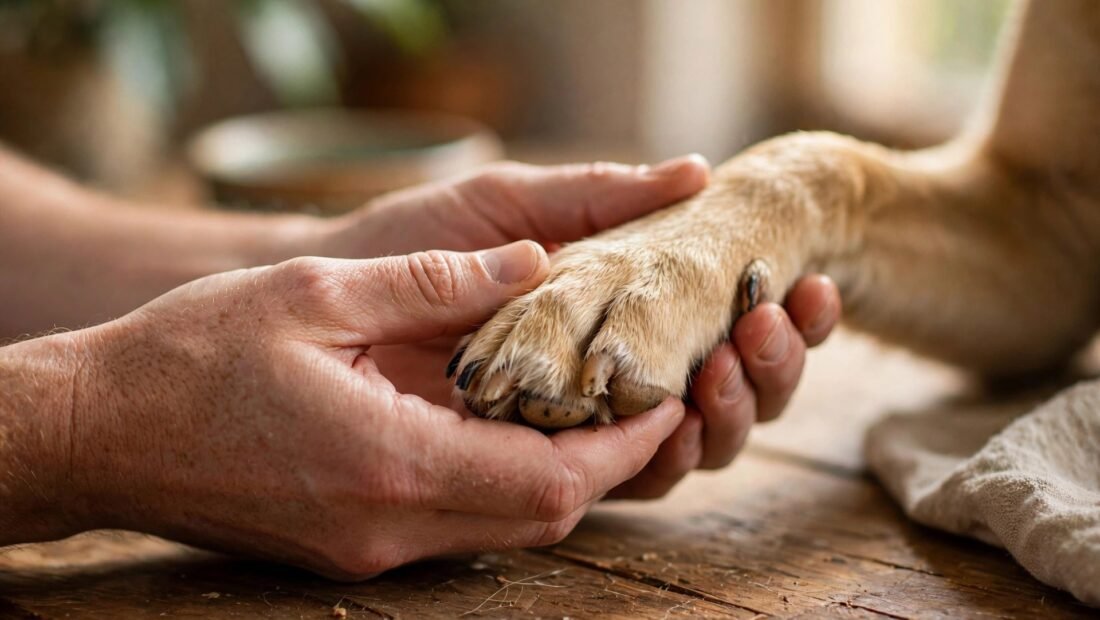
Start by looking, slowly and in good light. Spread the toes. Check the pads, the nails, the webbing between toes, and the tops of the feet. Look for redness, cuts, swelling, thorns, stuck seeds, cracked skin, and anything lodged that should not be there. Note whether one paw or all four are affected, and when the licking happens. Those two notes are gold at a vet visit.
Wipe paws after walks. A plain damp cloth or a quick rinse removes pollen and grass residue before the dog settles and starts licking it off. This single habit helps allergy dogs more than most owners expect, because it cuts the contact that starts the itch.
For mild irritation, a lukewarm Epsom salt soak can soothe the foot. Use about a tablespoon of Epsom salt per cup of water, and soak for five to ten minutes. Pat the paw fully dry afterward. Dry is not a small detail. Moisture left between the toes feeds yeast, so a soak without careful drying can make the next round worse.
If a sore is starting, use a cone. Owners often dislike cones, but a cone for a few days is far kinder than weeks of treatment for a deep lick granuloma. A granuloma is much easier to prevent than to cure, because once the skin is raw and thickened, the spot itches and tempts the dog even after the first cause fades. Keep nails trimmed, keep the paw clean and dry, and redirect licking calmly toward a chew rather than scolding — scolding raises stress and can push an anxious dog to lick more when you leave the room.
Skip home experiments that can harm. Do not put strong oils, peroxide, or human creams on a paw a dog will lick off and swallow. Do not start leftover steroids or antibiotics. If you are unsure whether a product is safe for a licking dog, leave it off and ask the vet.
When does paw licking need a vet visit, with no debate?
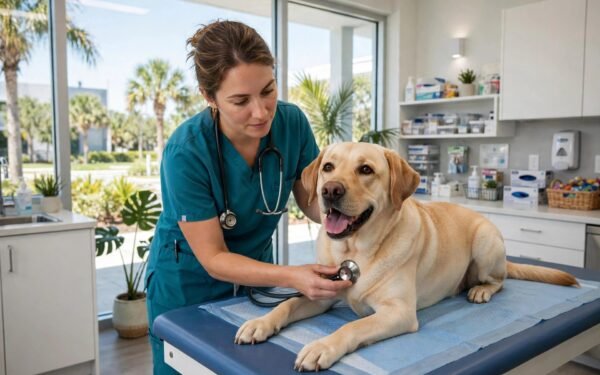
Book a visit if licking lasts beyond one to two weeks of steady home care. Book sooner if you see swelling, bleeding, discharge, limping, or hair loss. A dog who will not bear weight, whose paw smells strongly, or whose sore is growing needs care now, not another week of watching.
One pattern deserves special weight: a dog licking one single paw obsessively. That points toward pain, a trapped thorn or awn, a nail injury, or another local problem far more than it points toward general allergy. Local problems need eyes and hands on the foot, and sometimes imaging or a careful probe under sedation if something has worked deep between the toes.
Bring your notes. Which paws. When it happens. What changed — new food, new walks, new cleaning products, a move, a new pet, a change in your work hours. Bring a short phone video of the licking if you can. Vets solve these cases faster with a clear pattern than with a general report that the dog licks a lot.
Will it just stop on its own if you wait?
Almost never, once licking has become constant. Grooming stops on its own. Causes do not. Allergies need a management plan that may include paw care, diet review, and medicine. Pain needs a diagnosis — a burn, a thorn, a nail, a joint — before it can heal. Infection needs the right treatment for yeast or bacteria, not a generic wash repeated for a month. Anxiety needs routine, exercise, and sometimes medical support alongside training.
Waiting has a cost beyond discomfort. Skin thickens. A small sore becomes a granuloma. A simple allergy becomes allergy plus infection plus habit, and habit is the hardest layer to peel away.
The earlier visit is usually the cheaper one, in money and in effort. A dog caught at the wipe-and-soak stage may need only a clear plan and a recheck. A dog caught months later may need skin tests, cultures, longer medicine courses, a cone for weeks, and behavior work on top. If the licking is daily, focused, and changing the paw, treat that as your answer: look carefully at home, start the safe steps, and get the foot seen before a small signal turns into a long case.