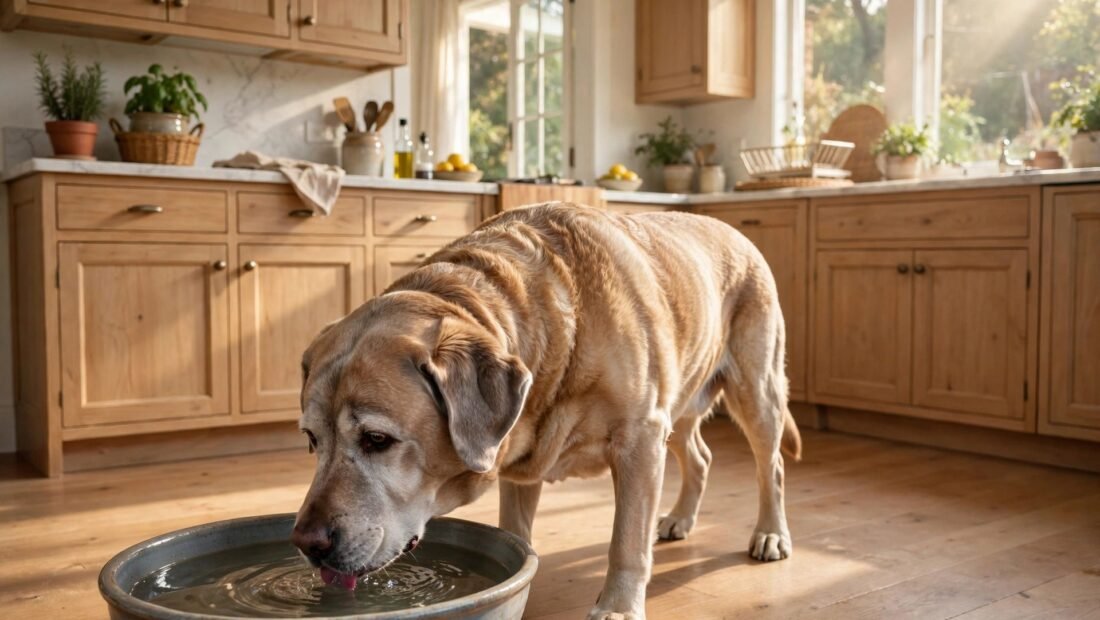
You are refilling the water bowl three times a day in an air-conditioned house in October. The dog is not coming in hot from the yard. He is not panting after a walk. He is an older dog, in a cool room, in a mild month, drinking as if it were August. That detail matters, because it removes the easy explanation. A sustained thirst like that in a senior dog is a symptom worth taking seriously, and several common reactions to it make the situation worse.
Mistake One: Cutting Back the Water to Cut Back the Accidents
The most dangerous reaction is also the most understandable. More drinking means more urination, more trips outside, and sometimes accidents on the floor, so limiting the bowl feels like a tidy fix. Do not do it. Never restrict water for a dog who is drinking excessively.
A dog drinking far more than usual is usually compensating for water the body is losing. Take the water away and you do not fix the loss. You add dehydration on top of it, and in a dog with kidney trouble or diabetes that can tip into a crisis. Manage the urination side instead: more frequent trips outside, a dog door if you have one, or indoor options for overnight. The intake is not the problem to control. The cause behind it is the problem to find.
Mistake Two: Blaming Texas Heat Long After Heat Stops Fitting
Heat is a real factor in Texas, which is exactly why it misleads. A senior dog in August will legitimately drink more. Heat, panting, and dry indoor air from air conditioning all increase water loss. A summer rise that tracks with the temperature is expected.
Heat-related drinking has a pattern, though. It rises and falls with the weather, eases when the dog spends the day in a cool house, and arrives without other changes. Suspect a medical cause when drinking stays high regardless of temperature, keeps climbing, roughly doubles, or shows up alongside other shifts — accidents, weight loss, lower energy, or vomiting. A senior draining the bowl at 72 degrees indoors in October is not answering the weather. He is telling you something else, and calling it heat delays the visit that would find it.
Mistake Three: Calling It “Just Old Age” and Waiting Months
Age is not a diagnosis. Older dogs do develop the conditions that cause heavy drinking more often, but the thirst itself always has a cause, and the common causes are treatable or at least manageable. Early kidney disease, early diabetes, and early Cushing’s disease all respond far better when they are caught early. A week or two of measuring and watching is reasonable. Months of hoping it settles is not a plan; it is lost treatment time.
Waiting also throws away the cheapest information you will ever give a veterinarian: a pattern. A vague sense that the dog “drinks a lot lately” is hard to act on. A short record of amounts and dates is not.
Mistake Four: Guessing Instead of Measuring
Before any visit, put numbers on the change. A healthy dog typically drinks about 1 ounce of water per pound of body weight per day, so a 50-pound dog drinks roughly 6 cups. Drinking that counts as excessive, called polydipsia, is generally set at more than 100 milliliters per kilogram per day — roughly 1.5 ounces per pound, or about 50 percent above normal. Dogs eating wet food tend to drink less, while active dogs and dogs in real heat drink more, so judge your dog against his own usual level as well as the range.
Measuring takes almost no effort. Fill a measured container each morning, note every refill, and track the total for 3 to 5 days. Write down related changes at the same time: more urination, accidents, appetite shifts, weight change, lower energy. “He drank 9 cups a day for four days, up from his usual 5” gets a veterinarian’s attention far faster than “he seems thirsty,” and it helps separate a real jump from a few hot afternoons. That record also connects to the wider routine covered in how often your dog should see the vet, because a senior with changing thirst is exactly the dog who should not be stretching out the gap between checkups.
What the Increase Often Means in a Senior Dog
None of the following is a diagnosis of your dog. It is the list a veterinarian works through, and it shows why a workup matters more than a guess.
Kidney disease is the most common suspect in older dogs. When kidneys lose the ability to concentrate urine, the dog urinates large volumes of dilute urine and drinks heavily to keep up. Early on, increased thirst may be the only visible sign for months. Caught early, the condition is manageable with measures such as prescription diets, phosphorus binders, blood pressure management, and fluids under the skin, which can support years of good quality life.
Diabetes has a classic pattern: heavy drinking, heavy urination, and weight loss despite a strong, even ravenous, appetite. Sugar spills into the urine and drags water with it. Diabetes is very treatable with insulin and diet management, but left undiagnosed it can progress to ketoacidosis, which is an emergency. Heavy thirst plus weight loss is a “call this week” combination.
Cushing’s disease, an overproduction of cortisol usually linked to a pituitary tumor, is common in older small breeds. Alongside thirst it often brings increased appetite, a pot-bellied look, thinning hair, and panting. Confirming it takes specific endocrine testing, and treatment is lifelong medication with monitoring.
Liver disease can raise thirst alongside lower energy, appetite changes, vomiting, or yellowing known as jaundice. Causes range from infection and toxins to age-related decline, and it needs prompt workup with blood tests and often imaging. A urinary tract infection is simpler and common in seniors, especially females; it raises urgency and frequency, and a urinalysis can identify it quickly and cheaply. Do not assume every increase is a major systemic disease when a common infection is on the list.
Medications round out the frequent causes. Steroids such as prednisone, diuretics such as furosemide, and phenobarbital can all raise thirst significantly. If the change began within days of a new prescription, call the prescribing veterinarian, because a dose adjustment may settle it. Never stop a prescribed medication abruptly on your own. Less common causes worth knowing include high blood calcium, which can sometimes signal cancer; pyometra, a uterine infection in unspayed females that is an emergency when thirst comes with lethargy and discharge; and behavioral excessive drinking, which is a diagnosis reached only after medical causes are ruled out.
The Correct Response: What a Vet Visit Actually Involves
Expect the visit to be a “rule out the serious causes” workup, and bring your measured record with you. The history comes first: intake numbers, timeline, other symptoms, medications, and diet. Then a physical exam covering hydration, weight, and feeling for organ enlargement. Bloodwork usually includes a complete blood count and a chemistry panel — kidney and liver values, glucose, calcium, and electrolytes — plus a marker used for early kidney detection. A urinalysis matters a great deal: how concentrated the urine is, measured as specific gravity, is one of the most informative single tests. Dilute urine alongside high intake points toward the kidneys, diabetes, or Cushing’s disease. A culture may follow if infection is suspected, and further testing such as endocrine panels, ultrasound, or a diabetes confirmation test is added as the first results direct.
Cost is part of planning honestly. A senior workup with bloodwork and urinalysis typically runs $300 to $600 in Texas, and endocrine testing adds $200 to $400. That is real money, and it buys the difference between guessing at six possible causes and treating the right one. Background reading in the American Veterinary Medical Association’s senior pet resources can help you understand the screening recommended for aging dogs before you go.
Supporting the Dog While the Cause Is Found
While testing proceeds, make daily life easier without touching the water supply. Keep fresh water in more than one spot, since a senior with stiff joints should not have to trek far for a drink. Offer more frequent bathroom breaks and protect floors where accidents happen rather than scolding for them. Keep the simple intake and output log going; it shows whether treatment is working and gives the veterinarian a trend instead of a snapshot.
Treat the timing with the right urgency. Heavy thirst alone is usually not a same-day emergency, but it should not wait more than a week or two for a visit. Move faster — same day — if it comes with vomiting, extreme lethargy, refusal to eat, or collapse, or with discharge in an unspayed female.
Seen clearly, the bowl is an early warning system doing its job. Many senior dogs with well-managed kidney disease or diabetes live comfortably for years after that warning is acted on. The wrong reactions — restricting water, blaming the season, calling it age, and waiting — all share one flaw: they explain the symptom away. The right reaction is duller and better. Measure it, write it down, and let a veterinarian translate what the water bowl has been saying.