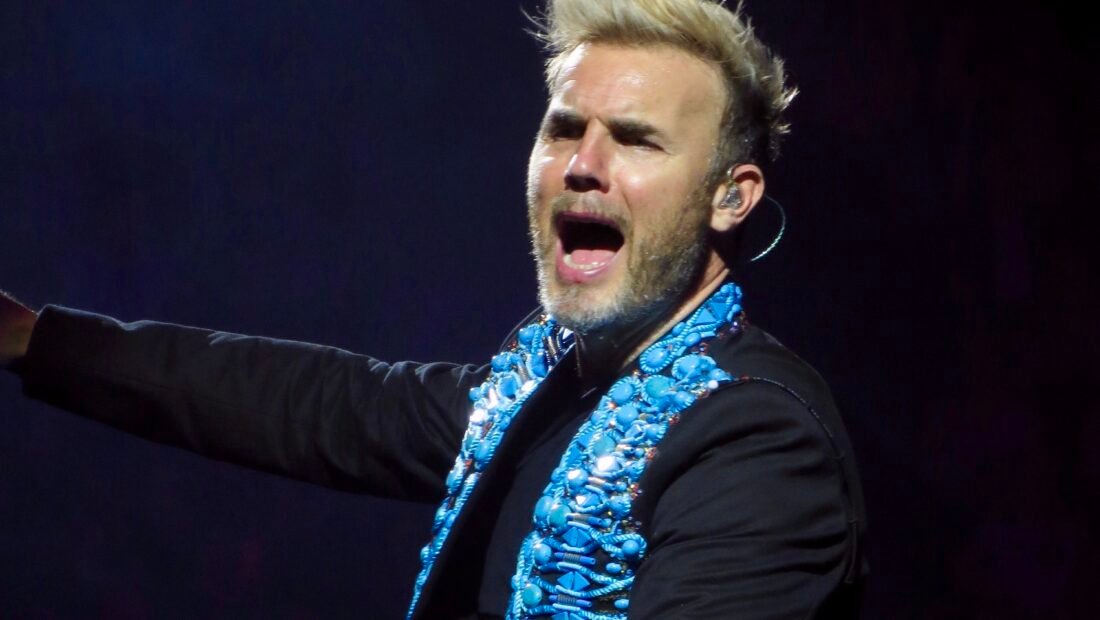
There is a particular kind of British pop career that is supposed to end twice: once when the boy band splits, and again when the comeback fails. Gary Barlow refused both endings. When Take That broke up in 1996, the obituaries for his solo career were written quickly and confidently. When the band returned a decade later to stadiums, a new generation of hits and one of the most successful reunions in British music history, the songwriter who had been blamed for being too serious turned out to be the reason the songs had lasted in the first place. More than three decades after he first sat at a piano in a Manchester audition room, Barlow is still the engine room of Take That, still writing, still touring, and still fielding the same questions from fans who grew up with his choruses.
This profile answers the questions readers ask most often about him: What is Gary Barlow’s net worth in 2026? How old is he, when is his birthday, and how tall is he? What is known — and what is honestly not known — about his weight? Who is his wife, who are his children, and who were his parents? It also covers his biography from Frodsham to fame, his best-known songs and albums both with Take That and as a solo artist, his family life away from the stage, and where to find him on Instagram.
Early Life & Biography: Where Did Gary Barlow Grow Up?
Gary Barlow was born on January 20, 1971, in Frodsham, a market town in Cheshire, England. That date makes his birthday January 20, and it makes him 55 years old as of November 2026. He was the second son of Colin Barlow and Marjorie Barlow, née Cowan, and he grew up in a household where music was not a career plan so much as a fascination that took over early. His parents supported the obsession rather than treating it as a distraction: by his early teens he was learning piano, studying the craft of the songwriters he admired, and performing in working men’s clubs and local venues around the North West.
The biography turns on an unusually precocious start. At fifteen, Barlow entered a BBC Christmas song competition with a composition called Let’s Pray for Christmas, which reached the semi-final stage and led to studio recording experience in London. Around the same period he was hired to provide musical backing for cabaret performers, an apprenticeship in professionalism that most teenage musicians never get. He was, by his own repeated account in interviews, less interested in being a pop star than in being the person who wrote the songs pop stars sang — a distinction that explains almost everything about the career that followed.
In 1989, Manchester manager Nigel Martin-Smith began assembling a British vocal group modeled in part on the American success of New Kids on the Block. Barlow was recruited as lead vocalist and principal songwriter, and the group that formed around him — Robbie Williams, Mark Owen, Howard Donald and Jason Orange — became Take That. His parents watched the gamble pay off at extraordinary speed. His father, Colin, died on October 15, 2009, a loss Barlow has spoken about with great candor; his mother, Marjorie, remains a frequently mentioned figure in his accounts of his upbringing. The family roots in Cheshire matter to the story because Barlow has never presented himself as a manufactured product: he was a working club musician who happened to be standing in the right city when British pop changed around him.
Career Highlights: The Songs and Albums That Built the Catalog
Take That’s first run, from 1990 to 1996, produced a run of hits that defined British pop in the first half of the decade. The group’s albums from that era — Take That & Party (1992), Everything Changes (1993) and Nobody Else (1995) — carried songs that Barlow wrote or co-wrote, including “Pray,” “A Million Love Songs,” “Back for Good,” “Relentless” favorites like “Relight My Fire” as a hit cover, and “Never Forget.” “Back for Good,” written by Barlow, became the band’s signature ballad and a number one in dozens of countries. When Robbie Williams left in 1995 and the remaining four finished their commitments before splitting in February 1996, Barlow was widely expected to inherit the solo spotlight.
Instead, the opposite happened — and that reversal is central to any honest biography. His debut solo album, Open Road (1997), reached number one in the UK and produced the number-one singles “Forever Love” and “Love Won’t Wait,” but his second album, Twelve Months, Eleven Days (1999), stalled commercially at the very moment Williams’s solo career exploded. Barlow withdrew from performing, concentrated on writing and producing for other artists, and rebuilt his reputation in the least glamorous way possible: by making other people’s records better. Across his career he has written fifteen UK number-one singles — twelve with Take That, two as a solo artist and one as co-writer of Robbie Williams’s “Candy” — and he has won six Ivor Novello Awards, British songwriting’s most respected honor. He was appointed an Officer of the Order of the British Empire (OBE) in the 2012 Birthday Honours for services to entertainment and charity.
The comeback, when it came, rewrote the record books. Take That re-formed without Williams in 2005 and released Beautiful World (2006), anchored by “Patience,” which won the Brit Award for Best British Single, and “Shine.” The Circus (2008) followed, with “Greatest Day” and “Rule the World,” the latter written for the film Stardust and performed at the closing ceremony of the London 2012 Olympics. Williams rejoined for Progress (2010), which became one of the fastest-selling albums in UK chart history, and its stadium tour broke ticket records. Later albums — III (2014), Wonderland (2017) and This Life (2023), the band’s ninth studio album, recorded largely in Nashville and Savannah — kept the group, now a trio of Barlow, Owen and Donald, at the top of the album chart into a fourth decade. In total, Take That have sold more than 50 million records worldwide.
Barlow’s solo discography stands alongside the band’s work rather than beneath it: after Open Road and Twelve Months, Eleven Days came Sing (2012), a collaboration built around the official Diamond Jubilee song “Sing,” co-written with Andrew Lloyd Webber and performed by the Military Wives Choir and musicians across the Commonwealth; Since I Saw You Last (2013); the big-band and orchestral Music Played by Humans (2020), another UK number one; and the seasonal The Dream of Christmas (2021). Television added a second public identity: he served as head judge on The X Factor UK from 2011 to 2013, created and judged the BBC’s Let It Shine in 2017, and judged ITV’s Walk the Line in 2021. He also moved into musical theater, co-writing the score for Finding Neverland and creating The Girls, later retitled Calendar Girls the Musical, with playwright Tim Firth. Readers who enjoy tracing how a songwriter’s catalog travels across decades of British life may also enjoy our explainer on whether scientists can really bring back extinct species like the woolly mammoth, a very different kind of comeback story.
Personal Life & Family: Who Is Gary Barlow’s Wife?
Barlow’s wife is Dawn Andrews, a former dancer who worked on Take That’s 1995 Nobody Else tour. The couple married on January 12, 2000, in an intimate ceremony on the Caribbean island of Nevis. The marriage has outlasted every phase of his career — the split, the wilderness years, the comeback and the stadium era — and it remained current news in 2026: in January of that year, coverage marked the couple’s 26th wedding anniversary, including tributes Barlow posted publicly. Dawn Barlow has generally stayed out of the entertainment industry spotlight, and the couple’s family life has been conducted with a privacy that contrasts sharply with the scale of his touring career.
The couple have three living children: a son, Daniel, born in 2000; a daughter, Emily, born in 2002; and a daughter, Daisy, born in 2009. Any complete account of the family must also include their fourth child, Poppy, who was stillborn in August 2012. Barlow has written and spoken about Poppy’s death with unusual openness for a public figure of his generation, including in his autobiography, and the family’s experience has informed his support for charities concerned with baby loss. That candor is part of why his later writing — which frequently returns to family, endurance and gratitude — connects with an audience that has aged alongside him.
His wider family story begins with his parents, Colin and Marjorie, in Frodsham, and Barlow has consistently framed his work ethic as something learned at home rather than in the music business. He is the second son in the family, and although his siblings have lived private lives away from publicity, his parents’ influence is a recurring theme in his memoirs: a father who worked and a mother who encouraged the music, and a home close enough to the club circuit that a talented teenager could turn practice into paid work years before most performers leave school.
How Much Is Gary Barlow Worth in 2026?
Celebrity Net Worth estimates Gary Barlow’s net worth at $125 million in 2026. That figure reflects more than record sales: as Take That’s principal songwriter, Barlow earns publishing royalties on one of the most durable British pop catalogs of the last forty years, and publishing is precisely the income stream that keeps paying when touring stops. In February 2026, he signed an exclusive global publishing agreement with BMG covering his entire songwriting catalog, including existing compositions and future releases — a deal whose structure underlines how valuable that catalog remains more than thirty years after “Pray.” Estimates elsewhere vary, and readers should know that lower figures, in the range of roughly $60 million to $105 million, circulate in less authoritative roundups; the $125 million Celebrity Net Worth figure is the most widely cited published estimate, and it is the one used here, clearly attributed rather than presented as an audited account.
Two physical questions follow him in search results, and they deserve straight answers. His height is most commonly listed at 5 feet 9 inches (175 cm), although a minority of profiles give 5 feet 8 inches; this profile uses 5 feet 9 inches as the dominant published figure. His weight is a different matter: no reliable published figure exists. Barlow has spoken publicly over the years about significant weight changes, diet and fitness, particularly after Take That’s split and again during his later health-focused years, but no dependable, sourced measurement is on record, and the precise numbers repeated by low-quality listing sites are unverified estimates. Rather than print a guess, this profile states the gap plainly: his weight is not reliably published.
His lifestyle, as far as it can be documented, is that of a working musician rather than a retired one. Touring with Take That remains a stadium-scale enterprise, his songwriting and theater work continues between band cycles, and his public presence on Instagram — where his verified official account is @officialgarybarlow — mixes tour photography, piano-at-home clips, family milestones he chooses to share, and charity work. The account is the most direct window he offers into a life that is otherwise deliberately kept at home in England, with his wife and children out of the professional frame.
Quick Facts
| Full Name | Gary Barlow OBE |
| Born | January 20, 1971, Frodsham, Cheshire, England |
| Age | 55 (as of November 2026) |
| Nationality | British (English) |
| Height | 5 feet 9 inches (175 cm) — most commonly listed figure |
| Partner/Spouse | Wife Dawn Andrews (married January 12, 2000) |
| Children | 3 living — Daniel (born 2000), Emily (born 2002), Daisy (born 2009); daughter Poppy was stillborn in 2012 |
| Net Worth | $125 million — Celebrity Net Worth (2026); lower estimates of $60–105 million appear elsewhere |
| @officialgarybarlow |
The bottom line
Gary Barlow’s career is the rare pop story in which the songwriter outlasted the phenomenon. The biography runs from a Frodsham childhood and club stages in the North West, through Take That’s first imperial phase, a solo collapse that would have ended most careers, and a comeback that made the band bigger in middle age than it had been in youth. His family — parents Colin and Marjorie, wife Dawn, and children Daniel, Emily and Daisy — has remained the fixed point while the industry cycled around him. With a net worth estimated at $125 million by Celebrity Net Worth, fifteen UK number-one singles as a writer, six Ivor Novello Awards and a catalog now administered under a 2026 BMG publishing deal, the questions fans ask about him have a consistent answer underneath: the songs were always the business, and the business is still running.