The water you can save without feeling it is the water you never see. It runs through a toilet at 2 a.m., slips past a worn faucet washer, and sprays onto a sidewalk while the lawn a foot away stays dry. Fix that invisible half first and a Texas household can cut use by roughly 20 to 30 percent — no shorter-shower timers, no brown grass by willpower, no daily sacrifice to remember.
The savings checklist
- Test every toilet with food coloring in the tank and a 20-minute wait; replace a leaking flapper — about $10 — if color reaches the bowl.
- Run a two-hour meter check with all water off; any movement means a leak somewhere in the house or yard line.
- Fit $5 faucet aerators that cut flow about 30 to 50 percent, and a low-flow showerhead in the $15 to $40 range that still feels full.
- Add a dual-flush converter kit for about $25 to save roughly 4,000 gallons a year per person on toilet flushes.
- Run dishwashers and washers only on full loads, scrape dishes instead of pre-rinsing, and keep cold drinking water in the fridge.
- Water the yard deeply and rarely, fix overspray, mulch beds 3 to 4 inches deep, and check for utility rebates that can cut outdoor use 20 to 40 percent.
- Read the meter for 2 minutes once a month, in gallons, and watch the trend.
Each item on that list is a one-time fix or a two-minute habit. The detail below shows why each one pays, how to do it without guesswork, and where Texas homes lose the most water without knowing it.
Find the leaks first
Start with the toilet, because it is both the biggest indoor user and the quietest leaker. Put a few drops of food coloring in the tank, do not flush, and wait 20 minutes. If color shows up in the bowl, water is slipping past the flapper or the fill valve while the toilet sits idle. A silent leak like that can waste well over a hundred gallons a day without a sound or a puddle. In most cases a new flapper — about $10 and about 10 minutes with no tools beyond your hands — restores the seal. If the leak continues, the valve seat or fill assembly needs attention.
Next, run the meter check. Turn off every faucet, appliance, and irrigation zone. Read the meter and write down the number, including the small dial or digital decimal. Leave the house alone for two hours — no flushing, no ice maker cycle if you can avoid it — and read it again. Any movement with everything off means water is going somewhere you did not send it: a toilet you missed, a dripping hose bib, a slab or yard line leak, or an irrigation valve that does not fully close.
Finish the leak sweep at the small points. A faucet dripping once a second wastes thousands of gallons a year, and the fix is often a $5 washer or cartridge. Walk the irrigation system while it runs once a month. A cracked head or a tilted nozzle can throw hundreds of gallons onto concrete in a single cycle.
Install-once fixtures that pay every day
Faucet aerators are the cheapest quiet win in the house. A standard aerator can be swapped by hand in under a minute. A low-flow aerator in the 1.0 to 1.5 gallons-per-minute range, at about $5 each, cuts faucet flow by roughly 30 to 50 percent. For handwashing, toothbrushing, and rinsing, most people cannot feel the difference, because the aerator mixes air into the stream and keeps the pressure feeling steady. Do the kitchen and the main bathrooms first, where taps run the most.
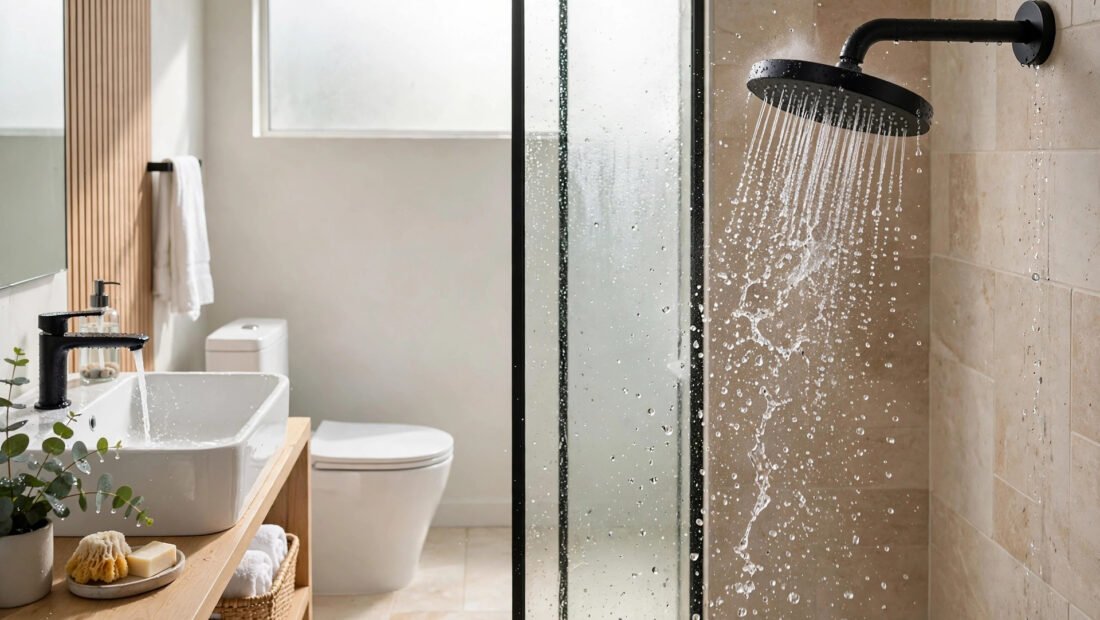
Showerheads carry a worse reputation than modern models deserve. Early low-flow heads felt thin. Current heads in the $15 to $40 range use air injection and better nozzle patterns to feel close to an older 2.5 gallon-per-minute head while using notably less. The install is a 5-minute job: unscrew the old head, clear old tape, add fresh thread tape, and hand-tighten the new one. One person switching can save thousands of gallons a year without changing shower length at all — the savings come from the fixture, not from discipline.
Toilets offer the third install-once gain. A dual-flush converter kit, at about $25, turns a standard toilet into one with a light flush for liquid waste and a full flush when needed. Fitted well, it saves roughly 4,000 gallons a year per person compared with flushing full volume every time. If a toilet is already due for replacement, choose a high-efficiency model at 1.28 gallons per flush rather than an older 3.5-gallon design. Do not rip out a working toilet early just for the rating — the payback is in choosing well at natural replacement time, the same logic that applies when you check what a new water heater costs installed and decide to buy the efficient option then, rather than replacing early.
Habits that cost no comfort
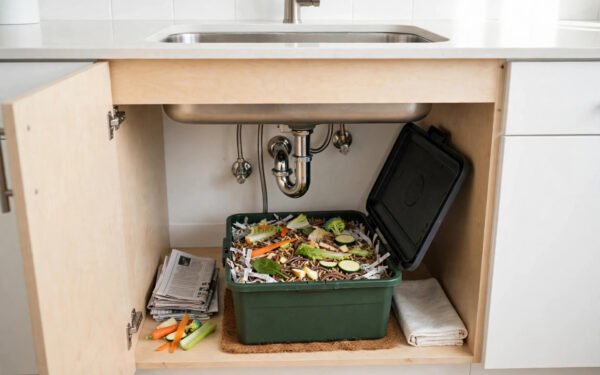
Full loads are logistics, not sacrifice. A dishwasher and a washing machine use nearly the same water on a half load as on a full one. Waiting a day to run a full load saves water with no change in how clean anything gets. Modern dishwashers also beat handwashing by a wide margin — a full Energy Star load uses only a few gallons, while washing the same dishes by hand under a running tap can use 20 gallons or more. Scrape plates into the trash or compost and load them. Pre-rinsing under the faucet undoes the machine’s advantage.
Two small tap habits help without nagging anyone. Turning the water off while brushing teeth or soaping hands takes seconds and stops a steady, pointless flow. Keeping a pitcher of drinking water in the fridge ends the Texas summer habit of running the tap until it turns cold, which can waste a gallon or more each time someone wants a glass. Cold-water laundry as the default also saves twice — less water heating energy, and modern detergents clean everyday loads well in cold water. None of these asks a household to enjoy anything less. They just stop water running when no one is using it.
The outdoor half, where Texas water really goes
Inside savings matter, but in Texas the yard is often the larger half of the bill. Irrigation can make up 50 to 70 percent of household use in the hot months. The best change is timing and depth: water deeply and infrequently — about 1 inch once a week for most established lawns, early in the morning before heat and wind steal it — rather than sprinkling a little every day. Deep, rare watering trains roots downward, where soil stays moist longer. Short daily watering keeps roots shallow and needy.
Mulch is the second outdoor lever. A 3 to 4 inch layer over beds cuts the water those beds need by roughly 30 to 50 percent, because it shades the soil, slows evaporation, and suppresses weeds that compete for moisture. Fixing overspray is free and instant: adjust any head watering a driveway or street, straighten tilted heads, and replace cracked nozzles. A 10-minute walk while the system runs, once a month, prevents the most wasteful pattern of all — paying to water concrete.
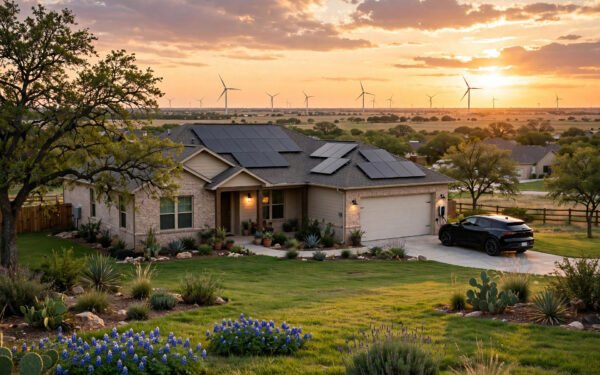
Plant choices finish the job over time. Texas native and well-adapted plants — salvias, lantana, muhly grass, agave, and similar tough stock — once established, often live on rainfall plus occasional deep watering, where thirsty turf needs constant help. Converting even part of a yard can save a large volume each year, and many Texas cities rebate turf replacement and smart irrigation gear. A smart controller that skips a cycle after rain and waters ahead of a heat wave can cut outdoor use by about 20 to 40 percent on its own. Before buying any outdoor upgrade, check your utility’s rebate page. For statewide context and rebate links, start with the Texas Water Development Board’s water conservation resources and then your city provider’s own program page.
A rain barrel is a modest, satisfying add-on. A 55-gallon barrel under a downspout fills fast in a Texas storm and gives you free water for pots and beds for days after. It covers the thirstiest containers, which you would otherwise water from a hose.
Appliances: buy efficient when replacement time comes
Do not replace a working washer or dishwasher early just to save water — the cost and waste of early replacement erase the point. Instead, make efficiency the tie-breaker when an appliance dies. A modern front-load washer uses roughly half the water of an older top-loader, on the order of 13 gallons a load against 30 or more. For a family running about 300 loads a year, that gap adds up to more than 5,000 gallons saved annually, with no change in routine. The same rule holds for dishwashers and toilets: buy the efficient model at the moment you already have to buy.
Water heaters belong in the same conversation because they shape how long taps run while people wait for hot water, and how much energy each gallon costs. When a heater fails, compare total installed cost and efficiency together rather than grabbing the cheapest tank on the shelf. A well-chosen replacement pays back quietly for a decade, which is exactly the pattern this whole approach depends on — small, durable choices that keep saving without daily attention.
The 2-minute monthly habit that keeps it true
None of the fixes above stays true forever. Flappers age, heads clog with mineral scale, irrigation nozzles shift. A 2-minute monthly meter habit catches the drift. Read the meter or the gallon total on the bill — gallons, not dollars — and compare it with the same month last year if you can. A sudden jump with no guests, no new plants, and no hotter weather is a leak until proven otherwise. A slow climb across three months often points to a toilet starting to slip or an irrigation schedule creeping longer.
Keep a simple note on the fridge or in a phone note: date, meter reading or bill gallons, and one line for anything you changed. Start tonight with the food-coloring test, fit aerators and a showerhead this weekend, and set the yard to deep and rare. The house will feel exactly the same — same showers, same clean dishes, same green beds — on roughly a fifth to a third less water.