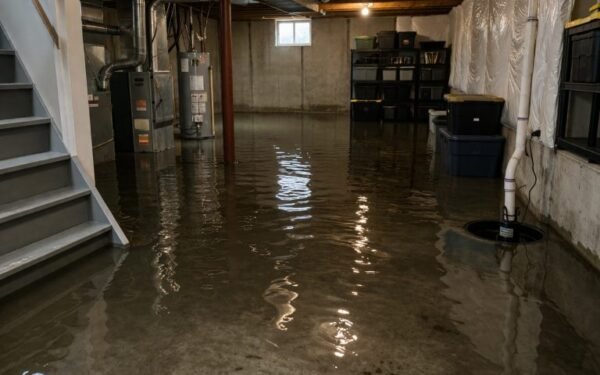
The same 50-gallon water heater is a $1,100 planned purchase or a $2,400 emergency, and the difference is nothing but timing — one is bought on a Tuesday with three quotes, the other on the wettest Saturday of the year with one. So what does a new water heater actually cost, installed? The short answer: a standard tank replacement professionally installed runs $900 to $1,800 in most markets; tankless runs $2,000 to $4,500; a heat-pump hybrid lands between at roughly $1,500 to $3,000. The useful answer separates the box from the labor, explains why quotes scatter, and works out which type deserves your money — because the expensive mistake in this category is rarely the price. It is the rushed decision the puddle forces.
The tank: the default, priced in two layers
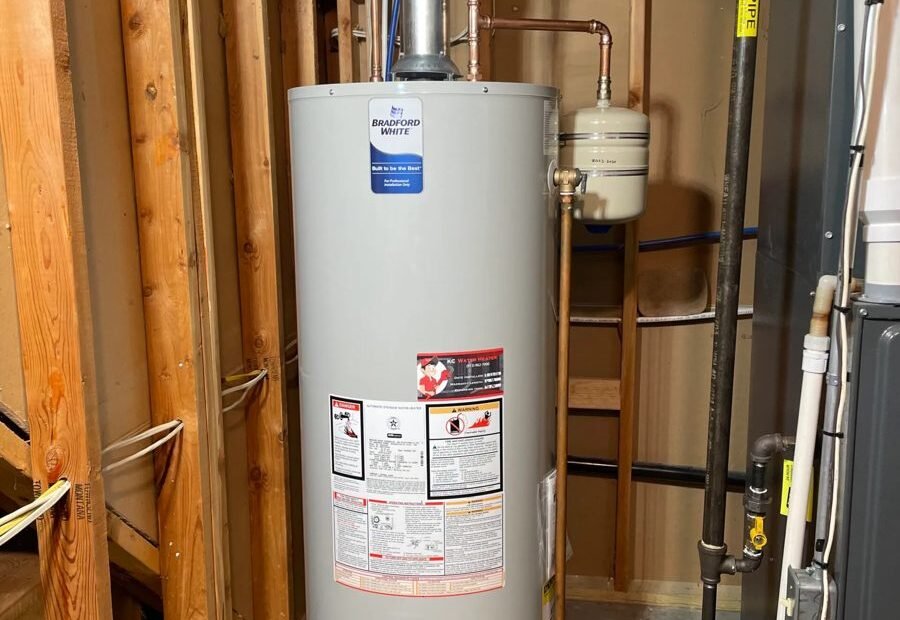
A standard tank heater of 40 to 50 gallons costs $400 to $800 for the unit, and professional installation adds $500 to $1,000, totaling the $900 to $1,800 band. The labor layer is not a mystery fee: it covers draining and removing the old tank (a heavy, sediment-laden object that must leave the house), setting and leveling the new one, water and gas or electrical connections, venting checks on gas models, permits where required, and disposal. A like-for-like swap in the same location with sound connections sits at the bottom of the band; every deviation — a relocated heater, a different fuel, venting that no longer meets code, a platform or drain pan to add — moves it upward. Tank lifespan runs 8 to 12 years, which makes the installed price a decennial subscription of roughly $100 to $200 a year, the correct frame for comparing it against the longer-lived alternatives below. Current market figures for your region can be sanity-checked against HomeAdvisor’s water heater installation cost data before signing anything.
Tankless: paying for the conversion, not just the heater
Tankless units cost $1,000 to $2,500 for the equipment and $1,000 to $2,000 to install — $2,000 to $4,500 all-in — and the installation half deserves scrutiny, because a first tankless installation is a conversion, not a swap: gas lines are commonly upsized, venting is entirely different, condensate must be drained, and electrical service may be added. Against that stand three durable advantages: a lifespan of 20 years or more (double the tank), endless hot water within the unit’s flow rating, and energy savings in the region of 25 to 35 percent for a typical household, because no standby heat is maintained in a tank all day. The honest cautions: flow is finite, so three simultaneous showers plus a dishwasher can exceed a single unit’s capacity; hard water demands annual descaling to protect the heat exchanger; and the payback period is long enough that a household planning to move within a few years may never collect it. Tankless is a twenty-year decision priced like one.
The hybrid: the quiet middle
Heat-pump water heaters — a tank with a small heat pump on top that moves heat from the surrounding air into the water — cost roughly $1,500 to $3,000 installed and run at a fraction of a resistance tank’s energy cost, commonly the cheapest hot water a household can buy per gallon. Their conditions are spatial: they need a decent volume of air around them (a garage or large utility space is ideal, a tiny closet is not), they cool and dehumidify that space as a side effect — a bonus in a hot garage, a consideration in a cold basement — and they are taller than the tank they replace. Lifespan runs 10 to 15 years. For a household staying put, with a suitable space, the hybrid is frequently the arithmetic winner of this entire article, and utility rebates in many regions narrow its premium over a standard tank to very little.
Repair or replace: the decision rules
Not every failure deserves a new heater, and the rules are clear enough to apply standing in the puddle. Repair when the tank is under about eight years old and the fault is a component: a thermostat or heating element at $150 to $300 fitted, a pilot or igniter issue, a leaking valve that is itself replaceable. Replace when the tank body itself leaks (the vessel has failed and cannot be repaired), when the unit is past ten years with any major fault, or when a repair quote exceeds half the cost of replacement. The maintenance act that buys a tank its full lifespan costs almost nothing: the sacrificial anode rod, a $30 part designed to corrode in the water’s place, checked or changed every few years, plus an annual drain of a few gallons to clear sediment. A garden hose and half an hour is the whole ritual, and neglected tanks in hard-water regions commonly die years early for want of it. One installation addition deserves its own line in any quote: a drain pan with a plumbed drain line under a heater located in a finished space — about $50 in parts during installation, against the price of the floor it saves in year nine.
Reading the quote: what a complete number includes
Installed prices scatter partly because quotes quietly include different jobs. A complete replacement quote should name, in writing: the unit’s make, capacity and warranty (tank warranties run 6 to 12 years and are a real price variable — the cheapest tank at the store often carries the shortest warranty, which is how it is cheapest); removal and disposal of the old unit; the permit and inspection where required; any code upgrades the jurisdiction will insist on at replacement, such as an expansion tank, seismic strapping or a drain pan; and the venting work on gas models. A quote $300 lower than its rivals that omits disposal and the expansion tank is not lower — it is unfinished, and the difference arrives as change orders on installation day, when your bargaining power is at its lowest because the old heater is already on the truck. Ask each bidder to price the same written scope and watch the field converge, exactly as with deck quotes: the honest spread for an identical job is usually a few hundred dollars, and outliers in either direction have something to explain.
Sizing: capacity is a household decision
Replacement is the one moment sizing can change, and the numbers are worth a minute. Tank sizing follows the household’s peak hour, not its daily total: the first-hour rating on the label — how much hot water the unit delivers in its busiest hour, tank plus recovery — should cover the morning of showers, laundry and dishes as your household actually runs it. A 40-gallon tank suits many one-to-two-bathroom homes; 50 gallons is the common family default; larger households or a soaking tub push beyond it. Upsizing beyond the need wastes standby energy for a decade, while undersizing produces the specific misery of the last shower. Tankless sizing runs on flow rate at your winter groundwater temperature — a unit rated generously at southern inlet temperatures delivers less in a northern January — which is why tankless quotes should state the assumed temperature rise, and why a household adding fixtures should have this conversation during the install rather than after it. Size for the house you have and the one you have firmly planned, not for guests who visit twice a year; they can shower at ten instead of nine for two mornings.
Permits and code deserve their own sentence in the budget, because replacement day is when a jurisdiction gets its look at your mechanical room. Many areas require a permit for water heater replacement and an inspection of the venting, the pressure-relief valve’s discharge path and, for gas units, the combustion air supply. Older installations frequently predate current code, so a legal replacement can include small upgrades — the expansion tank, the drain pan, seismic strapping in earthquake country — that a quote should itemize rather than ambush you with. None of this is optional spending that a cheaper bidder has cleverly avoided; it is the same job, priced completely or incompletely. Confirm the permit is in the quote, and keep the inspection sticker with the house records, where a future buyer’s inspector will look for it with approval.
The planning move that beats every price
Everything above converges on one recommendation: know your heater’s age and condition before it fails, and replace on your schedule, not its. The age is printed on the rating plate’s serial number (the first digits commonly encode month and year of manufacture). A tank at year nine or ten, in a finished space, is a candidate for a planned replacement with three quotes and a chosen model — and it is also the moment when adding a bathroom becomes realistic planning, since how much it costs to add a half bathroom and the household’s hot-water capacity are the same conversation. The emergency replacement, by contrast, buys whatever is on the truck, at whatever the day charges, with no time to consider the hybrid’s rebates or the tankless conversion. The water heater is the most plannable appliance in the house; the $900 difference between the planned and emergency price is the fee for not planning it.