
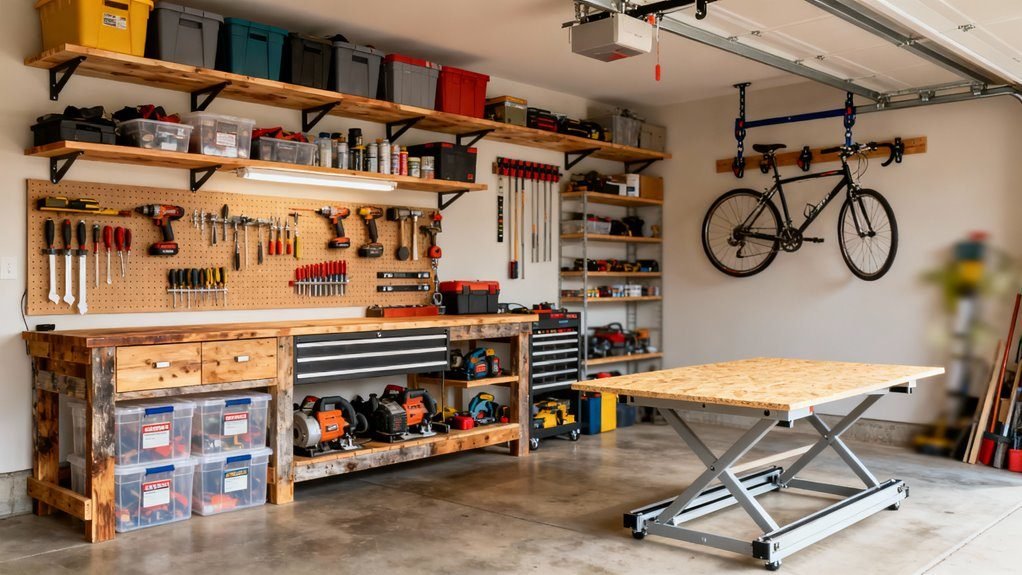
Our garage was where things went to be forgotten: boxes from three moves ago, tools I owned twice because I could not find the first one, and a car that had not fit inside since 2019. One spring weekend of ruthless sorting and $250 in storage systems turned it into the most functional room in the house. The car fits now. That still feels like a miracle.
How to make your garage more organized and useful is a systems problem, not a storage problem. Here is the system.
How Can I Make My Garage More Organized and Useful?
Start with the purge, because no organization system survives too much stuff. Pull everything out (yes, everything), sort into keep, donate, trash, and relocate, and be brutal: the broken, the duplicated, the aspirational (the kayak you have not touched in five years). Most garages hold 30% stuff that should leave. The purge is the hardest part and the most transformative; every shelf you buy afterward holds things you actually use.
Then zone the garage like a workshop. How can I make my garage more organized and useful as actual space? Assign zones: parking zone (keep it clear, mark it with floor tape if needed), tool zone (pegboard or wall panels near the workbench), sports and outdoor gear zone (by the door you exit through), seasonal storage zone (overhead or high shelves), and a project zone (folding workbench). Zones prevent the natural entropy where everything migrates to the center of the floor.
- Purge first, ruthlessly. 30% of garage contents should leave. Sort everything before buying storage.
- Zone the space. Parking, tools, sports, seasonal, project. Every item has a zone.
- Pegboard or slatwall for tools. $50-$150. Every tool visible, every tool with a home.
- Overhead ceiling storage. $100-$200 per rack. Seasonal and rarely-used items up high.
- Heavy-duty shelving units. $80 each. Labeled bins, not piles. Bins beat shelves for categories.
- Wall hooks for bikes and ladders. Get them off the floor. $15 per heavy-duty hook.
- Magnetic strips for small metal tools. $15. Wrenches and bits visible and grabbable.
- Rolling workbench. Folds or rolls away. Project space that disappears.
- Floor coating or mats. Epoxy or interlocking tiles. Transforms the feel, protects concrete.
- Label everything. Bins, shelves, zones. Labels are the system remembering for you.
Go vertical aggressively. Garage floors are for cars and walking; everything else belongs on walls or ceilings. Overhead racks hold the holiday decorations and camping gear you touch twice a year. Wall-mounted cabinets keep chemicals and paints locked and organized. Slatwall panels with hooks adapt as needs change. The goal is a floor you can sweep in five minutes, because a sweepable floor is a usable garage.
Keeping It That Way
Organization decays without maintenance rituals. The ones that work: a one-in-one-out rule for garage items, a 10-minute reset every Sunday (everything back to its zone), and an annual spring purge before the entropy rebuilds. Label makers are the secret weapon; labeled bins get used correctly by the whole household, unlabeled bins become mystery boxes within months.
Also, set a parking test: if the car does not fit, something must leave before anything new enters. The car is the canary in the garage’s coal mine. When the car gets evicted to the driveway, the system has failed, and it is time for another purge.
Quick Answers to Common Questions
How much does it cost to organize a garage?
$200-$500 covers pegboard, shelving, bins, and hooks for a typical two-car garage. Overhead racks add $100-$200 each. The purge itself is free and the most impactful step.
What is the best garage storage system?
A combination: pegboard/slatwall for tools, heavy-duty shelving with labeled bins for categories, overhead racks for seasonal, and wall hooks for bikes and ladders. No single product does it all.
How do I organize a small one-car garage?
Go vertical harder: wall panels floor to ceiling, overhead storage, fold-down workbench. Zone strictly and purge more aggressively; small garages have zero tolerance for maybe-someday items.
Should I epoxy my garage floor?
It looks great, protects concrete, and makes cleaning easy, at $3-$7/sq ft DIY or $7-$12 pro. Do it after organizing, on a clean empty floor, in mild weather for curing.
My Garage Organization Checklist
- Purge everything first. Keep, donate, trash, relocate. Be brutal.
- Define zones. Parking, tools, sports, seasonal, project.
- Walls and ceiling for storage. Pegboard, shelves, overhead racks. Floor stays clear.
- Bin and label every category. Labels make the system survive the household.
- Sunday 10-minute reset. Maintenance beats re-organization.
What I Would Do Next
A year later, the garage still works: the car parks inside every night, I can find every tool, and the zones have held. The Sunday reset takes ten minutes because everything has a home. The miracle was not the storage products; it was the purge and the zones. Buy less, sort more, label everything, and the garage stays the hardest-working room in the house instead of the most forgotten one.
How to make your garage more organized and useful: purge ruthlessly, zone the space, store vertically, and maintain with tiny rituals. $250 and a weekend buys the most functional room in the house.
The car fits. Start with the purge and join me in the miracle.
The often-missed opportunity is the wall above the workbench: a combination of pegboard, small parts organizers, and a shelf for manuals creates a command center that keeps projects moving. And designate one shelf as the donation staging area; items headed out of the garage go there immediately instead of migrating back into zones. The staging shelf is the pressure valve that keeps the whole system honest.
Related reading: How Do I Plan a Surprise Anniversary Trip.
Related reading: How Do I Avoid Baggage Fees on Budget Airlines.
Related reading: What Should I Know Before Driving in Another Country.
For official guidance, check out the Department of Energy home efficiency guides and Family Handyman project walkthroughs.



