
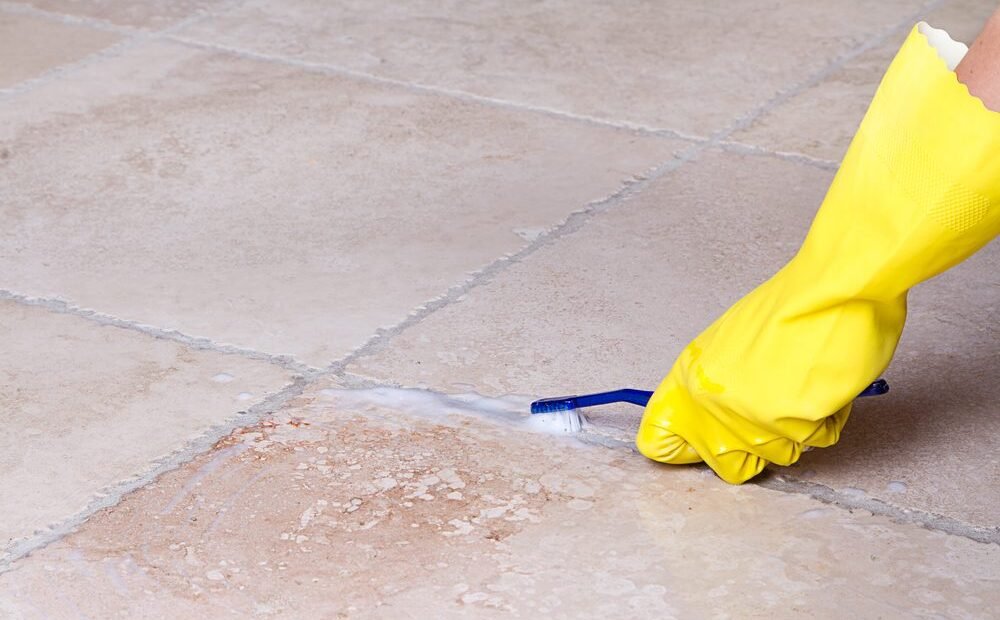
I spent a Saturday on my hands and knees with a toothbrush and a Pinterest-famous vinegar solution, and the grout looked exactly the same at 5 p.m. as it had at 9 a.m. That failure sent me down a rabbit hole of actually testing grout-cleaning methods, and the results surprised me: the best methods are not the most popular ones.
Here is the best way to clean grout between tiles, ranked by what actually works, from daily maintenance to the nuclear option.
What Is the Best Way to Clean Grout Between Tiles?
The method that works best for most people is also the simplest: a paste of baking soda and water, applied to the grout, scrubbed with a stiff grout brush (not a toothbrush; the $8 grout brush with stiff bristles is a different universe of effectiveness), then sprayed with hydrogen peroxide and scrubbed again. The baking soda provides mild abrasion, the peroxide bleaches and disinfects, and the stiff brush does the real work. This handles 80% of grungy grout in one pass.
For stubborn staining, step up to oxygen bleach (sodium percarbonate, sold as OxiClean and similar). What is the best way to clean grout between tiles when baking soda is not enough? Mix oxygen bleach with hot water per the package, apply to grout lines, let it dwell 15 to 30 minutes, scrub, and rinse. It is dramatically more effective than vinegar on organic staining and far safer than chlorine bleach on colored grout. Chlorine bleach whitens but can weaken grout over time and discolors colored grout permanently; oxygen bleach is the safer heavy hitter.
- Baking soda paste + stiff grout brush. The 80% solution. Paste, scrub, spray hydrogen peroxide, scrub again.
- Oxygen bleach soak for stubborn stains. Hot water mix, 15-30 minute dwell, scrub, rinse. Safe for colored grout.
- Steam cleaner for chemical-free deep cleaning. A $50-$100 steam mop with a grout attachment blasts out embedded grime with heat alone.
- Grout pen for cosmetic refresh. When grout is clean but stained permanently, a grout colorant pen restores uniform color.
- Regrout or replace failing grout. Cracked, crumbling, or missing grout needs replacement, not cleaning.
- Seal after cleaning. Grout sealer applied to clean, dry grout keeps it clean dramatically longer.
- Avoid these: vinegar on natural stone, chlorine bleach on colored grout, and wire brushes on glazed tile.
The tool matters more than the chemistry. A stiff-bristled grout brush, an old electric toothbrush for detail work, or a steam cleaner will outperform any cleaning solution applied with a soft cloth. Grout is textured and recessed; cleaning it requires mechanical agitation, full stop. My Saturday failure was not the vinegar’s fault alone; it was the toothbrush’s.
Keeping It Clean: The Part Nobody Does
Clean grout gets dirty again unless you change the conditions. Seal the grout after deep cleaning; penetrating sealer fills the pores that trap dirt, and it is the single highest-leverage maintenance step. In showers, squeegee after use and run the exhaust fan; in kitchens, wipe spills promptly and mop with a pH-neutral cleaner rather than harsh chemicals that degrade sealer. Reseal annually in wet areas. Ten minutes of sealing saves hours of scrubbing later.
Also calibrate your expectations: grout in a shower will never stay showroom-white without constant effort. Choosing a mid-tone grout color at installation is the smartest grout decision, but for existing white grout, sealing and ventilation are your best friends.
Quick Answers to Common Questions
Can I use bleach on grout?
On white grout, occasionally, but it weakens grout over time and ruins colored grout. Oxygen bleach is safer and nearly as effective. For regular maintenance, avoid chlorine bleach.
Why does my grout get dirty again so fast?
Unsealed grout is porous and traps dirt, soap, and oils. Sealing after cleaning is the fix. In showers, inadequate ventilation accelerates re-soiling.
Should I just regrout instead of cleaning?
If grout is cracked, crumbling, or permanently stained after proper cleaning, regrouting is the answer. It is labor-intensive but transforms the tile. For intact but dirty grout, clean and seal first.
Does a steam cleaner really work on grout?
Yes, very well. Heat and pressure extract embedded grime without chemicals. It is the best chemical-free option and excellent for maintenance cleaning.
My Grout-Cleaning Checklist
- Get a stiff grout brush. The tool matters more than the cleaner.
- Baking soda paste + peroxide. Scrub hard. This handles most grime.
- Oxygen bleach for stubborn stains. Hot mix, dwell 15-30 min, scrub, rinse.
- Seal clean, dry grout. Penetrating sealer. The maintenance multiplier.
- Maintain with ventilation + neutral cleaner. Prevention beats the annual scrub-a-thon.
What I Would Do Next
My kitchen grout went from gray-brown back to its original light gray in one afternoon with the baking soda method and a proper brush, and the sealer I applied afterward has kept it there for a year. The toothbrush Saturday was not wasted; it taught me that technique beats chemistry. Get the brush, seal afterward, and never kneel in vain again.
What is the best way to clean grout between tiles? Baking soda paste plus a stiff brush and hydrogen peroxide for most jobs, oxygen bleach for stubborn stains, steam for chemical-free deep cleaning, and sealer afterward to keep it clean.
The brush is the hero. The sealer is the epilogue. Everything else is supporting cast.
For grout that is structurally fine but permanently discolored, grout colorant is the cosmetic miracle. It is essentially paint for grout lines: you paint it on, wipe the tile clean, and the grout looks new in a uniform color of your choice. A $15 bottle covers an average bathroom floor, and unlike cleaning, the result is permanent until the grout itself fails. When scrubbing stops working, colorant is the next step before regrouting.
Related reading: What Is the Best Paint Finish for Kitchen Walls.
Related reading: What Is the Best Flooring for Homes with Dogs.
Related reading: How Can I Make My Garage More Organized and Useful.
For official guidance, check out the Department of Energy home efficiency guides and EPA guidance on indoor air quality.




1 Comment