
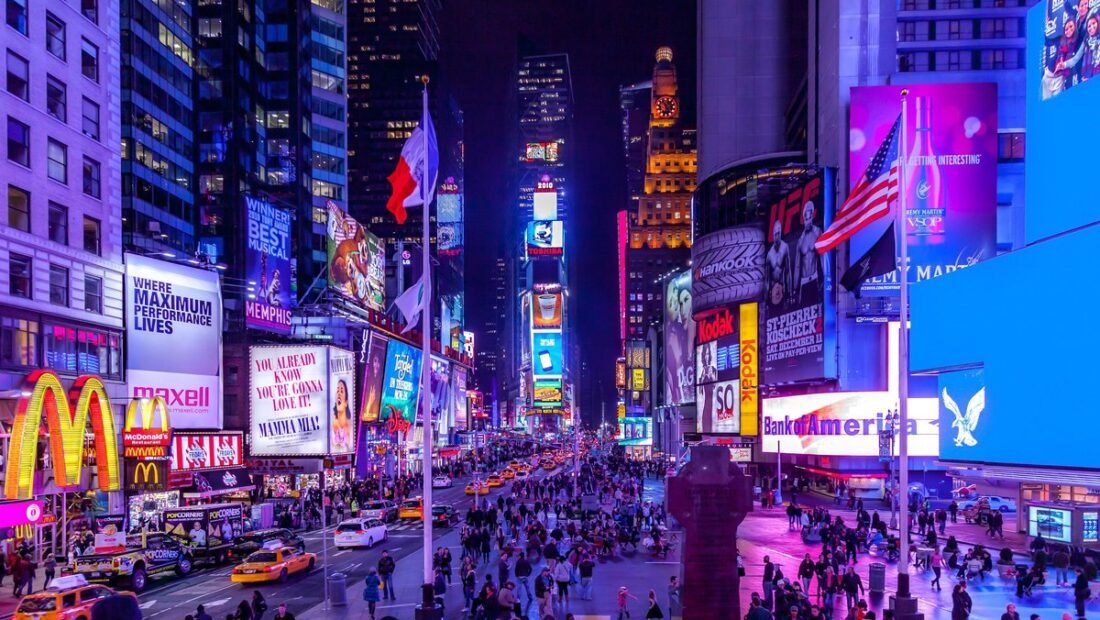
New York has a talent for separating visitors from their money — an $8 coffee here, a $30 museum there, a restaurant you “might as well” try because you are standing in front of it. By Sunday night the total can be a genuine surprise, and not because anything outrageous happened; the city simply charges by the hour for being in it. The good news is that New York is also unusually honest about its price tiers. The same weekend can be run at three completely different costs without changing the skyline, and the difference between them is decided almost entirely before you arrive. Excluding hotel and flights, plan on $250–$400 for a lean weekend, $600–$900 for a comfortable one, and $1,200 or more when the brakes come off. Here is what each tier actually buys, category by category.
Food: the biggest variable, the best playground
No category separates the tiers like food, and no city rewards the lean version like this one. Lean, $50–$75 a day: breakfast from a bodega or bagel shop at $5–$8 (the bacon, egg, and cheese is a cultural institution and costs less than a fancy coffee), lunch from a halal cart, a deli counter, or by-the-slice pizza at $10–$15, and dinner at casual places in the outer boroughs or in Chinatown at $20–$30. This is not deprivation dining — some of the best food in the city costs under $15, because New York’s cheap eats compete at a level most cities’ good restaurants never reach. Comfortable, $100–$150 a day: a sit-down brunch at $25–$35, a proper lunch at $20–$30, and dinner at a well-reviewed restaurant at $50–$80 with a drink. Splurge, $200 a day and up: the tasting menus and the famous rooms. Two steering tricks apply at every tier. Lunch menus at serious restaurants often run about forty percent cheaper than dinner for the same kitchen, so eat your ambition at noon. And cocktails run $16–$20 in Manhattan, while happy hours, typically four to seven, cut that nearly in half — the city’s drinking is priced for people who arrive at five. Knowing how to find good local restaurants while traveling matters more here than anywhere, because the difference between the tourist-priced room and the beloved one is often a single street.
Getting around: the glorious bargain
Transit is where New York gives money back. The subway and buses cost $2.90 a ride, and the seven-day unlimited option at $34 pays for itself in twelve rides — a weekend of active sightseeing clears that by Saturday afternoon. Check the official OMNY fare information before you go, since payment is now tap-based and the weekly cap does the math for you automatically. The subway is also the fastest way across the city at most hours, so the cheap option and the good option coincide, a rare event in travel. Taxis and rideshares earn their money only in specific situations: late at night, in punishing weather, with luggage, or split four ways across a short hop. Budget a small line for one or two of those, and let the trains carry the rest of the weekend at a cost that rounds to nothing against the food budget.
Getting in: attractions, decks, and Broadway
The paid sights price honestly too. Major museums run $25–$30 — but many have pay-what-you-wish hours or free evenings, and the Metropolitan Museum is pay-what-you-wish for New York State residents, so the calendar matters as much as the wallet. Observation decks run $35–$45 and are worth exactly one visit, chosen for the clearest day of the weekend. Harbor cruises sit at $30–$50. Broadway is the category with the widest spread: full-price seats run $100 to $300 and beyond, while the TKTS booths, digital lotteries, and rush tickets cut deeply for the flexible — the same show, the same night, at a fraction of face value, if you let the city choose which production you see. And the ballast under the whole budget is that a full day of world-class New York costs nothing at all: Central Park, the High Line, the Brooklyn Bridge at dawn, the Staten Island Ferry past the Statue of Liberty, the great libraries and cathedrals. A lean weekend is not a weekend of closed doors; it is a weekend that lets the free city carry the days and spends its money on food.
The zero-dollar day, planned properly
The free city deserves more than a passing mention, because a well-built free day is not the budget option — on any tier, it is often the best day of the trip. Start with the Staten Island Ferry at morning: free, twenty-five minutes each way, and the harbor view of the Statue of Liberty that the paid cruises sell, from a boat that is simply going to work. Walk the Brooklyn Bridge before the crowds thicken, then let Central Park take the middle of the day — eighty-plus acres of designed landscape with the reservoir, the ramble, and street performers who are frequently better than ticketed entertainment. The main branch of the Public Library is free, gorgeous, and has exhibitions; the great cathedrals ask nothing at the door. Time it right and the day ends at a museum’s free evening, which most of the majors offer on a weekly rotation. Total spend for the day: the subway rides and whatever you ate. Visitors who build one of these into a splurge weekend report, reliably, that it competes with the $300 day — the city’s masterpieces were mostly built as public goods, and they still work that way.
Shopping and souvenirs: the line item that sneaks
Every tier should carry an explicit shopping number, because unbudgeted shopping is how New York weekends quietly overrun: the city is a department store with a subway system. Fix the figure in advance — $50 on the lean plan, $100 comfortable, $200-plus when shopping is a purpose of the trip — and let it be a real allowance rather than a hope. Two ground rules keep it honest. Souvenirs bought in the neighborhoods where things are actually made or sold to locals — a Chinatown bakery box, a Strand bookstore tote, a deli’s own hot sauce — cost less and mean more than the airport-grade merchandise near the big sights, which is priced for people with no time left to compare. And the Fifth Avenue windows are a free attraction of the first rank: look at everything, photograph freely, and let the allowance decide what crosses the threshold from admired to owned. The discipline is not about denial; it is about making sure the thing you bring home was chosen, not accumulated.
The three weekends, itemized
Lean, $250–$400: about $150 of food across the weekend — bodegas, carts, one Chinatown feast; $34 of transit; $50–$100 of attractions — one paid museum plus the entire free city; and $20–$50 of incidentals. Comfortable, $600–$900: about $350 of food — brunches, two good dinners, happy hours used well; the same $34 of transit; $150–$250 of attractions — a deck, a museum, a TKTS Broadway seat; and $50–$100 of shopping and incidentals. Splurge, $1,200 and up: $500 or more of dining, $100 or more of cars, $300 or more of entertainment at full price, $200 or more of shopping. Set against each other, the tiers buy the same skyline and wildly different dinners — which is why the honest planning question is not “what does New York cost” but “which category do I want to feel rich in.” Pick one per trip. The food-first weekend and the Broadway-first weekend are both excellent; the everything-first weekend is the one that stings in the airport on the way home.
The airport decision, made before you land
The weekend’s first spending decision happens at arrivals, and it is worth making on the plane rather than at the curb. From JFK, the AirTrain plus subway combination costs about $11.50 and takes roughly an hour; the flat-rate taxi lands near $70 with tip and tolls. From LaGuardia, a free bus connection to the subway makes the whole trip into Manhattan cost a single $2.90 fare — arguably the best airport deal in America. Newark’s airport train station puts you at Penn Station for about $15.75. None of this is news to New Yorkers, which is exactly the point: the transit options are the local default, the taxi queue is priced for the tired and the uninformed, and a visitor who decides in the air saves the price of a good dinner before the weekend has properly started.
The daily cash habit that keeps it true
Whichever tier you choose, one small system keeps the plan and the reality acquainted: divide the weekend total by the days and carry roughly that amount as the day’s budget, checking the running total once each evening — thirty seconds, no spreadsheet. Money spent by lunch is information, not failure; it tells you whether dinner is the Chinatown feast or the tasting menu, while the choice still exists. New York rewards the prepared out of all proportion: the city is not actually more expensive than other great cities, it is simply faster, denser, and more tempting per block. A number chosen in advance turns that density from a leak into a buffet.



1 Comment