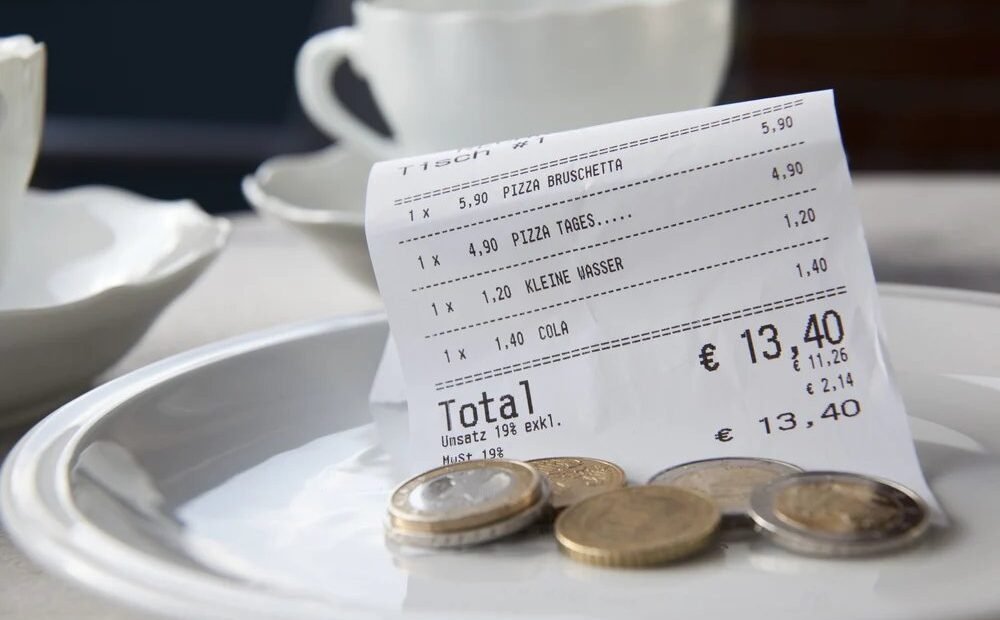
Coins left on a Paris café table. Nothing at all in Tokyo — the money would be chased after you and returned. Twenty percent in New York, calculated on the pre-tax total, while your dining companions silently audit the math. Tipping is the travel skill most likely to cause a small, hot moment of shame at the end of an otherwise lovely meal, because the rules are invisible, local, and enforced entirely by facial expressions. The good news: the world divides into a handful of patterns, and once you know the pattern of the place you are in, you will be close enough everywhere. Here are the questions travelers actually ask, answered country pattern by country pattern.
Is service already included in Europe?
Often, yes — and this is the single fact that prevents the most expensive mistake, double-tipping. In France, service is included by law (service compris, a service charge built into prices): nothing further is owed, though rounding up or leaving five to ten percent in cash for genuinely good service is a welcome gesture, never a requirement. Spain and Portugal work similarly — service included, small extras appreciated. The United Kingdom and Ireland sit in between: ten to twelve and a half percent is customary, and it is frequently added to the bill as an optional service charge — check the bill before adding anything, because paying the charge and then tipping on top is the classic visitor’s donation. Germany and Austria expect you to round up by roughly five to ten percent, handed to the server directly or stated as you pay (“keep the change” energy) rather than left on the table. Greece runs at five to ten percent or a simple round-up. Eastern Europe — Hungary, the Czech Republic, Poland — expects closer to a full ten percent in restaurants, especially in tourist areas, and Turkey likewise works around ten percent.
What about Asia — and is Japan really different?
Yes, Japan is really different: tipping is not customary there, there is no infrastructure for it, and leaving money can create confusion or even a small chase down the street to return it. The correct tip in Japan is a sincere thank-you, possibly with a small bow; excellent service is simply the standard, priced in. Southeast Asia is softer: in Thailand, Vietnam, and Indonesia tipping is not traditional, but five to ten percent in tourist restaurants is genuinely appreciated, and rounding up for street food vendors — letting them keep the small change — is simple kindness in economies where it matters. The through-line across the region is that small cash, offered warmly, is received as a bonus rather than an obligation, which is a pleasant arrangement for everyone.
Latin America, the Middle East, and Africa?
Latin America’s anchor number is ten percent: standard in Mexico, Brazil, Argentina, and Chile — though check the bill first, because it is often already included as servicio, and the double-tip trap is set there too. The Middle East runs ten to fifteen percent in tourist areas of Egypt, Jordan, and the UAE; in Egypt especially, small tips — baksheesh — are woven into daily life far beyond restaurants, so keep a supply of small bills and treat the practice as part of the local economy rather than an ambush. Israel’s standard is twelve to fifteen percent. In Africa the map varies more: South Africa expects ten to fifteen percent, Morocco works at five to ten, and elsewhere the honest answer is to ask locally — a hotel concierge or a guide will tell you the real number in one sentence, and asking is never shameful. Australia and New Zealand resemble Western Europe: no obligation, with rounding up or ten percent for great service welcomed.
How do I tip correctly on the mechanics?
Three habits travel everywhere. Cash beats card for the tip itself, even when the meal goes on plastic: in many countries a card tip passes through systems that delay, dilute, or occasionally swallow it, while cash in the server’s hand arrives whole and immediately. Check the bill before doing any arithmetic — for the service charge, for items you did not order, and for the quiet mutations that mark out the tourist trade; the bill is where tipping questions and how to avoid tourist scams in popular cities shake hands. Hand the tip over or state it as you pay in the round-up cultures, rather than leaving coins to be interpreted — the gesture is part of the thank-you, and in much of Europe money left silently on a table reads as forgotten change. Keep small denominations for exactly this purpose; the traveler with only large notes ends up either over-tipping hugely or apologizing, and neither is the local custom.
Beyond restaurants: guides, drivers, and hotel staff?
The restaurant rules get the attention, but the rest of the trip has hands out too — more quietly, and mostly deserved. Tour guides on group excursions are commonly tipped the equivalent of a few dollars per person for a half day, scaling up toward ten or twenty dollars for a full day with a guide who was genuinely good, and private guides sit at the top of that range and beyond. Taxi and rideshare drivers follow the restaurant pattern of their country in miniature: nothing expected in much of Western Europe beyond rounding up to the nearest sensible figure, the same ten-percent logic in the ten-percent countries, and no tip where the culture does not tip at all. Hotel staff run on small, steady amounts rather than percentages: the equivalent of a dollar or two per bag for the porter who actually carries them, and a similar small amount per night for housekeeping, left daily rather than in a lump at checkout, because the person who cleans your room on Tuesday is frequently not the person who cleans it on Friday. In the baksheesh economies of Egypt and similar places, these small transactions multiply — doormen, bathroom attendants, the man who appears with a flashlight at the tomb — and the correct response is a pocket kept deliberately stocked with small notes and a cheerful absence of resentment: it is a wage system wearing a costume, and the amounts are small by any traveler’s standard.
Why is the card machine asking me for twenty-five percent?
A modern ambush deserves its own answer. Card machines in tourist districts worldwide have begun presenting tip prompts — fifteen, twenty, twenty-five percent — calibrated to American habits in countries where the local norm is rounding up, and the screen appears at the exact moment of maximum social pressure, server watching, queue behind you. Understand what it is: software, set by someone who profits from your embarrassment. The correct move is unembarrassed and takes two seconds: choose “other amount” or “no tip” on the machine, and leave the locally correct tip in cash on the table, which is what the server would have received in the world before the screen existed. The same logic applies at home-country counters where prompts appear for counter service that never had a tipping norm. A suggested percentage is a suggestion engineered by a payment company. The custom of the country, and the service actually rendered, are the only two inputs that deserve your money.
And in the United States, for visiting friends?
The question runs in reverse often enough to deserve an answer, because the US is close to a global outlier and visitors consistently under-tip there without meaning any harm. In American sit-down restaurants, eighteen to twenty percent of the bill is the working norm, and it is not really optional in the local moral economy — servers’ base pay is structured around it. Bartenders work at a dollar or two per drink, taxi and rideshare drivers at ten to fifteen percent, hotel housekeeping at a few dollars a night, and the coffee-shop tip jar is genuinely optional. None of this is intuitive from outside, all of it is load-bearing for the people receiving it, and the kindest briefing you can give a friend visiting America is exactly this paragraph: the percentages look strange because the system is strange, and within the system, they are simply the price of the meal.
What if I genuinely do not know?
Then use the global safe default: ten percent, in cash, given warmly. It is rarely offensive anywhere, usually appreciated, and never wildly wrong — in no-tipping cultures it is at worst a puzzling kindness, and in high-tipping cultures it is merely light. For the fine detail beyond these answers, the country-by-country summary of tipping customs is the reliable pocket reference to check the night before a new country. And do not let your home habits bully you abroad: the American twenty percent, exported wholesale, is unnecessary in most of the world and quietly expensive across a long trip. Tip like the place you are in, not the place you are from, and the end of the meal goes back to being about the meal.