
It usually starts friendly. A petition to sign for a good cause. A bracelet that someone has somehow already tied onto your wrist. A taxi whose meter is, the driver explains with real sorrow, broken. Tourist scams are not random bad luck — they are plays, run hundreds of times a week in the same squares and stations, and they succeed by exploiting predictable visitor mistakes rather than visitor stupidity. That is the hopeful part: mistakes can be corrected in advance, cheaply. So the order here follows what matters most — the mistakes that make a traveler a target first, the classic plays second, and the short arrival protocol that shuts most of them down at once.
Mistake one: navigating like a lost person in public
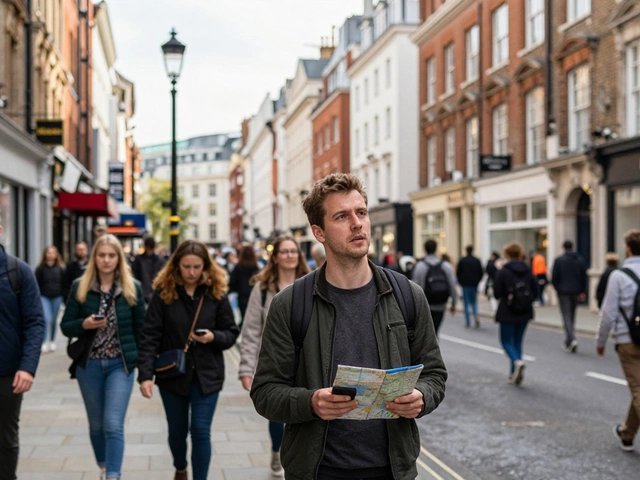
The foundational mistake is stopping in a crowded place, phone held high, map rotating, wearing the international uniform of the disoriented. Every distraction scam in the world begins with a mark who is visibly not paying attention to their surroundings or their bag. The correction is procedural, not psychological: know the route before you leave the hotel, duck into a café or shop doorway to consult the map rather than performing the consultation mid-square, and keep the bag zipped, closed, and against your body in crowds, on transit, and in queues. Confidence is partly acting: a traveler who walks with purpose and checks directions discreetly is simply a worse prospect, and the professionals running these plays are, above all, efficient choosers of prospects.
Mistake two: accepting unsolicited help, gifts, and friendship
The second mistake is politeness without a filter. The plays are variations on one mechanism — something is given, then payment is demanded. The friendship bracelet tied onto a wrist near a famous basilica, followed instantly by a hand out for money. The sprig of rosemary, the rose, the “free” blessing — never free, and refusing gets theatrical because the theater is the point: embarrassment is the collection tool. The smiling local who insists on showing you to a “better” bar, shop, or viewpoint is steering you somewhere his commission lives, and the bill at the end of that hospitality is the business model. The defense is a warm, boring formula, used identically every time: a smile, “no, thank you,” no hand extended, no stopping. Anything physically placed on you can be physically set down. Nothing about this requires rudeness — it requires recognizing that in the great tourist squares, unsolicited generosity from strangers is a trade, and you are allowed to decline trades.
Mistake three: carrying your whole financial life in one pocket
The third mistake turns a bad moment into a ruined trip. Pickpocketing is the most professional and least dramatic of the tourist crimes — a bump in a crowd, a staged commotion, a shoving match on a boarding train that exists only to move your attention while a hand works — and its damage depends entirely on what was in the pocket. Carry one card and a small amount of cash in your daily wallet; the second card, the main cash, and the passport live in the hotel safe or a hidden money belt, because a loss measured in one card and forty euros is an anecdote, while a loss measured in everything is a consulate visit. The money mechanics deserve the same care as the physical ones — short-changing and currency confusion are their own play family, and the best way to exchange currency before a trip covers the defenses on that side. Phone discipline belongs here too: the phone left on the café table, or wielded loosely at the square’s edge, is the single most-grabbed object in European tourism.
The classic plays, so you recognize the costumes
The distraction: something spills on you, a petition needs signing, a passerby helpfully points out a mess on your jacket — and while you process it, your bag is processed by someone else. The closed attraction: a friendly voice at the station explains that the famous sight is closed today — holiday, strike, private event — but luckily he knows a wonderful alternative, which is a shop. The sight is open. The fake official: plain-clothes “police” flash a wallet, announce an operation against counterfeit money, and ask to inspect yours; real police do not audit tourists’ wallets on the street, and the answer is to offer to walk to the nearest station together, at which point the play evaporates. The broken meter and the long route: the meter is broken, the direct road is closed, the fare will be “about” something — all cured in advance, below. The bill that mutates: menus without prices, drinks that arrive unasked, a bar bill in handwriting; agree every price before anything is poured, and photograph menus the way you photograph views. The European versions of these are catalogued usefully in Rick Steves’ guide to outsmarting thieves and scams in Europe, which is worth reading for any trip on that continent.
The restaurant and shopping variants
Two play families deserve their own warning because they wear respectable clothes. The first is the unpriced menu: a charming restaurant near a famous sight where the menu lacks prices, the waiter recommends generously, and the bill arrives as a work of fiction. The defenses are dull and total — never order anything whose price you have not seen, ask the price of the special out loud, and remember that in most jurisdictions the price must be displayed or stated; a restaurant that resents the question has answered it. The second family is the detour shop, the endgame of the friendly-guide play: the carpet warehouse, the jewelry “factory,” the leather emporium where your new friend’s cousin gives you a special price and tea appears before any merchandise does. The tea is the tell. These visits cost time always and money when resistance tires, and the exit is always the same sentence, delivered standing up: thank you, we are leaving now. Nothing in either family survives a visitor who insists on prices before consumption and treats unscheduled retail stops as what they are.
If it happens anyway
Even good travelers get caught — the plays are refined by volume, and one success against you is a statistic, not a character flaw. Respond in order: cancel or freeze the exposed cards immediately through the app or the bank’s line; note what was taken and where; file the local police report, which feels ceremonial and is in fact the document your insurer and your bank will want; and then, deliberately, go back to enjoying the city, with the daily-wallet discipline now running on your backup card from the hotel safe. That recovery sequence is exactly why mistake three mattered: the difference between a ruined hour and a ruined trip was decided at packing time, by what was not in the pocket that got picked.
Mistake four: improvising the arrival
More scams succeed in a traveler’s first two hours in a city than in the following two days — jet lag, luggage, and novelty are a pickpocket’s ideal conditions, and the taxi rank outside the station is his office. The arrival protocol is therefore the highest-value habit in this entire guide, and it is five minutes long. Before landing, know three things: roughly what the ride to your hotel should cost and how you will take it (licensed taxi rank, rideshare pickup point, or the train), the hotel’s address written in the local language, and a plan for the first hour that does not involve standing around with bags. Inside stations and airports, use only the official taxi line, however unofficial the helpful man’s offer sounds; if a meter is claimed broken, leave and take the next car, because in most cities that claim alone marks the play. Fifteen minutes of research per destination — common local scams, normal taxi fares, the local emergency number, saved offline where a dead phone cannot strand you — converts nearly every classic play into something you have already seen described in advance, and a play you recognize on sight is a play that fails before it starts.
The mindset that finishes the job
End with proportion. These are plays run on tourists in specific places, not the character of the cities themselves, and the locals navigate the same squares safely every day of their lives with exactly the equipment described here: awareness, a bit of local knowledge, and valuables carried like they matter. The aim is confident, not paranoid — a traveler so armored against scams that they decline every human interaction in a foreign city has been robbed of something too, just more slowly. Keep the bag closed, the prices agreed in advance, the arrival planned the night before, and the “no, thank you” warm, brief, and ready. Then go and enjoy the squares, the stations, the markets, and the midnight trains home. That enjoyment, after all, is what the plays were counting on all along — they just do not get to charge you for it in the end.



1 Comment