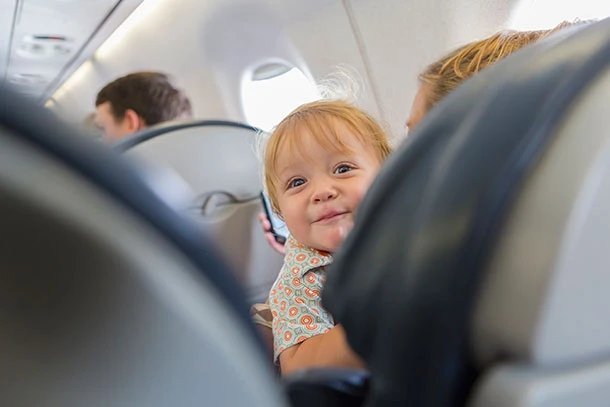
Hour three of a nine-hour flight, somewhere over an ocean, and the toddler has discovered that the tray table makes an excellent drum. The parents are fine — tired, but fine — because almost everything that will decide this flight was decided before boarding: the seats, the timing, the bag packed like a munitions store of small surprises. Traveling long-haul with a toddler is roughly eighty percent preparation and twenty percent luck, and the luck part cannot be helped. The preparation can. Walk through one flight day with a fictional but faithful family — two parents, one two-year-old, nine hours in the air — and steal every decision they get right, including the one about the drum.
The decisions made at booking, weeks earlier
The family’s first good decision was the seat. On a flight this long they bought the toddler her own seat rather than flying her as a lap infant: nine hours of holding a warm, wriggling twenty-five pounds is an endurance event with no medal, and the familiar car seat, installed in her own space, doubles as the place she will actually sleep. They chose an evening departure, timed so the flight’s long middle overlaps her normal night — the single most powerful scheduling move in toddler aviation, worth more than any toy. They requested the bulkhead row where bassinets fit for younger babies and legroom swallows a play mat for older ones, and they picked seats near the back, close to the galley and the toilets, where a walking toddler is a short stroll rather than a parade down forty rows. The parents also split the labor in advance, in writing, more or less: one owns the bag and the supplies, the other owns the child, and they swap at set points rather than negotiating mid-meltdown.
One honest note on the seat decision, because it is a real trade rather than a rule: children under two can fly on a lap for free or nearly so on most tickets, and on a two-hour flight that trade is usually worth it. The calculation flips as flights lengthen — the price of the extra seat buys sleep for the child, both arms for both parents, and a safety margin in turbulence that a lap cannot offer, which is why safety regulators consistently recommend a seat and an approved restraint for every child. Families do this both ways and land safely either way; the family’s choice here — seat bought, car seat installed — is the version of the decision optimized for a nine-hour overnight, and the rhythm below assumes it. A lap version of the same flight leans even harder on the evening departure, the carrier or wrap, and the parents’ shift system.
The night before, and the magic bag
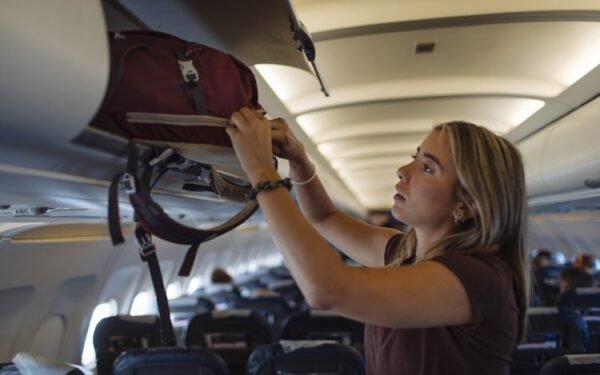
The carry-on that decides the flight is packed the day before, slowly, against a list. Half of it is logistics: more diapers than the hours suggest — delays and altitude both argue for extras — two complete changes of clothes for the toddler and one for each adult (the adult change is the line item rookies laugh at exactly once), wipes in two places, and food security in depth: familiar snacks in quantity, a meal she will definitely eat rather than the gamble of the airline’s tray, milk or formula handled according to the rules — the TSA’s page on traveling with children confirms that formula, breast milk, and baby food pass security in reasonable quantities above the usual liquid limits, exempt from the standard bottles rule. The other half of the bag is theater: a sequence of small, new, inexpensive items — sticker books, a miniature animal, a roll of painter’s tape, finger puppets — each wrapped or bagged separately, because unwrapping is half the entertainment and novelty is measured in items, not quality. One familiar blanket and the usual bedtime soft toy ride on top: in a strange metal tube at midnight, familiar is the whole point.
At the airport: spend the energy, board with a plan
The family arrives with time to burn and burns it deliberately: the toddler walks — runs, climbs, explores the quiet end of the terminal — because every joule spent in the departure lounge is a joule not spent against the seatbelt sign. Stroller goes to the gate and gets checked there, keeping hands free and options open. The final pre-boarding ritual takes ninety seconds and veterans swear by it: a fresh diaper, a full drink, a last sprint up and down the carpet. On boarding order, they split the difference that parents argue about: one adult boards early with the bags and the car seat, installs everything, and builds the nest; the other stays in the lounge with the toddler until the last group is called, minimizing the time a small person spends strapped into a stationary plane. The drum, the tray table, will still happen — but it will happen at hour three, not minute ten.
In the air: the rhythm that works
The flight settles into a rhythm of small rotations, roughly one new thing every twenty to thirty minutes. Takeoff is timed with a drink or a snack — the swallowing helps small ears equalize, and a child occupied with a straw cup complains about nothing. The entertainment escalates slowly and deliberately: books first, then the sticker and tape theater, then the snack parade (small items, individually presented, eaten at archaeological pace), then a walking tour of the cabin when the seatbelt sign allows, because a lap of the aisle is a reset button for the whole row. Screen time rules are formally suspended for the duration — a tablet loaded with downloaded favorites is held in reserve as the heavy artillery for the flight’s hardest hour, which on this routing arrives around hour six, when the novelty is spent and sleep has not yet won. When the cabin lights drop, the family runs the home bedtime routine in miniature and in order: pajamas over the seat, teeth with a finger brush, the familiar blanket, the same two songs at the same slow volume. The toddler sleeps in her car seat under her own blanket while the parents take turns doing the same, badly, in shifts — which is still immeasurably better than the alternative.
Ears, food, and the descent
The flight’s last medical fact deserves its own small section, because it causes a disproportionate share of toddler air misery: ears hurt on descent, when the cabin pressure rises and small tubes clear slowly. The defenses are mechanical — keep the child awake for the final half hour if you can (sleeping toddlers do not swallow enough), offer a drink, a snack, or a dummy to suck during the descent, and time any pain relief you use, on your pediatrician’s standing advice, about half an hour before landing. The family also treats arrival as part of the flight rather than the end of it: into daylight as fast as immigration allows, a real meal at a local hour, a walk, and the discipline of keeping the toddler awake until a plausible local bedtime, however tragic the late afternoon feels. Jet lag with a toddler is a team negotiation, and day one sets the treaty terms.
Using the crew, and the small kindnesses that compound
A practical word about the professionals in the cabin, because parents consistently underuse them. Cabin crew can warm bottles and food where the galley allows, supply water for formula at any hour, hand out the spare supplies (cups, napkins, bags) that make a spill a non-event, and — on the long night sectors — will often keep a genuinely kind eye on a sleeping row while a parent stretches. Ask early and politely, during quiet moments rather than the meal-service rush, and the galley becomes an ally instead of a service counter. The bassinet, for the youngest travelers, comes with limits worth knowing at booking: bassinets have weight and length limits that vary by airline, and the bulkhead seat that holds one must usually be reserved specifically rather than assumed. None of this is secret knowledge — it is simply the part of toddler flying that lives with the crew instead of in the bag, and it rewards the parents who treat asking as part of the system rather than an admission of defeat.
The honest summary
Nothing here eliminates the hard twenty minutes — there is almost always one, usually involving a full-body protest in a confined space while strangers practice elaborate indifference. What preparation does is shrink it to twenty minutes and surround it with hours that range from calm to genuinely pleasant. The parents in this scenario will land tired, a day behind on sleep, and quietly proud of a system that held. Given that the same toddler, on solid ground, is the guest of honor in guides like how to plan a birthday party for a toddler, the flight is simply the same truth at altitude: toddlers run on novelty, rhythm, snacks, and sleep, and the adult who plans for all four gets to sit down occasionally. Even at 35,000 feet. Even during the drum solo.