
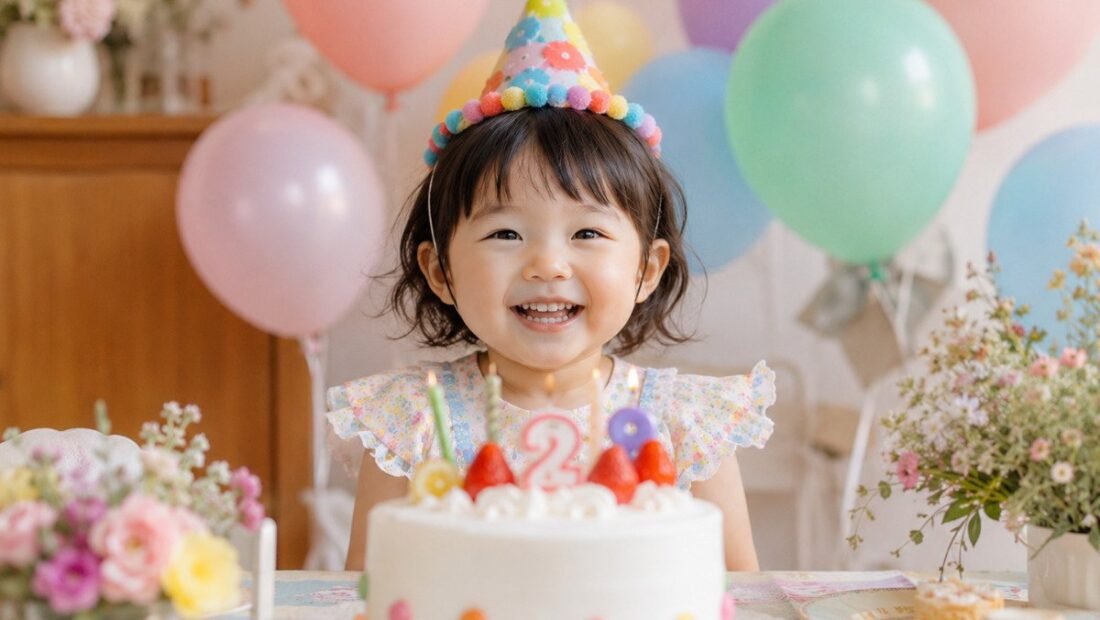
The picture-perfect toddler party takes about four hours to set up and roughly eleven minutes to destroy. Somewhere around minute twelve, a two-year-old is crying because another child touched a balloon, the carefully arranged snack table has been “reorganized” at knee height, and the birthday child — the entire reason for the event — is playing happily with the box a present came in. None of this means the party failed. It means the party was planned for adults’ eyes instead of toddlers’ reality. A stress-free toddler party starts from a different place: short, small, simple, and built around what one- and two-year-olds actually enjoy, which is almost never the things that cost money or take effort.
The whole plan on one checklist
Here is the entire party, before the detail. Pick a date three to four weeks out and schedule around the nap, not against it — a 10 a.m. start or a 3 p.m. start both work; a 12:30 start is a meltdown with a cake. Keep the whole thing to ninety minutes, two hours at the absolute most, and put the end time on the invitation so nobody has to guess. Keep the guest list to the child’s age plus one or two friends, plus close family — for a second birthday, that is three or four toddlers. Choose the venue for comfort, not impressiveness: home is free and familiar, a park is fine if you have a weather backup. Pick the theme from whatever the toddler is already obsessed with, because they will not notice matching napkins but they will notice their favorite animal on the plates. Buy themed plates, a tablecloth, and balloons and call the decorating done. Scatter a bag of balloons on the floor, plug in a bubble machine, and set out two or three free-play stations with no schedule attached. Serve simple toddler food and one make-ahead dish the adults will genuinely enjoy. Do the cake and the singing at the two-thirds mark, before the tiredness cliff, and keep a small smash cake aside if you want the classic photograph. That is the whole system — everything below is just how each line works.
Why short and small beats big every time
Toddlers run on a fuel tank of about ninety good minutes in an exciting environment, and no party plan can negotiate with it. Past that point you are not hosting a party, you are managing a slow-motion group overtiredness event. The end time on the invitation is not rude — it is the kindest detail on it, because it tells other parents exactly how to plan naps and meals around you, and it gives you a graceful finish line. Guest count matters for the same reason: every extra toddler is another set of needs arriving at once, and every extra adult is mostly there to watch one child anyway. A small party also means the birthday child is not overwhelmed in their own home, which is the single most common cause of the classic “birthday kid cries at their own party” photograph. Keep the circle small and the party gets easier in every direction at once — cheaper, calmer, shorter to clean up, and genuinely more fun for the one person it is nominally for.
Decorations: the ten-dollar floor wins
Here is the badly kept secret of toddler parties: a ten-dollar bag of balloons scattered across the floor will entertain a room of one-year-olds longer than any organized entertainment you can hire. Toddlers want things at their height, things they can carry, chase, and sit on. A bubble machine costs about fifteen dollars, is reusable at every party for years, and produces a level of joy that themed centerpieces cannot compete with. Beyond that, the themed plates and tablecloth genuinely are enough decoration — they photograph as “a theme” and cost almost nothing. What you can skip entirely: banners at ceiling height (nobody under three feet tall looks up), favor bags full of tiny plastic that parents will throw away in the car, and any decoration that can break, stain, or be pulled down onto a small head. One safety point sits inside the decorating, and it matters: popped and uninflated balloons are one of the leading choking hazards for small children, which is why Safe Kids Worldwide’s choking and strangulation prevention tips are worth two minutes of any party planner’s time. Use foil balloons or keep latex ones as floor toys only under supervision, and sweep up every popped fragment the moment it happens — toddlers find balloon scraps the way metal detectors find coins.
Food: two menus, both simple
Feed two audiences separately and both get easier. For toddlers: fruit cut small, cheese, mini sandwiches with the crusts off for the youngest, plain crackers, and foods that survive being carried around in a small fist. Cut grapes lengthwise and keep anything hard and round off the toddler table for the same choking reason as the balloons. Small portions on small plates, and expect most of it to end up worn rather than eaten — that is normal, not a failure of your menu. For adults, serve exactly one make-ahead crowd-pleaser — a tray of baked pasta, a slow-cooker dish, a big sandwich platter — plus drinks and somewhere to stand with a plate. Adults at a toddler party are doing childcare duty in a nicer room; genuinely decent food is the main pleasure available to them, and one good dish delivered well beats five fussy ones delivered stressed. The cake strategy: one simple cake for everyone, plus a small smash cake for the birthday child if you want the photo. Grocery bakery cakes are entirely respectable here. Do the cake at the two-thirds point of the party, not the end — a sugared, tired toddler at the exit door is a much harder goodbye than a sugared toddler with twenty minutes of balloon time still to burn it off.
Activities: stations, not a schedule
Structured games are where toddler parties go to suffer. One- and two-year-olds cannot follow game rules, do not want to wait for turns, and experience “pass the parcel” as a series of small thefts. What works instead is free-play stations: a corner of soft balls and the floor balloons, a table with chunky crayons and big paper taped down, a water or sand tub outside if the weather allows, and the bubble machine doing atmospheric work over all of it. Children drift between stations at their own speed, nobody is eliminated, nobody waits, and nobody cries because the game moved on without them. If you are looking for more ways to keep small children happily occupied for free, 40 free activities for kids on weekends has plenty that shrink down to party size. The adults, meanwhile, get the rarest toddler-party luxury: the chance to finish a sentence, because their children are busy rather than queued.
The running order that keeps it calm
A loose timetable is the difference between hosting and firefighting. Set up the stations and food before anyone arrives, and keep the birthday child out of the party room until guests come — a toddler who has already played with everything for an hour is bored by the start time. The first thirty minutes are pure arrival and free play; do not try to gather anyone for anything, because arrivals at toddler parties trickle in across twenty minutes and every new child needs a settling period. Food goes out early and stays out — grazing suits toddlers far better than a seated meal, and it suits parents who eat in shifts while supervising. Around the halfway mark, refresh the energy with the one novelty you held back: a fresh batch of bubbles, a parachute or big blanket game if you have the adults to hold the corners, or simply new balloons tossed into the room. Cake and singing land at the two-thirds mark, as planned. The final stretch is wind-down by design: presents can be opened then if your crowd expects it, but many families now save gifts for after guests leave, which removes the duplicate-toy drama, the grabbed presents, and the impossible task of making a two-year-old perform gratitude on demand. If you do open gifts, sit the birthday child with one gift at a time and let an adult quietly remove the opened ones. End on time, kindly and without apology — a short party everyone leaves happy beats a long one everyone survives, and the end time you printed on the invitation has been preparing everyone for it all along.
What it should cost
For a home party of twelve to fifteen people, the honest breakdown looks like this: decorations twenty to thirty dollars (dollar-store supplies plus the balloons), food forty to sixty dollars (the one crowd-pleaser, snacks, and a grocery bakery cake), paper goods about ten dollars, and activities about fifteen dollars for the bubble machine and coloring supplies — which you then own forever. That lands under $120 all-in, and under $80 if you borrow serving dishes and skip buying anything themed beyond the plates. Notice what is not in the budget: a venue fee, an entertainer, rented anything. Toddlers are the one party audience on earth who are genuinely indifferent to production value. Spend the savings on the adult food being good, and on your own morning being calm. The real budget of a toddler party is not money at all — it is the host’s energy, and every line of this checklist is designed to protect exactly that.



1 Comment