A beautiful baby shower does not need a $500 budget — fifteen guests can be celebrated well for about $150, and the guests will not be able to tell where the saving happened. That is because a shower’s cost and a shower’s quality live in different places. The money leaks out through venue hire, restaurant catering, and decorations bought item by item at party-store prices; the quality lives in a room that looks intentional, food that is genuinely nice, and a host who is not visibly unraveling. Below, each major decision is compared as what it really is — a pair of options with a price on one side and a smarter route on the other — so you can see exactly where the $150 version wins and where it sensibly spends.
Decision one: the venue — hire a room or borrow one
The restaurant or hired hall opens at $200 before a single balloon exists, and it brings rules with it: their catering, their timings, their minimum spend. The home of the host — or better, of a co-host with the biggest living room — costs nothing and imposes nothing, and a shower is one of the few parties that genuinely suits a home, because it is seated, daytime, and conversational by design. A park pavilion is the middle option in good weather: often free or nearly so, pretty without decoration, but hostage to the forecast and short on sockets and seating. Verdict: home wins outright for a budget shower. The money a venue would have eaten becomes the entire rest of the party. If the guest of honor’s home is the only option, recruit the cleanup crew in advance and clear the space the day before, because a host scrubbing at midnight is a hidden cost of the “free” venue.
Decision two: decorations — the $15 garland versus the $100 look
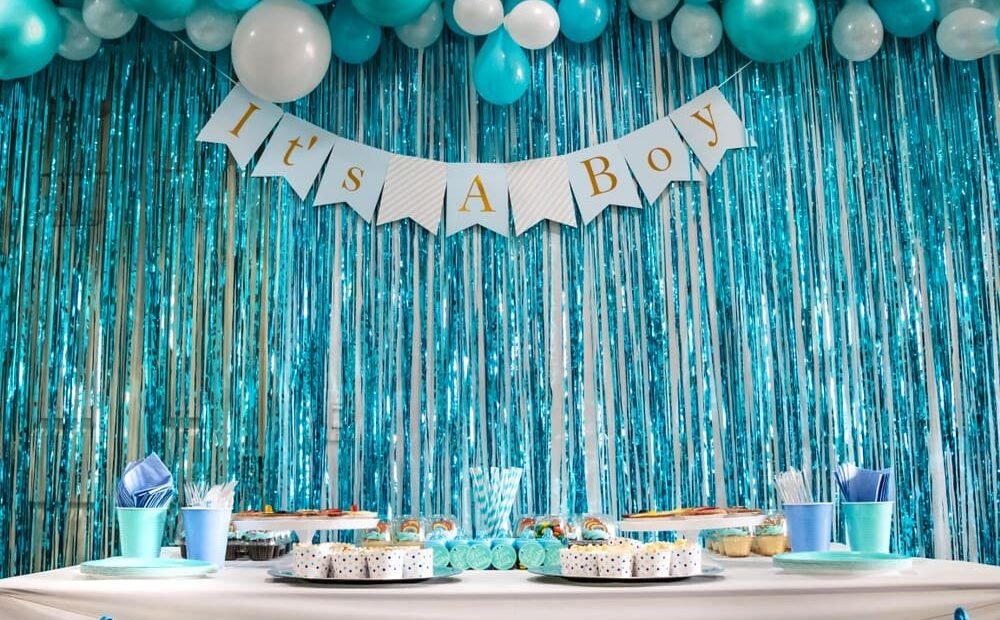
Here is the comparison that surprises everyone: a balloon garland kit costs about fifteen dollars (plus a five-dollar hand pump), takes forty minutes, and photographs like a hundred-dollar professional installation. Against that, the à-la-carte route — banners, centerpieces, themed tableware sets, chair sashes — costs more per item than the garland costs in total, and photographs as exactly what it is: a pile of small purchases. The rule for decor on a budget is concentration: one strong visual gesture (the garland, or a single backdrop wall with the gifts beneath it) plus restraint everywhere else. Fresh flowers go on the cake rather than in vases. Everything else — plain white or one-color tableware, real glasses if you own them — should quietly disappear. Guests remember one beautiful focal point and a room that felt calm; nobody’s memory stores the napkins. If you are attending rather than hosting and wondering what the etiquette looks like from the other chair, what to wear to a baby shower as a guest covers the guest side of the same afternoon.
Decision three: food — a meal or a time slot
The cleverest saving in the whole party is a clock. A shower at mid-afternoon — two or three o’clock — is a snacks event, not a meal event, and nobody expects otherwise. That single decision converts catering into: one savory that scales cheaply (pinwheels, a big pasta salad, or slow-cooker meatballs), one sweet, plus fruit, chips and dip, and a punch. Total for fifteen people: sixty to ninety dollars. Against it, the brunch or lunch timing obliges you to feed fifteen adults a meal, and the same menu at that hour costs two to three times as much for identical praise. The cake deserves its own line in the comparison because it is the visual centerpiece of the room: a bakery showpiece might run $80 and up, while a simple grocery-store cake dressed with fresh flowers costs about $25 and reads as custom in every photograph. Allocate to the cake before anything else decorative. And if the guest list grows past twenty, do not scale the menu up item by item — scale the format instead: a potluck contribution from two or three close friends, framed as involvement rather than economy, is a tradition in many families precisely because it works.
Decision four: entertainment — bought games or free ones
Shower games have a commercial ecosystem now — printed kits, props, prizes — and almost none of it is better than the free canon. Baby Bingo, played during the gift opening with cards printed free online, gives guests something to do with the one part of the shower that can drag. The Price Is Right, guessing the cost of everyday baby items, produces the loudest laughter per dollar in the genre (the dollar being zero). “Don’t Say Baby,” played with clothespins, costs about a dollar and runs itself for the entire party. Advice cards for the mother-to-be — free printables or plain index cards — are the one game that becomes a keepsake. Prizes, if you offer them, should be one-to-three-dollar treats: a candle, nice candy, a small lotion. The comparison is not close: paid kits buy you instructions for games that are worse than the classics, while the classics cost almost nothing and have been focus-grouped by several generations of aunts. A wider run-through of formats and timings lives in WikiHow’s guide to throwing a baby shower, useful for the order of events if this is a first hosting.
The whole budget, line by line
So the $150 is not a mood; here is where it goes for fifteen guests. Venue: zero, at home. Invitations: zero to a few dollars — a digital invitation is now the norm for showers and nobody reads it as economy, though a paper invitation for the grandparents costs little goodwill insurance. Decorations: about $20 — the garland kit, the pump, plain tableware, and the flowers destined for the cake. Food and drink: $60 to $90 — the one savory, fruit and dips, punch ingredients, tea and coffee. The cake: about $25 from the grocery bakery, dressed at home. Games and prizes: about $10 — printing, clothespins, and a handful of small treats. That is roughly $115 to $145, leaving a small contingency, because every party generates one surprise expense and a budget with no slack is a plan to be stressed. Notice the proportions: over half the money is food, because food is the part guests physically experience, while the visual layer that dominates social media costs less than the punch. If you must cut further, cut in reverse order of perception — decor thins first, games are already free, the cake shrinks before it cheapens, and the savory stays. If you can add twenty dollars, add it to the food or to a second pair of hands’ worth of convenience — pre-cut fruit, bakery pinwheels — because host time is the one currency this party is genuinely short of.
The running order: where budget parties are won on the day
Money is saved in the planning, but the afternoon itself is won in the sequence. Guests arrive to a room that is already dressed — garland up, gifts table ready, punch made — because a host finishing decorations in front of guests broadcasts stress, and stress is the one thing this party cannot afford to serve. Food goes out before the guest of honor arrives, complete, so the hosts are free for the only jobs that matter once people land: greeting, drinks, and starting the first game while the room is still warming up. Games sit in the middle, gifts after them (with Baby Bingo running across the opening, as planned), cake as the full stop before the natural end. Build the end as deliberately as the beginning: showers should close while they are still pleasant, which for a daytime seated party means about two hours, and a host who thanks everyone warmly at the two-hour mark is not rushing them — she is protecting the memory. Leftovers divided, garland photographed before it comes down, and the group chat gets the pictures the same evening. The guest of honor’s review of a budget shower, delivered to friends for years afterward, will mention none of the savings. It will mention how relaxed everyone was — which was, of course, the thing the budget was actually for.
The multiplier: co-hosts change the maths entirely
The final decision is structural, and it outperforms every saving above: do not host alone. Two to four co-hosts transform a budget shower in three directions at once. The $150 total splits to about $38 each across four hosts. The work splits too — nobody is simultaneously greeting, cooking, and running games, which is how budget parties acquire their stressed atmosphere. And the party itself gets better, because more hands produce better food, calmer decor, and a host group that can actually talk to the guests. The natural co-hosts are the guest of honor’s close friends and siblings; the way to ask is early, specifically (“would you co-host with me — we’d split costs and jobs four ways?”), and with the jobs divided by strength: the cook takes food, the crafty one takes the garland, the organized one takes invitations and the game printing. Added together, the verdict of every comparison on this page is the same sentence: the $150 shower wins not by buying cheaper versions of the expensive party, but by spending on the three things guests actually perceive — a room with one beautiful gesture, food that is simple and good, and hosts who are enjoying themselves — and declining, politely and completely, to spend on everything else.