
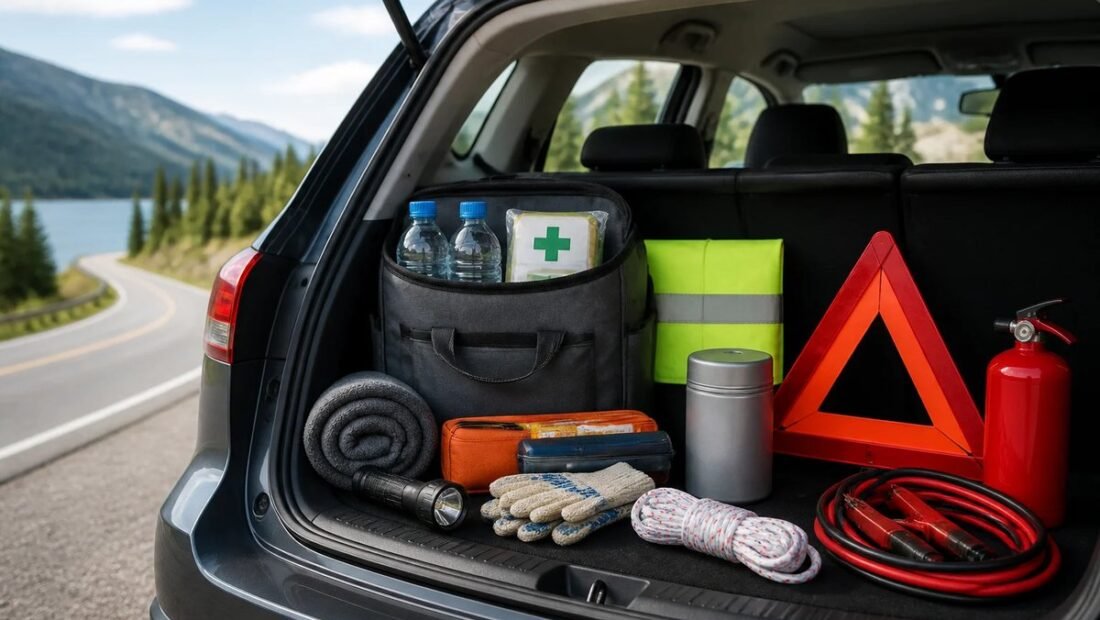
I learned about car emergency kits the hard way: a dead battery, 11 p.m., a rural highway, 20 degrees outside, and nothing in my trunk but an old gym bag. A passing trucker jumped my car and probably saved me from a very bad night. I built a proper kit the next weekend and haven’t driven unprepared since. When I built my first “emergency kit for my car,” I did it for $50 in one store trip — here’s the prioritized version if the full list feels like a lot.
What to include in an emergency kit for your car depends a bit on your climate, but the core is universal: handle a breakdown, stay warm and hydrated if stranded, and signal for help. Most of it costs under $75 total and lives quietly in your trunk for years.
Here’s the complete checklist, plus the winter additions and the maintenance most people forget.
The Core Kit: Breakdown Essentials
Start with the mechanical basics: jumper cables (or better, a portable jump starter — $60, no second car needed, and it charges your phone too), a tire pressure gauge, a portable air compressor or fix-a-flat, and the knowledge of where your spare tire and jack actually are. Check the spare’s pressure twice a year; a flat spare is a special kind of betrayal.
Add visibility and repair items: reflective warning triangles or flares, a high-visibility vest, a flashlight with extra batteries (or a crank/hand-squeeze light that never dies), a basic tool kit, duct tape, and zip ties. Duct tape has temporarily fixed everything from hoses to bumpers — it’s the universal donor of car repair.
Keep your paperwork accessible: insurance card, registration, and roadside assistance numbers saved in your phone and written on a card in the glove box. If your phone dies, the paper card is your backup. The National Highway Traffic Safety Administration recommends reviewing these supplies seasonally — set a calendar reminder with your oil changes.
Survival Supplies: If You’re Stranded
If you’re stuck waiting for help — especially at night or in bad weather — you need warmth, water, and calories. Pack: a warm blanket (wool or mylar emergency blankets, $2 each), extra warm layers (hat, gloves, socks), bottled water (rotate every six months), and non-perishable snacks like granola bars, nuts, and dried fruit. Rotate the food yearly; set a phone reminder.
A phone charger is survival gear now: a battery bank kept charged, plus a car charger. A whistle (to signal without exhausting yourself), a notepad and pen, and some cash in small bills round it out — tow trucks and rural gas stations don’t always take cards. For families, add kid supplies: diapers, wipes, a change of clothes, and a comfort item per child.
The rule for stranded-in-cold: stay with the car, run the engine 10–15 minutes per hour for heat (crack a window, clear the exhaust pipe of snow), and make yourself visible. Your car is shelter and a signal — it’s almost always safer than walking.
Winter Additions and Year-Round Maintenance
Winter drivers need more: a snow brush and ice scraper, a small shovel, cat litter or sand for traction, extra blankets, hand warmers, and winter-grade washer fluid. Keep the gas tank above half in winter — it prevents fuel-line freeze and buys you hours of heat if stranded. In summer, add sunshade, extra water, and sunscreen; heat kills faster than cold for kids and pets left waiting.
Maintain the kit like you maintain the car. Twice a year — when you swap to/from winter gear is perfect — check: battery bank charged, water fresh, snacks unexpired, flashlight working, jumper cables present (they migrate to other cars mysteriously), and seasonal items rotated. Five minutes, twice a year.
Store it smart: a sturdy duffel or milk crate in the trunk keeps everything together and stops it becoming trunk clutter. Heavy items low and forward so they don’t become projectiles. And tell your family where it is — a kit nobody knows about helps nobody. Pair this with knowing what to do if your flight gets cancelled and you’re covered for travel disruptions of all kinds.
Emergency Kit for My Car: The $50 Starter Version
If the complete checklist feels overwhelming, start with the $50 version that covers 90 percent of scenarios: a portable jump starter ($35–$45 on sale — the single highest-value item), a reflective vest and warning triangle ($10), a flashlight ($8), and a wool blanket from home ($0). That’s it. Those four items handle dead batteries, nighttime visibility, and staying warm — the three most common roadside situations. Add the rest over time; start with these this weekend.
The jump starter deserves emphasis because it changes the dead-battery equation completely. No more flagging down strangers or waiting an hour for roadside assistance — you jump your own car in two minutes. Keep it charged (top it off every 3–4 months; set a phone reminder), learn to use it before you need it (practice in the driveway once), and note that it doubles as a phone charger. For the price of one roadside assistance call, you own the solution permanently. And if a breakdown strands you far from home on a trip, knowing what to do when flights get cancelled covers the air-travel equivalent of travel disruption.
Complete Car Emergency Kit Checklist
- Jumper cables or portable jump starter
- Tire pressure gauge + portable compressor or fix-a-flat
- Spare tire, jack, and lug wrench (verify present!)
- Reflective triangles or flares + hi-vis vest
- Flashlight + extra batteries
- Basic tool kit, duct tape, zip ties
- Wool blanket + 2 mylar emergency blankets
- Warm layers: hat, gloves, socks
- Bottled water (rotate every 6 months)
- Non-perishable snacks (rotate yearly)
- Phone battery bank + car charger
- Whistle, notepad, pen, small-bill cash
- Insurance/registration copies + roadside numbers
- First aid kit
- Winter add: brush/scraper, shovel, cat litter, hand warmers
- Family add: diapers, wipes, kid clothes, comfort items
Build It This Weekend
You can assemble 90 percent of this in one Target run for under $75 — less if you shop your house first (everyone has an old blanket and a flashlight somewhere). The portable jump starter is the single best upgrade; everything else is cheap basics.
Then forget about it — that’s the point. It sits in your trunk, quietly ready, maintained twice a year in five minutes. You’ll probably never need most of it. But on the night you do, you’ll be the person who’s warm, visible, and calling for help instead of the person I was on that rural highway.
Build the kit. Future stranded you says thanks.




1 Comment