
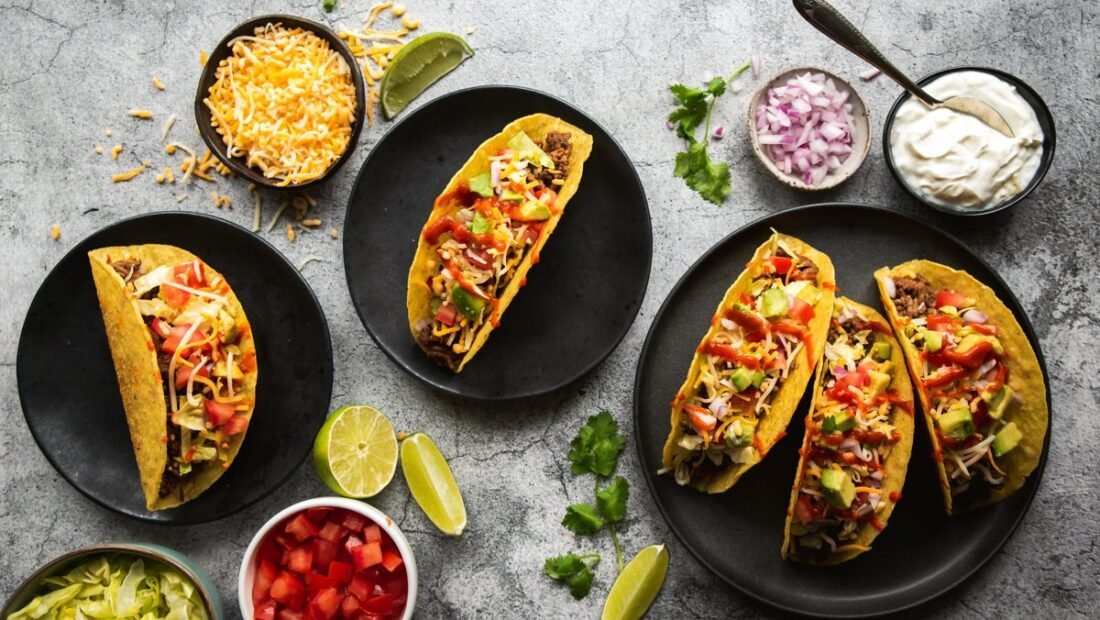
There is a specific sadness to the home taco that gets everything almost right: decent meat, fresh toppings, and a cold, stiff tortilla straight from the bag that cracks when folded and tastes like packaging. Add unseasoned ground beef and a jar of salsa and dinner reads like a school lunch tray, no matter how good the intentions were. Taqueria tacos are not built from secret ingredients. They are built from four ordinary things done properly — tortillas treated as an ingredient, meat cooked hard and seasoned, a salsa with a pulse, and restraint in assembly. Here is the whole build, in order.
What you need
- Corn tortillas (flour if you must, but corn is the taqueria default)
- For carne asada: flank or skirt steak, lime and orange juice, garlic, cumin, oil, salt
- White onion and cilantro, finely chopped — the only garnish a street taco requires
- Limes, cut in wedges
- For the salsas: tomatillos, jalapeños or serranos, garlic, and dried chiles for a roja
- A cast-iron skillet or flat griddle, and a clean kitchen towel
Step 1: Marinate the meat like it matters
For carne asada, combine lime juice, a splash of orange juice, minced garlic, cumin, oil, and salt, and marinate flank or skirt steak for 4 to 8 hours. The citrus tenderizes the surface and seasons deeply; much longer and the acid starts to cook the exterior into mush. This is the same cut-selection and marinade logic laid out in the best cheap cut of steak for grilling — the taqueria and the backyard grill agree that flank and skirt, marinated and sliced right, punch far above their price. Seasoned ground beef has its place too, but it needs actual seasoning — chili powder, cumin, smoked paprika, garlic, salt, and a splash of water to distribute it — bloomed in the pan drippings, not sprinkled on at the end.
Step 2: Sear hard, rest, slice thin against the grain
Get the skillet or grill genuinely hot — the steak should hiss on contact. Sear until a deep crust forms on both sides, then rest the meat 5 to 10 minutes so the juices stay in the board instead of the tortilla. Slice thin, against the grain, and then chop the slices roughly, taqueria-style. The grain direction is not a detail: sliced wrong, the same steak eats chewy; sliced right, it eats tender at any price point. Return the chopped meat to the hot pan for 30 seconds with a spoonful of its juices if it needs waking up, and season once more at the end.
Step 3: Make one salsa, twenty minutes, no jars
The salsa is the homemade difference, and it is a 20-minute job that keeps a week in the fridge. For a salsa verde: simmer or roast tomatillos with serrano or jalapeño, garlic, and onion until soft, then blend with cilantro and salt — bright, tart, alive. For a salsa roja: toast dried chiles, soak them, blend with tomato, garlic, and salt for something deeper and smokier. Either one transforms the taco more than any other single upgrade on this page. The jar is not evil, but it is sweet, flat, and cooked-tasting next to these. Make one batch and the week’s tacos, eggs, and grilled anything all level up.
Step 4: Treat the tortilla as an ingredient
This step is the whole ballgame for most home cooks. A tortilla must be warmed until it is soft, pliable, and lightly spotted — either directly over a gas flame for a few seconds a side, on a dry hot comal or skillet, or (for corn) quickly passed through the meat’s hot fat for the full taqueria treatment. Then it goes into a towel-lined basket or a wrapped stack, where the tortillas steam together and stay supple. For a crowd, warm them in batches and hold them wrapped; a $25 tortilla press becomes worth discussing only if homemade corn tortillas enter the picture, which is a level-up for another night. A cold tortilla under great meat is a broken promise; a warm one under decent meat is a great taco. For deeper technique on tortillas, chiles, and regional styles, Rick Bayless’s Mexican recipes and techniques are the reference American home cooks have trusted for decades.
Beyond beef: the chicken and pork versions
The same build carries the other two classic fillings with minimal translation. Chicken: thighs — never breast, which dries — marinated in the same citrus-garlic-cumin mix, cooked hard in the skillet until the edges char slightly, rested, and chopped. The thigh’s fat renders into the pan and seasons the meat from inside in a way lean beef cannot match. Carnitas-style pork: pork shoulder cut in chunks, simmered in its own fat and juices with orange, bay, and salt until tender, then crisped in a hot pan at the end — a weekend project rather than a weeknight one, but the leftovers reheat into tacos all week, which argues for making it exactly when time exists. Both fillings obey the same assembly law as the beef: warm tortilla, meat, salsa, onion, cilantro, lime. A household that rotates the three proteins through one salsa and one tortilla routine has a taco night with genuine range and only one technique to maintain.
Corn versus flour, settled without tribalism
Taquerias default to corn for reasons beyond tradition: corn tortillas bring their own flavor — sweet, earthy, unmistakably maize — where flour tortillas are closer to a neutral wrapper, and corn’s smaller size enforces the two-or-three-taco portioning that keeps the meat-to-tortilla ratio honest. Flour has its legitimate territory: breakfast tacos, burritos, and the northern styles built on them, and a fresh flour tortilla, puffed and blistered, is a fine thing. The home-cook error is not choosing flour; it is choosing either one and serving it cold and stiff. A warmed flour tortilla beats a cold corn one every time, and the reverse is also true, which brings the whole argument back to the point Step 4 made: the tortilla is an ingredient, and its preparation matters more than its pedigree.
Setting up taco night for a group
The method scales gracefully, and the scaling rules are about heat management rather than quantity. Warm the tortillas in two waves rather than one giant stack, because the second wave should be coming off the comal as the first is eaten — a tortilla’s perfect window is about fifteen minutes, and a wrapped stack holds its own steam and stays supple for roughly that long. Cook the meat in batches even for a crowd, since an overloaded pan steams the beef instead of searing it, and hold the finished batches warm while the last one crisps. Set the garnishes out as a line — salsa verde, salsa roja if you made both, onion, cilantro, lime — and let people assemble their own, which is not laziness but design: self-assembly keeps every tortilla filled at the moment of eating rather than softening under a pile made ten minutes early. Budget about three tacos per adult as a floor and four for the honest appetites, with a pot of beans on the side to stretch the meat further than any filler could. Taco night for eight, run this way, is less work than taco night for two done carelessly — because the system, not the cook, does the carrying.
The leftovers question answers itself unusually well here, which is worth a sentence before assembly. The meat keeps three to four days refrigerated and reheats best in a hot skillet with a splash of water, which revives the sear’s spirit; the salsas keep a week and improve for the first day or two as their flavors marry; only the tortillas refuse storage logic, wanting to be warmed fresh each time — a two-minute task that decides whether leftover night tastes like a rerun or a revival. A household that makes Sunday’s salsa and a double batch of carne asada owns Tuesday’s tacos at nearly no marginal effort, which is how restaurant techniques actually pay rent in a home kitchen: not in the single performance, but in the encore.
Step 5: Assemble with restraint
Meat, a spoon of salsa, a scatter of raw white onion and cilantro, a squeeze of lime. That is the street taco, and its restraint is the point: every element is hot, bright, or sharp, and nothing is there to fill space. Cheese, sour cream, and shredded lettuce have their place in other taco traditions, but load a taqueria-style taco like a burrito and the tortilla tears, the meat cools, and the balance dies. Two or three small tacos, built simply, eaten immediately — that is the restaurant experience, and it was never about expensive ingredients. It was about the tortilla being warm, the meat being seasoned, and the salsa being alive. Master those three and the taqueria stops being a destination. It becomes a Tuesday — or a Friday, or any ordinary night the tortillas get warmed properly and the lime gets cut fresh.

1 Comment