
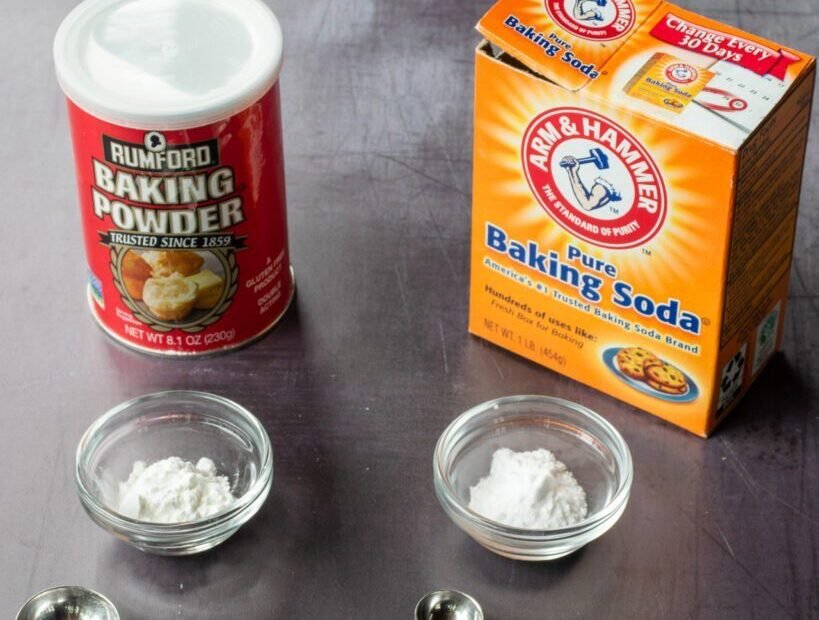
I once substituted baking soda for baking powder in pancakes, figuring white powder is white powder. The pancakes tasted like soap and rose like roofing shingles. That breakfast taught me that these two look identical and behave completely differently, and confusing them is one of baking’s most common disasters.
What is the difference between baking soda and baking powder? One needs acid to work; the other brings its own. Here is the chemistry every baker should know.
What Is the Difference Between Baking Soda and Baking Powder?
Baking soda is pure sodium bicarbonate, a base that reacts with acid and moisture to produce carbon dioxide bubbles. No acid in the recipe means no reaction, which means flat baked goods and a soapy, metallic taste from unreacted soda. It is powerful (3-4x stronger than baking powder per teaspoon) and single-acting: it reacts immediately when wet, so batters using it must hit the oven fast.
Baking powder is baking soda plus powdered acid (usually cream of tartar) plus a starch to keep them dry. What is the difference between baking soda and baking powder in practice? Baking powder is complete: add moisture and heat, and it leavens on its own, double-acting (once when wet, again when heated). That is why recipes without acidic ingredients call for baking powder; it does not need buttermilk or lemon to work.
- Baking soda = pure base. Needs acid in the recipe (buttermilk, lemon, vinegar, brown sugar, honey).
- Baking powder = base + acid. Self-sufficient. Works with moisture and heat alone.
- Soda is 3-4x stronger. A little goes far. Too much tastes soapy and metallic.
- Soda reacts immediately. Get batters in the oven fast. No dawdling.
- Powder is double-acting. Reacts when wet, again when heated. More forgiving timing.
- Acidic recipes often use both. Soda neutralizes acid and adds lift; powder adds extra rise.
- Test freshness. Soda: fizz in vinegar. Powder: fizz in hot water. Dead leaveners = flat baking.
- Store dry and sealed. Moisture kills both. Replace yearly; write the open date on the box.
The substitution rules, since you will need them: to substitute baking powder for baking soda, use 3x the amount (1 tsp soda = 3 tsp powder), but the extra powder can add bitterness. To substitute soda for powder, use 1/3 the amount PLUS add acid (1 tsp powder = 1/4 tsp soda + 1/2 tsp cream of tartar, or use buttermilk/lemon in the recipe). These work in a pinch but change flavor and texture slightly; buy both and keep them fresh instead.
Why Recipes Use Both
Many recipes call for both soda and powder, which confuses beginners. The logic: the soda neutralizes the recipe’s acid (buttermilk, brown sugar, cocoa) and provides initial lift, while the powder adds extra leavening power for a higher rise. Chocolate cake with buttermilk is the classic example. The soda handles the acid; the powder handles the height. They are teammates, not rivals.
And the freshness issue is real: opened baking powder loses potency within 6-12 months, soda within about a year. The fizz tests take ten seconds and prevent the mystery of the flat cake. If your baking has been disappointing lately and you cannot figure out why, check the dates before blaming the recipe.
Quick Answers to Common Questions
Can I use baking soda instead of baking powder?
In a pinch: use 1/3 the amount plus an acid (cream of tartar, lemon juice, or buttermilk). Flavor and texture shift slightly; it works but is not identical.
What happens if I use too much baking soda?
Soapy, metallic taste and coarse, open crumb with possible collapse. More leavener is not more rise; excess actually weakens structure.
How do I test if baking powder is still good?
Spoon some into hot water; vigorous fizzing means active. No fizz means replace. Test every 6 months once opened.
Why do cookies use baking soda and cakes use baking powder?
Cookies often contain brown sugar (acidic), so soda suffices and promotes browning and spread. Cakes need the extra lift and neutral flavor of powder, often alongside soda for acid balance.
My Leavener Checklist
- Soda needs acid. No acid in recipe = no soda. Ever.
- Powder is self-sufficient. Moisture + heat. The forgiving one.
- 3:1 substitution ratio. With acid added when going soda-for-powder.
- Test freshness regularly. Fizz in vinegar (soda) or hot water (powder).
- Replace yearly. Write the open date on the box.
What I Would Do Next
My pancakes recovered once I understood the chemistry, and my baking improved across the board because leavening stopped being mysterious. The white powders are not interchangeable, but they are understandable: acid plus base makes bubbles, and everything else is details. Respect the chemistry and the rise takes care of itself.
What is the difference between baking soda and baking powder? Soda is a pure base needing recipe acid; powder is base-plus-acid, self-sufficient. Different tools for different recipes.
Check the dates, match the leavener to the recipe, and never substitute blindly again.
The storage detail most people miss: baking soda absorbs odors, which is why the open box lives in fridges, but that same property means an open box near strong-smelling foods loses potency faster. Keep a separate sealed box for baking and use the old one for deodorizing. And the aluminum question: most modern baking powders are double-acting with sodium acid pyrophosphate rather than the old aluminum-based acids, but if you are sensitive to metallic tastes, look for aluminum-free labels; the difference is subtle but real in delicate cakes.
For sourdough bakers, the soda-versus-powder logic gets an interesting twist: sourdough discard recipes (pancakes, crackers, banana bread) are acidic from fermentation, so they pair naturally with baking soda, which neutralizes the tang while providing lift. It is the same chemistry as buttermilk recipes, just with a funkier acid source. Understanding the acid-base pairing turns sourdough discard from a waste problem into a leavening opportunity.
Related reading: What Is the Best Paint Finish for Kitchen Walls.
Related reading: How Do I Fix a Running Toilet That Will Not Stop.
Related reading: How Can I Make a Small Bathroom Look Bigger.
For official guidance, check out the FDA consumer food resources and FoodSafety.gov storage charts.



