Sunday night, a big pot of chili feels like a win. By Thursday, that same pot has turned into a lid you lift with suspicion, a sniff, and a hard decision. Nothing dramatic happened in between. The difference was set on Sunday, in the twenty minutes after cooking, when the chili either got cooled, sealed, and put away with care or got left to drift. Leftovers do not spoil at random. They spoil on a schedule you can control, and the steps below keep good food good for as long as it can safely last.
The goal is simple: get food cold fast, keep air out, put it where the fridge stays coldest, and know exactly when the clock runs out. Follow the sequence in order and most cooked food holds its best quality for three to four days in the fridge, with the freezer ready to pause the clock on anything you will not reach in time.
Step 1: Cool food fast
The clock starts the moment food comes off the heat. Bacteria grow fastest between 40°F and 140°F, a range often called the danger zone, and in that range they can roughly double every 20 minutes. Warm food sitting on the counter is not resting. It is spending time in the exact conditions bacteria prefer.
The rule is firm: get leftovers into the fridge within 2 hours of cooking. If the room is above 90°F, that window shrinks to 1 hour. A hot day, a crowded kitchen, or food served outdoors all count.
Leaving a pot out to cool slowly is the most common mistake, and it does not help. Food cools from the outside in, so the center of a deep pot can stay warm for hours even when the sides feel cool to the touch. Cooling has to be active, not passive. The next step is what makes fast cooling possible.
Step 2: Divide into shallow containers
Size is the whole trick here. A large pot of soup, stew, or chili holds heat in the middle long after the surface has cooled. Split that same batch into shallow containers and the picture changes. Thin layers lose heat quickly, chill evenly, and reach a safe temperature in a fraction of the time.
For a very large batch, an ice bath speeds things up even more. Fill a sink or a large bowl with ice and cold water, set the pot inside, and stir now and then so heat moves out evenly.
One old fear can be set aside: hot food can go straight into a modern fridge. It will not damage the appliance. The only real concern is that a single huge hot container can warm the foods around it for a while, which is another reason dividing first is the better move. Small, shallow portions solve the cooling problem and the fridge-warming problem at the same time, and they make reheating easier later, too.
Step 3: Choose airtight containers
Air dries food out, dulls flavor, and lets odors travel from one dish to the next. A loose lid or a plate balanced on top of a bowl leaves gaps that cost you freshness every hour. Airtight storage is not a nice extra. It is the difference between food that tastes like dinner and food that tastes like the fridge.
Glass containers with locking lids are the strongest choice for most kitchens. Glass does not stain, does not hold on to old odors, and moves from fridge to microwave without worry. A tight seal keeps moisture in the food where it belongs and keeps fridge smells out.
Portion with the next meal in mind. Single-meal portions mean you open only what you plan to eat, reheat only that amount, and leave the rest sealed and cold. Large tubs force a bad choice: reheat everything and cool it again, or dig out a portion and expose the whole batch to air and temperature swings. Small containers cool faster, reheat more evenly, and keep the untouched food in better shape.
Step 4: Put each container in the right fridge zone
A fridge is not one temperature. It has warm spots and cold spots, and placement decides how long food stays at its best. The door is the warmest spot of all, with a temperature swing every time it opens. Save the door for condiments, pickles, and other sturdy items that tolerate change. Leftovers do not belong there.
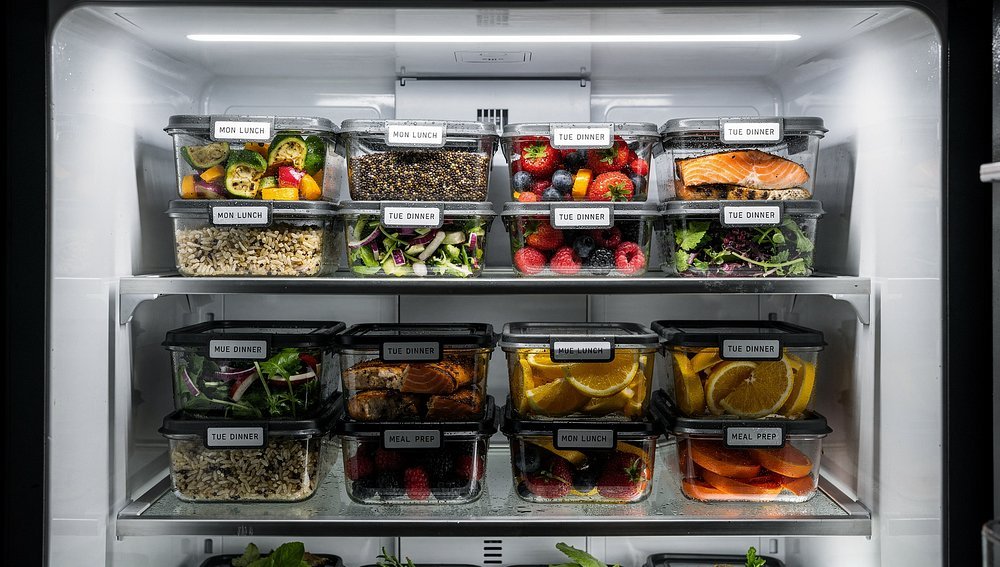
Leftovers belong on the upper and middle shelves, where the temperature stays cold and steady. That placement also keeps ready-to-eat food visible, which matters more than it sounds. Food you can see gets eaten. Food pushed to the back gets forgotten until it is too late.
Raw meat goes on the bottom shelf, always. If a package leaks, it drips down onto the lowest surface instead of onto food that is ready to eat. Keep that rule without exception, and keep raw meat in a container or on a tray that catches drips. While you sort the fridge, it also helps to think ahead to how to use up leftover vegetables before they spoil, since vegetables are often the first items to lose their window.
Step 5: Label and date everything
Memory is a poor storage system. On Sunday, every container looks obvious. By Wednesday, two similar soups in similar boxes are a guessing game, and nobody remembers which day the rice was cooked. A strip of masking tape and a marker end the guessing in about five seconds.
Write two things on each label: what the food is and the date it was cooked. Contents alone are not enough, because the date is what tells you whether the food is still inside its safe window. Date alone is not enough either, because opening three containers to identify dinner wastes time and warms the food.
Place new containers behind older ones when you can, so the oldest food sits at the front and gets used first. That single habit, front to back by age, prevents most waste without any extra effort.
Step 6: Know the limits
Good storage buys time, but it does not buy unlimited time. Most cooked leftovers keep for 3 to 4 days in a fridge held at 40°F or below. Cooked meat and poultry fit that window. Soups and stews fit it too, and many taste even better on the second day as flavors settle. Cooked rice and pasta also sit in the 3 to 4 day range, and rice deserves extra care at the cooling stage because it needs to chill quickly.
Pizza keeps for 3 to 4 days when stored airtight in a container rather than left in the delivery box, which lets air in and dries the crust out. Deli salads such as tuna, egg, or chicken salad keep for about 3 to 5 days when kept cold the whole time. Hard-boiled eggs in the shell last about a week, while peeled eggs should be used within a few days. Opened canned food should move to a clean container and be used within 3 to 4 days rather than stored in the opened can.
When a food falls outside the window, the decision is already made, even if it looks and smells fine. Harmful bacteria do not always change the smell, taste, or look of food. The calendar is a more reliable guide than a sniff. For a food-by-food check on items not covered here, StillTasty’s leftover and food storage database gives storage times for a wide range of foods.
Step 7: Freeze what you will not reach
Freezing pauses the clock. Food held at freezer temperature stays safe for a long stretch, with best quality lasting a few months for most cooked dishes. The rule for choosing is simple: if a dish will not be eaten within three days, freeze it on day one instead of letting it age in the fridge and hoping for the best.
Freeze in the portion sizes you will actually use. A family-size block of soup that takes a full day to thaw often stays frozen out of pure inconvenience, while single portions thaw fast and get eaten. Push out as much air as you can before sealing, label with contents and date, and add a short reheating note if a dish needs one.
Thaw frozen leftovers in the fridge overnight, not on the counter, so the outside does not sit warm while the center is still frozen. Reheat food until it is hot throughout, with soups and sauces brought to a full, rolling boil. Reheat only once, and reheat only the portion you plan to eat. Each extra cycle costs texture and adds another trip through the danger zone.
When to throw food out
Storage rules reduce waste, but they do not remove judgment. Throw food out if it has been in the fridge past its window, if it sat out longer than 2 hours, or if the container was left open or stored warm. Throw it out if the texture has turned slimy, if mold appears anywhere on the food, or if the smell is sour or off in a way that is hard to name. Mold is not a spot to cut around on soft foods, since growth can extend past what the eye can see.
Reheating does not rescue food that has gone too far. Heat kills many bacteria, but it does not undo every change that time and warmth cause, and it does not restore quality. When doubt remains after checking the date and the condition, the safe choice wins every time. When in doubt, throw it out. A fresh meal costs a few dollars. A bad one costs far more.
A weekly leftovers night ties the whole system together. Pick one evening, pull everything that is near the end of its window, and build dinner around it. The fridge clears before shopping day, nothing gets buried, and the labeling habit pays for itself in one free meal a week. Good storage is not about saving every scrap forever. It is about keeping each dish at its best for the days it is meant to be eaten, and letting the freezer handle the rest.