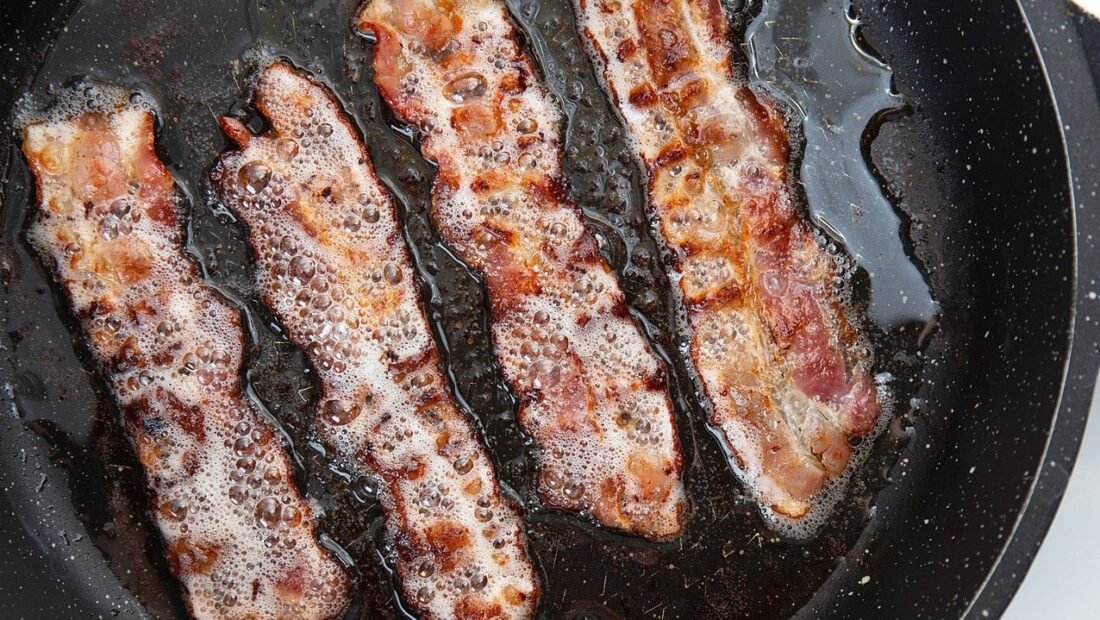
Bacon for four people should be a simple pleasure. On the stovetop it becomes a splattered cooktop, a smoke alarm with opinions, and four strips all cooking at four different speeds, one burnt at the ends while another is still pale in the middle. You stand there with tongs, flipping, dodging pops of grease, while the rest of breakfast waits on you. Every common way of cooking bacon trades something away: speed, texture, batch size, or a clean kitchen. Weighed fairly against each other, though, one method gives up the least, and it is not the pan.
The Oven Method, in Full
Line a rimmed sheet pan with foil or parchment. The rim is not optional, since bacon releases a surprising amount of fat and a flat pan lets it run onto the oven floor. A rack set inside the pan is optional: it lifts the strips out of their fat for extra crispness, at the cost of one more thing to wash. Lay the strips in a single layer, close but not overlapping. Overlapped bacon steams where it touches and cooks unevenly.
Put the pan into a cold oven, then set the temperature to 400°F. Starting cold lets the fat render slowly as the oven heats, which keeps the strips flatter and cooks them more evenly than a blast of heat from the first second. Then wait. Thin bacon takes about 12 to 15 minutes, regular bacon 15 to 20 minutes, and thick-cut 20 to 25 minutes. Check at the early mark for your thickness, because bacon moves fast near the end and ovens vary.
Pull the pan when the bacon looks just shy of done. Move the strips to a rack or a plate lined with paper towels to drain. Carryover crisping is real: residual heat and cooling firm the bacon up in the minute or two after it leaves the oven, so bacon pulled at perfect often eats overdone. Once the fat on the pan has cooled slightly, strain it through a fine sieve or coffee filter into a jar and refrigerate it. That saved grease fries eggs, roasts potatoes, and seasons greens better than most bottled oils, and it keeps for months.
Stovetop Bacon: The Honest Ledger
Pros. A skillet gives bacon its best lacy, crisped edges and deep browning, and it renders fat right where you might want it next. If eggs or greens are going into the same pan, stovetop bacon builds the meal in one place. It also handles one or two strips with no preheat and no pan to line, and a cold pan start works here too, softening the splatter somewhat.
Cons. The mess is the worst of any method. Grease pops onto the cooktop, the backsplash, the floor, and the cook. Batch size is small, so feeding four means cooking in rounds while the first strips go cold. The heat is uneven, with hot spots that scorch some strips while others lag, and the whole job demands constant attention and flipping. For a weekend pound of bacon, the stovetop turns breakfast into a shift at a diner grill.
Microwave Bacon: Fast, Clean, and a Little Sad
Pros. Layer strips between paper towels on a microwave-safe plate and cook about 1 minute per slice. The towels absorb the fat, the splatter stays inside the box, and the whole job is nearly mess-free. For two strips at 6 a.m. before work, nothing else comes close on effort. Clean-up is tossing the towels and rinsing one plate.
Cons. The texture gives the game away. Microwaved bacon steams in its own moisture even as it crisps, so it lands slightly chewy and steamy rather than shattering. Browning is pale and uneven, thick-cut bacon does poorly, and plates crowded with strips cook at wildly different rates. It is a sound emergency method and a poor way to treat a good pack of bacon when anyone is paying attention.
Air Fryer Bacon: Crispest Result, Smallest Batch
Pros. At 350°F for 8 to 10 minutes, an air fryer produces arguably the crispiest bacon of any method. The fast, dry heat renders fat quickly and evenly, strips stay fairly flat, and there is no cooktop splatter at all. For one or two servings, the speed rivals the microwave while the texture beats it by a mile.
Cons. Capacity is the ceiling. Most baskets fit four to six strips without overlap, so a family breakfast means batch after batch. Grease handling is fiddly: fat pools under the basket, can smoke if it builds up, and needs careful draining between rounds in many models. Strips can also curl or fly in the strong fan if they are light. Great tool, wrong scale, for a full pack.
Rack or No Rack, Foil or Parchment
The basic oven setup leaves two small choices, and both come down to taste. A rack lifts the strips clear of the rendered fat, so the undersides crisp instead of gently frying, and the finished bacon eats leaner and firmer. The cost is a rack coated in baked-on fat that takes real scrubbing, which quietly returns some of the mess the method promised to remove. Cooking the strips directly on the foil gives slightly richer bacon with tender-crisp edges, and clean-up stays at crumpling the foil and tossing it. Many cooks land in the middle: no rack for regular bacon, a rack only for thick-cut, which renders so much fat that the strips can otherwise swim in it.
Foil and parchment both work as liners. Foil can be folded up at the edges to form a shallow tray that holds every drop of fat, which helps when the pan will be carried across the kitchen. Parchment lies flatter and releases the strips a touch more cleanly, yet it should not hang over the edges of the pan near the heating element. Either way, line the pan before the strips go down, and let the fat cool until it firms slightly before you strain or discard it. Hot fat poured into a trash bag or down a drain causes problems that erase all the goodwill the method built.
Seasoning, if you want it, goes on before the pan enters the oven. Cracked black pepper, a light dusting of brown sugar, or a brush of maple syrup in the final minutes all suit the hands-off heat, since nothing needs flipping or watching at close range. Plain bacon needs none of it, though trying one seasoned strip alongside the plain ones is a low-risk way to test a variation on a real breakfast rather than on a guess.
Shrinkage, Curling, and Other Honest Notes
Bacon shrinks. A strip can lose a quarter to a third of its length as fat renders and water cooks out, and thin bacon shrinks more dramatically than thick-cut. Plan servings by the cooked result, not the raw strip, and buy thick-cut when bacon is the main event rather than a garnish. Fatty packs shrink most of all, which is one reason a meaty, well-marbled pack is worth its price.
Curling comes from uneven contraction as the fat and lean cook at different rates. The oven’s cold start already reduces it, since gentle rendering keeps strips relaxed. For stubborn curlers, set a second pan or a rack on top of the strips as a weight during the first part of cooking. In a skillet, a press does the same job. A small snip through the fat edge of a strip also stops it cupping, though flat bacon from the oven rarely needs the help.
Weekend cooks can also make a full pack ahead for the week. Cook it just shy of crisp, cool it, and refrigerate the strips in a sealed container. On weekday mornings, a brief re-crisp in a hot skillet, the oven, or the air fryer brings it back in a minute or two, with almost no mess because the fat has already rendered out. It will not match fresh bacon strip for strip, yet it beats every shortcut product sold for the same purpose, and it turns how to make perfect scrambled eggs every time into a ten-minute breakfast instead of a project.
The Verdict
For anything beyond two servings, cook bacon in the oven. It wins on evenness, since every strip finishes at the same time and the same crispness. It wins on mess, since the fat stays on one lined pan instead of across the kitchen. It wins on freedom, since the cook can make eggs, toast, and coffee while the bacon looks after itself, and it scales from four strips to a full pack with no extra rounds. Add the saved jar of grease and the foil you crumple and toss, and the method asks the least of you at every step.
The other methods keep their niches. Reach for the stovetop when the pan drippings are part of the dish that follows, or when two strips and lacy edges are the whole point. Use the microwave when speed and a clean counter matter more than texture. Choose the air fryer for a small batch where maximum crispness is the goal and the grease is manageable. General cooking references such as Weber’s grilling and cooking guides make the same broader point in different words: match the method to the job. For the common job, bacon for a table of hungry people with a kitchen you would like to keep clean, the sheet pan in a cold oven set to 400°F is the answer, and it is not close.