Why does the guacamole mixed tableside at a good Mexican restaurant taste brighter than yours, when the ingredient list is identical? Same avocados, same lime, same onion and cilantro. Nothing on the list explains the gap, which means the gap lives somewhere else: in the ripeness of the fruit, the way it was crushed, the order the salt went in, and the minutes between the bowl and the first chip. Guacamole has almost nowhere to hide. With so few ingredients, every small choice shows, and restaurant cooks simply make those choices with more care and less delay.
Choosing the Avocado: Ripeness Is the Recipe
Start with Hass avocados. The Hass variety has rich, dense flesh and a higher fat content than the smooth green types, and that fat is what gives good guacamole its body. A watery or stringy avocado cannot be rescued by seasoning. No amount of lime fixes fruit that was never rich to begin with, and no salt makes an underripe avocado taste ripe. Selection is not a preliminary step. It is most of the dish.
Ripe means a gentle give under the palm. Press the whole fruit in your hand, softly, the way you would test a peach. It should yield a little, evenly, without feeling soft or hollow. Do not test with your thumb. Thumb pressure bruises the flesh under one spot and can leave dark dents on fruit someone else then buys. The stem cap offers a second clue: flick it off and look underneath. Green suggests the fruit is ready. Brown suggests it has gone past its best inside.
Timing the purchase solves most problems before they start. Buy hard fruit 2 to 4 days ahead and ripen it on the counter at room temperature. To speed things up, seal the avocados in a paper bag with a banana. The banana gives off gas as it ripens, and the bag traps that gas around the avocados, nudging them along. Check daily. Once an avocado gives under the palm, use it that day or move it to the fridge, where the cold slows it down and buys a day or two. Guacamole made for guests on Saturday should start with fruit bought on Tuesday or Wednesday, not with a hopeful grab at hard fruit on Saturday morning.
Cut one open before committing the whole batch if you can spare it. Good flesh is green at the edges, pale and buttery toward the center, with no brown streaks or gray patches. A few small spots can be trimmed away. Widespread browning cannot, and that fruit belongs in a smoothie, not in a bowl where its dull color and flat taste will drag down better avocados mixed with it.
Texture: Crushed, Never Blended
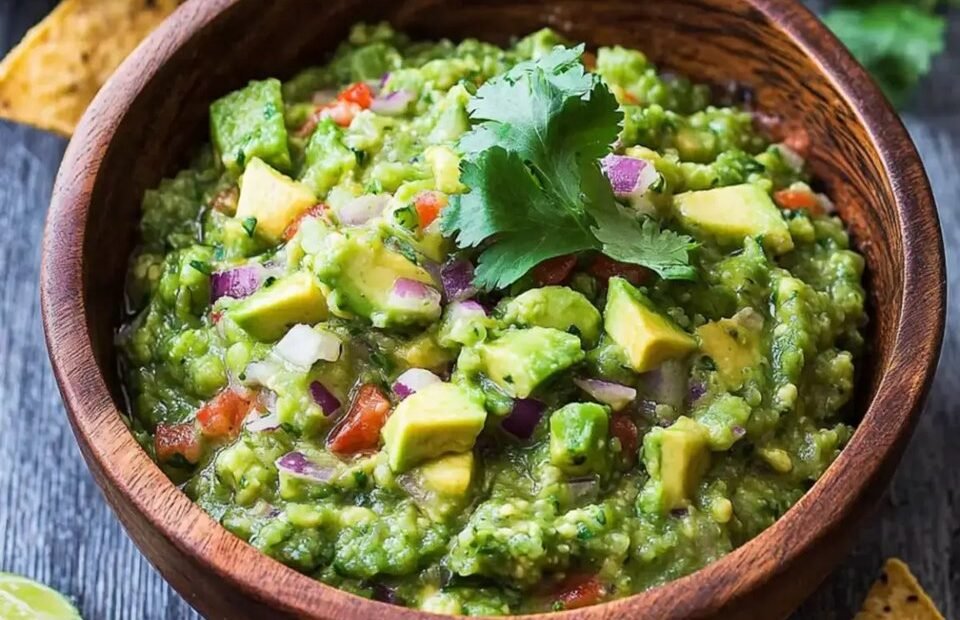
The second place home guacamole loses its edge is texture. Restaurant guacamole has pieces. Some avocado is mashed smooth enough to hold the bowl together, and the rest survives in soft chunks that give each bite a little structure. A fork does this well. So does working the fruit in a heavy bowl with the back of a spoon, molcajete-style, where the rough surface grips and tears rather than slicing.
A blender or food processor destroys that balance in seconds. Blades whip the avocado into a uniform puree with the texture of baby food, and the flavor dulls along with the structure. Air beaten into the mix speeds browning, too. The result looks smooth and tastes oddly flat, like a dip designed for spreading rather than scooping. Keep the machines off. Mash about two-thirds of the avocado to a rough paste and fold the last third through in chunks, and the bowl will have the contrast that makes people go back for another chip. Warm tortilla chips, sturdy enough to lift a chunky scoop without snapping, finish the job properly. Readers planning a full spread around the bowl can build on how to make restaurant-style tacos at home, where the same rule about fresh, bold seasoning carries the whole meal.
Seasoning: Salt Early, Lime at Once, Heat Fresh
Guacamole should taste vividly seasoned, and most home versions are simply under-salted. Add fine salt early, right as you mash, so it draws moisture and flavor out of the avocado instead of sitting on top in the finished bowl. Salt added at the end tastes like salt. Salt worked in from the start tastes like better avocado. Then taste, and be willing to add more. A bowl that seems almost too bold on the spoon will taste right on a plain chip, which dilutes every bite.
Lime goes in right away as well, about 1 tablespoon per 2 avocados. The acid brightens the rich flesh the way a squeeze of lemon lifts any fatty food, and it slows the browning that starts the moment avocado meets air. Add it during mashing, not as a finishing drizzle, so it spreads through the whole bowl. Then judge the balance: rich and flat means more lime or salt; sharp and thin means the fruit needed another day.
The fresh aromatics carry the top notes. Use white onion, finely diced, as the standard. White onion has a clean bite that suits the dish better than sweet or red onion. If raw onion tastes harsh to you, rinse the dice briefly in cold water and drain it well. That short rinse tames the raw edge while keeping the crunch. Cilantro goes in chopped, leaves and tender stems together, since the stems hold strong flavor. For heat, mince fresh jalapeño or serrano by hand. Serrano runs hotter and a little brighter; jalapeño is gentler and easier to dose. Seeds and white ribs hold much of the heat, so scrape them out for a mild bowl and leave some in for a bold one. Add heat in small amounts, stir, wait a moment, and taste again. Chile blooms as it sits, and a bowl that seems tame at minute one can be lively by minute ten.
Tomato, and the Case for Leaving Things Out
Tomato divides good cooks. Plenty of fine guacamole includes it, and plenty of the best versions skip it entirely. The risk is water. Tomato releases juice, and that juice thins the bowl and dulls its color as it sits. If you use tomato, choose a firm one, cut out the seeds and gel, dice only the flesh, and drain it briefly before folding it in at the end. Used that way, tomato adds a small sweet note without watering anything down. Skipped entirely, the bowl tastes more purely of avocado, which many people prefer once they try it both ways.
The skip list matters as much as the ingredient list. Sour cream and mayonnaise are fillers. They stretch the bowl and mute the avocado, turning a vivid dish into a pale, tangy dip that could have come from any tub. Garlic powder brings a stale, harsh note that fresh ingredients never produce. Pre-made seasoning packets pile in salt, dried onion, and anti-caking agents at a fixed ratio you cannot adjust, and the result tastes like the packet, not the fruit. Cumin, another common reach, quickly takes over a bowl this simple. Guacamole rewards restraint. Avocado, salt, lime, onion, cilantro, and fresh chile, handled well, need no help.
Timing and Browning: The Chemistry You Can Use
Avocado flesh browns because enzymes in the fruit react with oxygen in the air. Cut surfaces darken first, then the top layer of a mixed bowl. Lime juice slows that reaction, and limiting air slows it further, but nothing stops it for good. That chemistry is why timing is the real secret. Make guacamole about 15 minutes before serving. Mixed at that point, it tastes at its peak: the salt has settled in, the onion and chile have started to season the bowl, and the surface is still bright green. Let it sit 30 minutes and the edge dulls. The flavor flattens, the top darkens, and the bowl that would have vanished in minutes becomes one people politely finish.
Prep everything else first to protect that window. Dice the onion, mince the chile, chop the cilantro, and juice the lime before any avocado is cut. Once the fruit is open, work steadily: halve, pit, scoop, mash, season, fold, serve. Room temperature is part of the timing too. Cold mutes flavor, so a bowl served straight from the fridge tastes blander than the same bowl left to stand briefly. Restaurants serve it fresh and cool at most, never icy, and that alone explains part of the tableside gap.
Sometimes storage cannot be avoided. If the bowl must wait, press plastic wrap directly onto the surface of the guacamole, touching it across the whole top with no air pockets, add a thin layer of lime juice over the surface first, and refrigerate. Eat it the same day, stir it well before serving, and accept that it will be very good rather than great. Guidance from the California Avocado Commission’s ripening and storage tips backs the same approach: limit air, keep it cold, and keep the wait short. The oft-repeated trick of leaving the pit in the bowl does almost nothing beyond the small patch it touches. Air is the enemy, contact is the defense, and freshness beats both.