
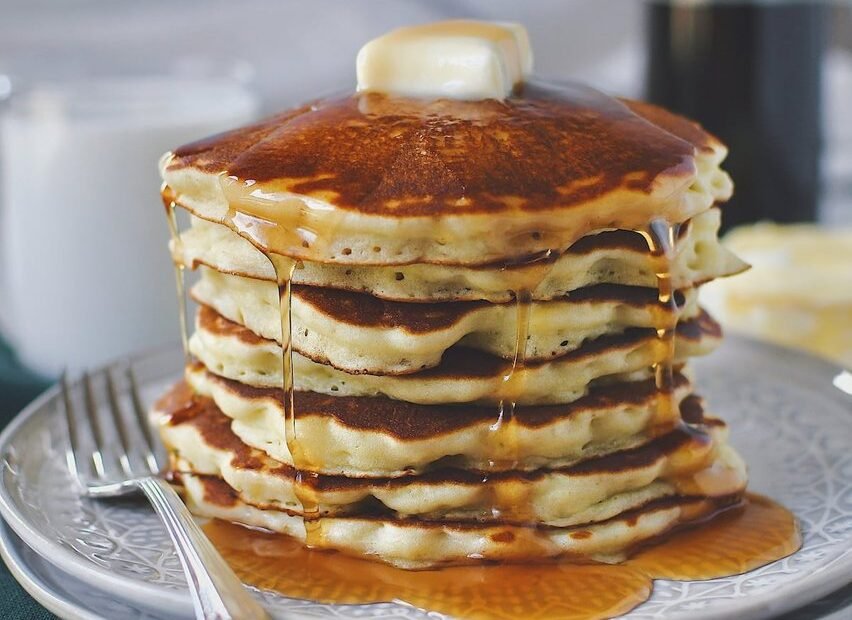
Buttermilk is the classic secret to fluffy pancakes — its acidity reacts with baking soda to create lift. But let’s be honest: nobody keeps buttermilk in the fridge on a random Saturday morning. The good news is you can make pancakes just as fluffy without it, using ingredients you already have and one technique tweak most recipes skip.
I’ve tested this every way you can imagine, from milk-and-vinegar substitutes to plain milk with extra leavening. The results were clear: the substitute matters less than the method. Get the acid reaction right and handle the batter gently, and your buttermilk-free pancakes will be tall, tender, and golden. Here’s exactly how.
The 5-Minute Buttermilk Substitute for Fluffy Pancakes Without Buttermilk
Buttermilk’s job is acidity, and you can fake that in five minutes. For every cup of milk, stir in one tablespoon of white vinegar or lemon juice, then let it sit for 5 to 10 minutes until it looks slightly curdled. That curdled look is exactly what you want — it means the acid is active and ready to react with your baking soda. Use this soured milk exactly as you’d use buttermilk in any pancake recipe.
No vinegar or lemon either? Plain yogurt or sour cream thinned with a little milk works beautifully — use 3/4 cup yogurt plus 1/4 cup milk per cup of buttermilk needed. In a real pinch, plain milk with an extra half-teaspoon of baking powder still makes respectable pancakes, though they won’t be quite as tender. The acid version is noticeably better, so it’s worth the five minutes.
Technique Matters More Than the Recipe
Here’s the part most people get wrong: they overmix. Lumps are not the enemy — they’re the goal. Stir the wet and dry ingredients together with just 10 to 12 gentle strokes, stopping while the batter still looks lumpy. Overmixed batter develops gluten, and gluten makes pancakes flat, tough, and rubbery instead of fluffy. If your pancakes have the texture of coasters, overmixing is almost certainly why.
Second, let the batter rest for 5 to 10 minutes after mixing. This hydrates the flour and lets the leavening start working, which means taller pancakes. Third, get the griddle temperature right: medium heat, where a drop of water sizzles and dances but doesn’t instantly vanish. Too hot and the outsides burn before the insides set; too cool and the pancakes spread thin and never puff.
Reference: King Arthur Baking’s pancake tips and techniques.
Reference: USDA food safety basics for eggs and dairy.
The Fluffy Pancake Checklist
Run through this every time and your pancakes will come out tall and tender:
- Use the milk-plus-vinegar substitute (1 tablespoon acid per cup of milk, rested 5 minutes) for real buttermilk-style lift.
- Whisk dry ingredients separately first so the baking powder and soda distribute evenly — no bitter pockets.
- Mix wet into dry with 10 to 12 gentle strokes. Lumpy batter is correct batter.
- Rest the batter 5 to 10 minutes while the griddle heats. Don’t skip this.
- Cook on medium heat with butter or oil. Flip exactly once, when bubbles pop on the surface and the edges look set.
- Keep finished pancakes warm in a 200°F oven on a rack, not stacked on a plate where steam makes them soggy.
- Serve immediately. Pancakes wait for no one — call everyone to the table before you start the last batch.
Troubleshooting Flat Pancakes
If your pancakes still come out flat, run this diagnostic. Old leavening is suspect number one — baking powder loses power after about six months opened. Test it: drop a spoonful in hot water. Vigorous fizz means it’s alive; weak fizz means buy a new can. Second suspect: overmixing, which we’ve covered. Third: too-thin batter. It should mound softly off the spoon, not run like milk. If it’s runny, your flour measurement was light — spoon flour into the cup and level it rather than scooping from the bag.
One more trick for maximum fluff: separate the eggs, whip the whites to soft peaks, and fold them in last. It’s an extra three minutes of work and it produces pancakes so tall they wobble. Save that move for when you really want to impress.
Frequently Asked Questions
Why are my pancakes flat even though I followed the recipe?
Three usual suspects: dead baking powder (test it in hot water — it should fizz vigorously), overmixed batter (stir 10–12 strokes max and embrace the lumps), or a griddle that’s too cool (medium heat, where water droplets dance). Fix those three and flat pancakes become rare. Also check your flour measurement — scooping from the bag packs in too much flour and throws off the ratios.
Can I make the batter the night before?
You can, but the pancakes won’t be as fluffy — the leavening starts working the moment liquid hits it and loses power overnight. If you must prep ahead, mix the dry ingredients the night before and add the wet ingredients in the morning. That gives you 90% of the convenience with none of the flatness.
What’s the best pan for pancakes?
A nonstick skillet or a well-seasoned cast-iron griddle, both on medium heat. Nonstick is more forgiving for beginners; cast iron gives superior browning once you learn its heat. Either way, wipe with butter or oil between batches — too much fat fries the pancakes instead of griddling them.
More from Daily USA Post
- Also see: what are the best budget-friendly dinner party menus
- Our complete guide: how do I host a movie night at home like a theater
- what are the best reality shows to watch with friends — what you need to know
Making fluffy pancakes without buttermilk comes down to three things: a quick milk-and-vinegar substitute for acidity, a gentle hand with the mixing, and a five-minute batter rest. Do those and you’ll get tall, golden, tender pancakes that nobody would guess were missing the classic ingredient. Saturday morning is saved — no emergency grocery run required.
Bookmark this method — once you’ve nailed the substitute, the mixing, and the rest, perfect pancakes become your effortless Saturday default.




1 Comment