
The average American family throws away over $1,500 worth of food every year. Not because we’re careless people — because our kitchens run on good intentions and vague plans, and food rots in the gap between the two. The wilted lettuce, the forgotten leftovers, the yogurt that expired while you weren’t looking: it’s death by a thousand small oversights.
Reducing food waste in your kitchen isn’t about guilt or perfection. It’s about systems — a handful of habits that make wasting food harder than using it. I’ve cut my own household waste to nearly zero with the methods below, and none of them require extra time once they’re set up. Here’s how.
The Systems That Reduce Food Waste in My Kitchen
Shop with a meal plan and a list — the single highest-impact change. Most waste starts at the store, when we buy aspirational groceries for meals we’ll never cook. Plan your week’s dinners, list only what those meals need, and check what you already own before writing anything down. Impulse produce is where waste is born.
Store food like you mean it. Herbs stand in water like flowers. Greens get a dry paper towel in a sealed container. Berries get a vinegar-water rinse and thorough drying before refrigerating. Bread gets frozen, not left to stale. These aren’t fussy chef tricks — each one adds days to a food’s life, and days are what stand between you and the trash can. The ‘eat me first’ box (a clear container for anything nearing expiration) makes the vulnerable food visible instead of buried.
Cook the Scraps: The Waste-Free Kitchen Mindset
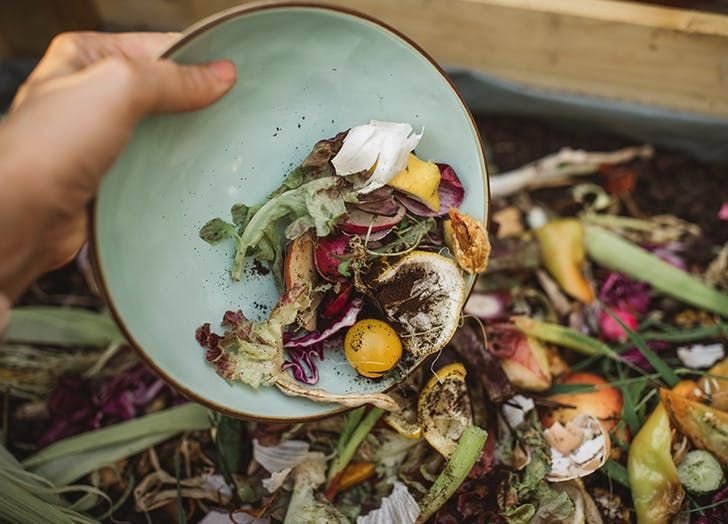
Professional kitchens waste almost nothing because they treat scraps as ingredients. Adopt the mindset: vegetable peels, stems, and ends become stock (keep a freezer bag of scraps and make a pot when it’s full). Stale bread becomes croutons, breadcrumbs, or panzanella. Wilting vegetables become soup, stir-fry, or frittata — heat erases wilt. Overripe fruit becomes smoothies, banana bread, or compote. Sour milk becomes pancakes or biscuits. The only things that should hit your compost are truly inedible: eggshells, coffee grounds, bones you’ve already made stock from.
Learn the difference between ‘best by’ and ‘unsafe.’ Date labels (except on infant formula) are about quality, not safety — they’re the manufacturer’s guess at peak freshness. Your senses are the real test: sniff it, look at it, and when in doubt with meat or dairy, throw it out. But perfectly good yogurt a day past its date? That’s a snack, not garbage. Misunderstood date labels cause an enormous share of household waste.
Reference: USDA food loss and waste resources.
Reference: EPA reducing wasted food at home.
12 Habits for a Near-Zero-Waste Kitchen
Start with three, add the rest over time:
- Meal-plan before shopping and never shop hungry — the two rules that prevent most waste at the source.
- Do a 2-minute fridge audit midweek and promote anything fading to tonight’s dinner.
- Keep an ‘eat me first’ box front and center in the fridge for items nearing expiration.
- Freeze aggressively: bread, cheese, herbs in oil, leftover tomato paste, stock — the freezer is a pause button.
- Learn proper storage for the top wasters: herbs in water, greens with paper towels, berries rinsed and dried.
- Cook ‘use it up’ meals weekly: soup, stir-fry, frittata, and fried rice absorb almost any leftover.
- Keep a scrap bag in the freezer for vegetable trimmings — it becomes free stock.
- Understand date labels: ‘best by’ is quality guidance, not a safety deadline (except infant formula).
- Serve smaller portions and offer seconds. Plate waste drops dramatically when people serve themselves.
- Repurpose leftovers deliberately: roast chicken becomes soup, then stock. Plan the cascade.
- Compost what’s truly inedible so even your waste feeds something.
- Track your waste for one week. Seeing it written down changes behavior faster than any lecture.
What About the Unavoidable Stuff?
Some waste is genuinely hard to avoid — banana peels, eggshells, bones, coffee grounds. That’s what composting is for. Even apartment dwellers can compost now: countertop electric composters, worm bins, and municipal curbside programs have made it practical almost everywhere. Composting doesn’t reduce your grocery bill, but it keeps food out of landfills, where it generates methane — a far more potent greenhouse gas than carbon dioxide.
And be kind to yourself about perfection. You’ll still forget a cucumber sometimes. The goal isn’t zero waste as a moral identity — it’s building systems that make waste the exception instead of the default. A kitchen that wastes 10% of what it used to is a massive win, worth hundreds of dollars a year and a meaningful dent in your environmental footprint.
Frequently Asked Questions
What’s the single biggest source of household food waste?
Fruits and vegetables, by a wide margin — they spoil fastest and get bought most aspirationally. The fix is buying slightly less produce more often (if your schedule allows), storing it properly, and running a weekly ‘use it up’ meal. Meat and dairy waste less often but cost more per incident, so the fridge audit matters for everything.
Are date labels actually expiration dates?
No — with the sole exception of infant formula, date labels (‘best by,’ ‘sell by,’ ‘use by’) are manufacturer estimates of peak quality, not safety deadlines. Your senses are the real test for most foods. Misunderstood labels cause an enormous share of household waste; perfectly good yogurt a day past its date is a snack, not garbage. (When in doubt with meat or dairy, though, throw it out.)
Is composting worth it if I live in an apartment?
Yes — countertop electric composters, worm bins, and municipal curbside programs have made apartment composting genuinely practical. It doesn’t save grocery money, but it keeps food out of landfills, where it generates methane — a far more potent greenhouse gas than CO₂. Even a small worm bin handles a household’s scraps.
More from Daily USA Post
- how can I make fluffy pancakes without buttermilk — what you need to know
- Keep reading: what is the best way to thaw frozen meat quickly and safely
- Related: what are the best spices to keep in a starter spice rack
To reduce food waste in your kitchen, build systems: meal-plan and shop with a list, store food properly, keep an ‘eat me first’ box, freeze aggressively, cook weekly ‘use it up’ meals, and understand date labels. These habits will save the average family over $1,000 a year and nearly eliminate the guilt of the slimy crisper drawer. Start with the meal plan this week — everything else follows.




1 Comment