Why does a six-dollar steak eat like the sole of a shoe while a twenty-dollar one eats like a steakhouse, when both came off the same grill at the same temperature? Mostly because “cheap steak” is not one thing. The budget case holds a few cuts with real marbling and tenderness hiding in them, and several lean cuts that punish lazy cooking and reward technique. The trick is not finding a cheap steak — it is matching the cut to the method. Below, the main contenders are weighed honestly, pros and cons, with a verdict at the end.
Chuck eye: the poor man’s ribeye, with caveats
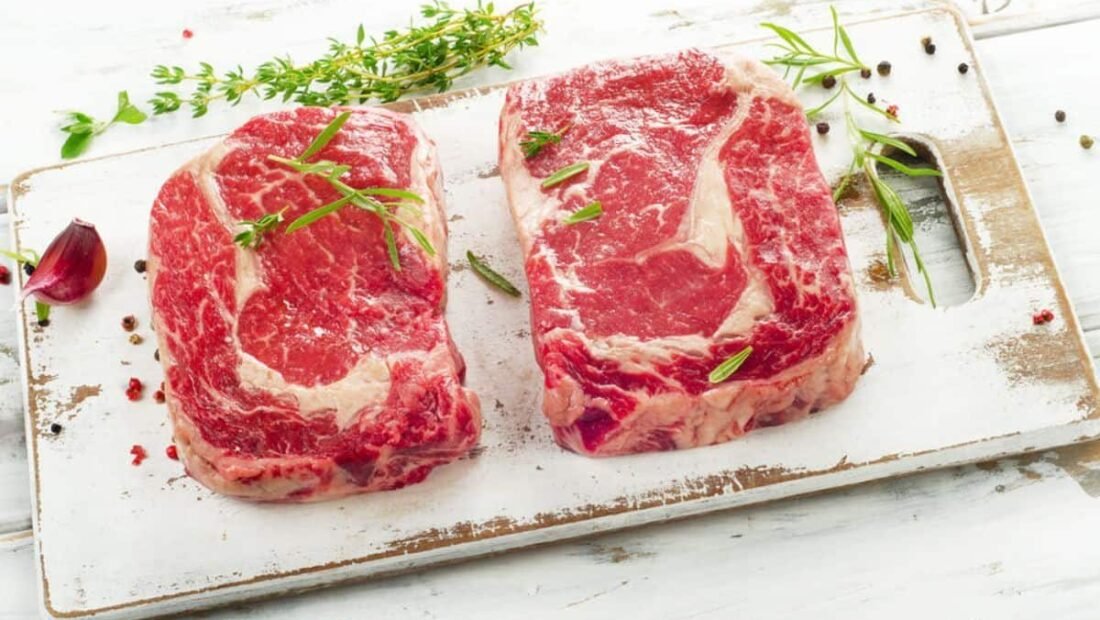
Pros. The chuck eye sits right next to the ribeye on the animal and shares much of its marbling, at a fraction of the price. Pick a well-marbled piece about an inch thick and it grills like its expensive neighbor: screaming hot, 3 to 4 minutes per side for medium-rare. Cons. Only a couple of steaks per animal are true chuck eyes, so supply is erratic, quality varies piece to piece, and a connective seam sometimes runs through the middle. Best for: a two-person steak night when the butcher case cooperates. No marinade needed; this is one of the naturally tender cheap cuts.
Flat iron: the reliable all-rounder
Pros. The flat iron is the second most tender cut on the animal after the tenderloin, and it is priced like an afterthought. Even thickness, deep beefy flavor, and it takes a hard sear beautifully. Cons. It must be cooked no past medium or it tightens up, and there is a line of gristle in lesser-trimmed versions that a good butcher removes. Best for: weeknight steak that behaves predictably. Salt it 40 minutes ahead (or the night before) and let the beef speak; skip the marinade.
Flank and skirt: flavor champions, technique required
Pros. Enormous, loose-grained beef flavor — the cuts taquerias build on, which is why they star in how to make restaurant-style tacos at home. They drink up marinade and cook in minutes. Cons. Lean and unforgiving: overcook them and they toughen; slice them wrong — with the grain — and they are chewy no matter what. The method is non-negotiable: marinate 4 to 8 hours in a mix of acid (citrus or vinegar), oil, salt, and aromatics — longer turns the surface mushy — then grill hot and fast, rest 5 to 10 minutes, and slice thin against the grain. Follow that and they eat like money.
Tri-tip: the crowd answer
Pros. For feeding a group on a budget, nothing beats it: one $20 to $30 roast feeds 4 to 6 people generously, which works out to $4 to $5 per person for real steakhouse-quality beef. Reverse searing — low heat first, then a hot finish — produces edge-to-edge pink with a proper crust, the technique that makes a $15 tri-tip eat like a $40 steak. Cons. It is a roast, not a steak, so it wants 30 to 40 minutes and a thermometer; and its grain runs in two directions, so slicing requires a moment of attention at the board. Best for: weekends and gatherings.
Two more names worth asking the butcher for
Hanger steak is the connoisseur’s cheap cut: one per animal, deeply flavored, tender when cooked to medium-rare and sliced against the grain. Its cons are availability — many counters never stock it because butchers famously keep it for themselves — and a thick center membrane that must be trimmed. If you see it at a budget price, buy it without deliberating. Ranch steak (from the chuck shoulder) is the opposite profile: always available, very cheap, lean and mild — and it is the one cut on this page that honestly benefits from a marinade and careful cooking to medium-rare, sliced thin. It will never be a ribeye, but at its price per pound it is the best value in the case for steak salads, stir-fries, and sandwiches, where slicing thin and pairing with sauce hides its leanness entirely. Knowing both names doubles the chance that any given week’s case contains a genuine bargain.
Reading the case: how to pick the piece
Cheap cuts reward inspection more than expensive ones, where quality is uniform. For marbled cuts (chuck eye, flat iron), look for fine, even white flecking spread through the meat rather than concentrated in one corner — distributed marbling melts everywhere; a single fat pocket just renders out. Thickness matters more than it is credited: an inch is the minimum for a proper crust-to-pink ratio on the grill, and inch-and-a-half is better, because a thin steak cooks through before its surface ever browns. Color should be bright cherry red; gray-brown edges mean the piece has sat, and while that is a discount some cooks accept for tonight’s dinner, it is never the piece to buy for a weekend plan. Finally, ask the butcher two questions — when was it cut, and is there more in the back? The freshest piece in a grocery case is routinely the one that has not been put out yet, and the question costs nothing.
Doneness, because budget cuts punish overshooting
Every cut above is at its best between rare and medium — roughly 120 to 135°F at the center after resting — and the tender, marbled ones forgive a drift toward medium while the lean ones (flank, skirt, ranch) turn genuinely tough past it. That asymmetry is the whole ballgame with cheap steak: the expensive cuts carry enough fat to survive overcooking, and the cheap ones are priced for cooks who will not overcook them. Use a thermometer until the press-and-spring test is calibrated in your own hand, pull the steak a few degrees early, and remember the rest is part of the cooking, not a pause after it.
The supporting techniques that apply to all of them
Two habits improve every cheap cut more than any marinade. First, the dry brine: salt the steak generously 40 minutes to 24 hours before cooking — uncovered in the fridge for the long version — which seasons deeply and dries the surface for a better crust. Second, the rest: every steak gets 5 to 10 minutes before slicing, so the juices redistribute instead of flooding the cutting board. Marinades, meanwhile, are specialists, not defaults: they earn their place on the lean, coarse cuts (flank, skirt) and only hide the flavor of the tender ones (chuck eye, flat iron). For safe internal temperatures by cut and doneness, Beef. It’s What’s for Dinner’s cut and grilling guides keep a clear chart.
The pan and grill notes each cut assumes
The verdicts above assume competent heat, and two details carry more weight with cheap cuts than expensive ones. First, surface dryness: a steak that goes on wet steams instead of searing, and lean cheap cuts pay for that steaming with grayness they cannot afford — pat every piece dry, and for the dry-brined ones the fridge time already did the work. Second, heat management by thickness: a one-inch budget steak on maximum heat cooks its crust and center on compatible schedules, while a thin half-inch piece needs the hottest, fastest treatment of all — ninety seconds a side and off — because its center is racing. Cast iron and a ripping-hot grill grate are equals here; the broiler is the winter understudy and performs better than its reputation when the steak is racked close to the element. Finally, compound butter and pan sauces are not decorations on cheap steak — a garlic butter melting over a rested flat iron or a quick pan sauce built on the drippings is the traditional French answer to exactly this category of beef, and it closes most of the remaining gap between a $6 cut and a $26 one. The cuts supply the beef. Technique supplies the rest, and the rest was always the larger half.
A final buying note, because the case can mislead: grocery pricing on these cuts is wildly inconsistent, and the same flat iron can appear at a premium “bistro steak” price in one store and a plain budget price in another, with the chuck eye occasionally mislabeled as a “poor man’s ribeye” at a rich man’s markup. The cuts earn their place on this page at their honest prices; at inflated ones, the verdict inverts and a ribeye on sale is the better buy. Learn the per-pound range each cut commands in your market — a few weeks of glancing at the case builds the instinct — and let the week’s actual prices, not the cuts’ reputations, cast the deciding vote. Budget cooking was never loyalty to a cut. It is loyalty to the arithmetic.
The verdict
If the case has a marbled chuck eye, buy it and grill it like a ribeye. If you want zero drama on a Tuesday, the flat iron is the most ribeye-like experience per dollar in the case. If the meal is tacos, fajitas, or anything sliced over rice, flank or skirt with a proper marinade and a thin against-the-grain slice beats everything. And if people are coming over, tri-tip turns $25 into a steak dinner for five. Cheap steak is not a compromise category. It is a matching exercise — cut to method — and once the matches are learned, the expensive cuts become the special occasion rather than the entry fee.