
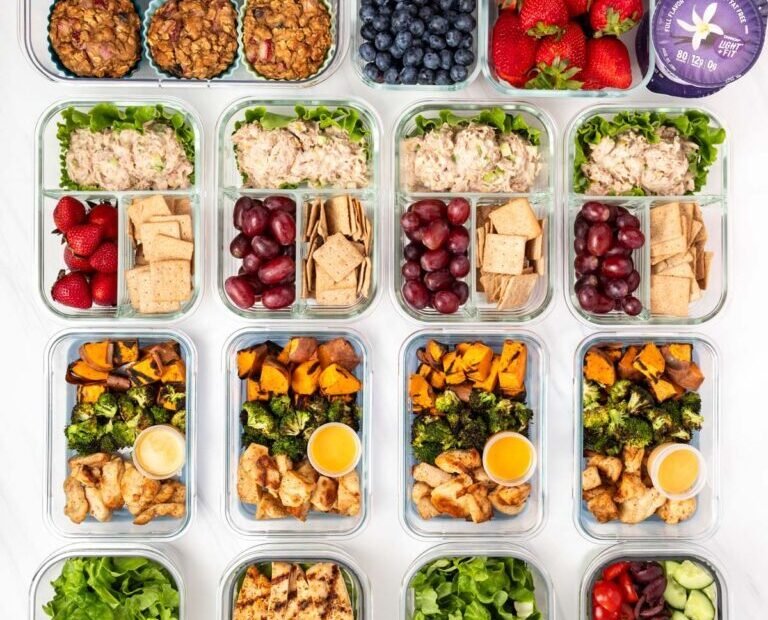
I spent $14 a day on lunch for years, which is $3,500 a year on mediocre salads eaten at my desk. Then I started spending two hours on Sunday prepping, and my lunches got better, healthier, and cheaper simultaneously. The weekly cost dropped to about $4 per lunch. The math was embarrassing in retrospect.
How to meal prep healthy lunches for the whole week without spending your Sunday in the kitchen or eating the same thing five days straight: the formula method. Here is how it works.
How Can I Meal Prep Healthy Lunches for the Whole Week?
The formula: grain + protein + vegetables + sauce, varied weekly. Cook one grain (rice, quinoa, farro), two proteins (chicken thighs, hard-boiled eggs, beans, tofu), roast a sheet pan of vegetables, chop fresh crunch (cucumber, carrots, cabbage), and make two sauces. Combine differently across five containers and no two lunches are identical. The variety comes from recombination, not from cooking five recipes.
Food safety sets the rules. How can I meal prep healthy lunches for the whole week safely? Cooked meals keep 3-4 days refrigerated; for Friday, either prep Wednesday night or freeze Thursday-Friday portions and thaw overnight. Cool food within two hours of cooking (spread on sheet pans to cool fast), refrigerate in shallow containers, and reheat to steaming. When in doubt, the 4-day rule is conservative and correct.
- Formula: grain + protein + veg + sauce. Recombine for variety. Never cook five recipes.
- Two hours, one session. Sheet pan + pot + oven simultaneously. Efficiency is the habit.
- Two proteins, two sauces. The variety multipliers. Everything else can repeat.
- Cool fast, store shallow. Sheet pans cool quickly. Refrigerate within 2 hours.
- 4-day fridge rule. Freeze Thursday-Friday portions. Thaw overnight.
- Invest in good containers. Glass, compartmentalized, leakproof. Worth every penny.
- Sauce on the side. Dress at eating time. Soggy is the meal-prep killer.
- Prep components, not meals. Versatile building blocks beat rigid identical boxes.
The container question matters more than people expect. Glass containers with locking lids reheat better, do not stain, and last years; compartmentalized ones keep textures separate. Buy a week’s worth (5-7) so you are never washing containers mid-week to pack the next day. And label with masking tape and the prep date; future you will not remember what is in the mystery container.
Five Formulas That Never Get Old
Rotate these weekly: (1) Burrito bowls: rice, black beans or chicken, corn, peppers, salsa and lime crema. (2) Mediterranean: farro, chickpeas, cucumber, tomatoes, olives, hummus and lemon-tahini. (3) Asian-inspired: rice noodles or rice, teriyaki chicken or tofu, edamame, carrots, cabbage, peanut sauce. (4) Harvest: quinoa, roasted sweet potato and Brussels sprouts, chicken, kale, maple-mustard dressing. (5) Taco salad: greens, seasoned ground turkey or beans, corn, tomatoes, avocado (added fresh), chipotle ranch. Five weeks of distinct lunches from one method.
The sauce rule cannot be overstated: sauce on the side, added at eating time. It is the difference between vibrant and soggy by Wednesday. Small leakproof sauce cups are the unsung heroes of meal prep.
Quick Answers to Common Questions
How long does meal prep last in the fridge?
3-4 days for cooked proteins, grains, and vegetables. Prep Sunday for Monday-Thursday; freeze Friday portions or do a mini-prep Wednesday.
Is meal prepping actually cheaper?
Dramatically. Home-prepped lunches run $3-$5 each versus $12-$16 bought. The savings fund better ingredients and still leave thousands yearly.
How do I keep meal prep from getting boring?
The formula method: same components, different combinations, rotating sauces and cuisines weekly. Boredom comes from identical boxes, not from prepping.
What are the best meal prep containers?
Glass with locking lids: reheats well, does not stain, lasts years. Compartmentalized versions keep textures separate. Buy 5-7 to cover the week.
My Meal Prep Checklist
- Formula, not recipes. Grain + protein + veg + sauce. Recombine.
- Two proteins, two sauces. Variety multipliers. Everything else repeats.
- Cool fast, refrigerate in 2h. Sheet pans cool quickly. 4-day rule.
- Sauce on the side. Soggy is the meal-prep killer. Always separate.
- Glass containers x7. Locking lids. Label with date.
What I Would Do Next
Eighteen months of Sunday prep sessions later, the habit is automatic: two hours, good music, a week’s lunches. The $3,500-a-year lunch habit is gone, replaced by food I actually look forward to. The secret was never willpower; it was the formula, which makes variety effortless and decisions minimal. Systems beat motivation every time.
How to meal prep healthy lunches for the whole week: the grain-protein-veg-sauce formula, two hours Sunday, components not identical meals, sauce on the side, 4-day safety rule. $4 lunches that beat $14 ones.
Start this Sunday. Your wallet and your afternoons will thank you.
The Sunday session workflow that makes two hours realistic: start the grain in a pot and the oven preheating simultaneously, get proteins in the oven or on sheet pans, chop vegetables while things cook, and make sauces during the last 15 minutes while everything cools slightly. Parallel processing is the skill; sequential cooking is what turns meal prep into an all-day affair. A little mise en place thinking, reading the whole plan before starting, prevents the standing-around-waiting that kills momentum.
For households with different dietary needs, the component method shines: prep the shared bases (grains, roasted vegetables, sauces) and cook proteins separately, then assemble per person. The vegetarian gets tofu and beans, the meat-eater gets chicken, and nobody cooks twice. Components are inclusive in a way that fixed recipes are not, which is why the formula method survives real families while rigid meal plans collapse by week three.
Related reading: What Are the Best Energy-saving Upgrades for an Older Home.
Related reading: What Should I Do About Mold in My Bathroom.
Related reading: What Are the Cheapest All-inclusive Resorts in the Caribbean.
For official guidance, check out FoodSafety.gov storage charts and the USDA MyPlate nutrition resources.



