
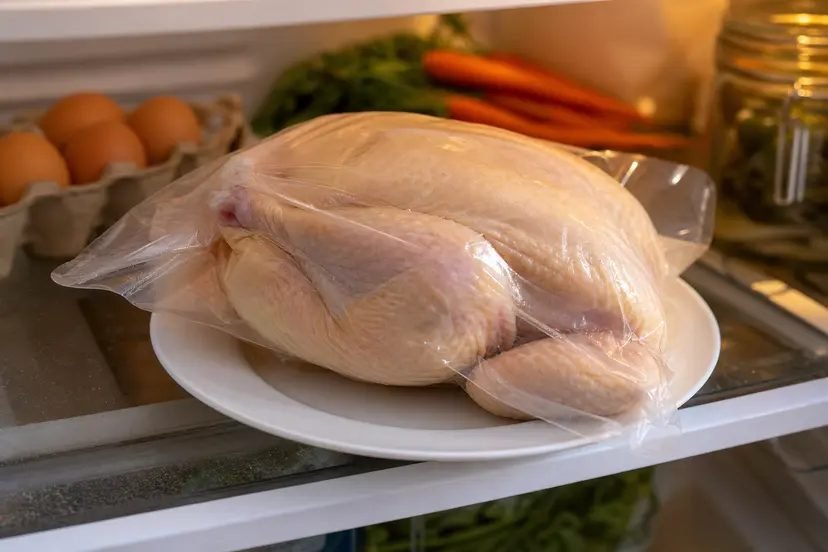
Four-day-old chicken, an open fridge door, and a cook leaning in for the sniff test: it is the most common food-safety procedure in America and one of the least reliable. So how long does cooked chicken actually last in the fridge? The short answer is 3 to 4 days — and the long answer is about why that number exists, why your nose cannot extend it, and how the freezer turns the whole question into a non-issue.
The short answer, and whose it is
The 3-to-4-day rule is the official USDA line for cooked chicken (and cooked poultry generally) stored in a refrigerator at 40°F or below. Day one is the day it was cooked, not the day you got around to putting it away. Rotisserie chicken follows the same clock, counted from purchase day, which is roughly its cooking day. This window assumes the chicken was refrigerated promptly — within 2 hours of cooking, or within 1 hour if it sat out somewhere hotter than 90°F, like a summer car or a picnic table. Chicken that missed that window does not get 3 to 4 days. It gets thrown out, however good it looks.
Why the sniff test fails
The rule is conservative for a specific reason: the bacteria that cause foodborne illness are not the bacteria that cause spoilage smells. Spoilage organisms make chicken slimy and sour, and they do announce themselves. Pathogens like Listeria — which, unusually, can grow slowly even at refrigerator temperatures — do not change the smell, look, or taste of the food they are in. That is why “it smelled fine” is not evidence and the calendar is. A $5 fridge thermometer is the cheapest food-safety upgrade in the kitchen: many home fridges actually run at 42 to 45°F, quietly shortening every storage window on the shelf, and you cannot fix a temperature you have never measured. Set the fridge at or below 40°F and the 3-to-4-day rule means what it says.
How storage method stretches (or shrinks) the window
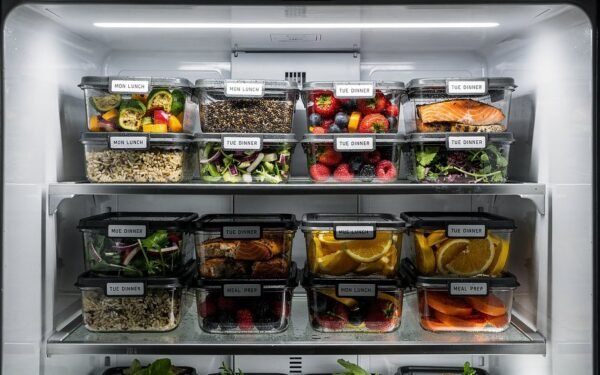
Within the 3-to-4-day rule, handling decides whether chicken reaches day four in good shape or fades by day two. Cool it quickly: large pots and whole birds should be portioned into shallow, airtight containers so the center chills fast instead of lingering warm. Store it sealed — an uncovered plate dries the meat and invites it to trade odors with everything else in the fridge. Keep it on a shelf, not in the door, where temperatures swing with every opening. And label the container with the cooking date, on tape, in marker. It takes ten seconds, and it permanently ends the fridge-door guessing game for good. Storage databases like StillTasty’s food storage database are handy for checking the same windows for the rest of the fridge’s contents.
Special cases people get wrong
Chicken salad and other deli-style mixes. Cooked chicken folded into mayonnaise-based salads follows the same 3-to-4-day clock, and the dressing slightly shortens the good-quality window even when safety holds — the salad weeps and the flavors flatten by day three. Make it in two-day quantities instead. Chicken in broth or sauce. Submerging the meat does not preserve it; soup and curry chickens obey the same rule as plain ones, counted from the original cooking day, not from the day the leftovers were reheated. Reheating resets nothing. Bringing leftovers to a boil kills active bacteria but does not rewind the calendar — day-four chicken reheated on day four is a day-four food, and reheating it again on day six is how the rule gets quietly broken in many kitchens. Reheat once, eat it then. Marinated raw chicken follows a shorter rule — 1 to 2 days in the fridge before cooking — and its clock and the cooked clock never merge. And the car ride home counts against the 2-hour window on warm days; a rotisserie chicken that toured three errands in a 95°F trunk has spent its allowance before it reaches the fridge.
How restaurants and delis think about the same chicken
It is instructive that professional kitchens, which are inspected on exactly this question, run tighter ships than most homes: cooked poultry is date-marked on the day it is made, stored in shallow pans so it chills to temperature fast, and rotated first-in-first-out so the oldest container is used first. Food codes typically allow up to seven days for properly held refrigerated prepared foods at 41°F — and yet the home guidance remains 3 to 4 days, because home fridges run warmer, doors open constantly, and temperatures are rarely verified. The gap between the two numbers is not a conspiracy; it is an honest allowance for the home fridge’s real conditions. A home cook who runs a verified 38°F fridge, shallow containers, and strict labels is operating closer to the professional end of the range — but the published rule stays 3 to 4 days, and no honest guide should pretend otherwise. The system is the safety margin; the calendar is the rule.
The freezer: the pause button
Freezing stops the clock entirely. Cooked chicken frozen at 0°F keeps its best quality for 2 to 3 months — it remains safe far longer than that, but texture slowly degrades, which is why the quality window is the one worth respecting. Freeze in portion sizes you will actually use, in airtight wrapping with as much air pressed out as possible, labeled with the date. Thaw in the fridge overnight, never on the counter, and once thawed the chicken re-enters the 3-to-4-day world — use it within that window. This is how a big batch of how to make crispy fried chicken at home becomes a Tuesday dinner plus a Friday lunch without either one gambling on day five.
Questions people actually ask
Can you eat cooked chicken after 5 days? The USDA says no, and the reasoning above is why: the risk is invisible. An $8 chicken is not worth a bout of food poisoning. What about chicken in a sauce or soup? Same 3-to-4-day rule — the sauce does not preserve the meat. Can I re-freeze thawed cooked chicken? If it was thawed in the fridge and is still within its window, yes, though texture suffers twice over; cooking it into a new dish and freezing that is usually better. How do I know the chicken has actually turned? Sour smell, slimy film, or gray-green patches mean spoilage — discard it immediately. But remember those signs only prove spoilage; their absence proves nothing. The calendar is the test.
Reheating leftovers without ruining them (or the rule)
Storage discipline deserves a decent reheating method, because chicken that survived four days of correct refrigeration should not die in the microwave’s rubber setting. Safety first: reheat leftovers to 165°F throughout, measured in the thickest part — the same thermometer habit that governs cooking applies to reheating. Quality second, by format. Roast or fried chicken reheats best in a 375°F oven on a rack for 10 to 15 minutes, which re-crisps skin that refrigeration softened. Shredded and sauced chicken reheats gently on the stove with a splash of broth, since its enemy is drying, not crisping. Chicken destined for salads and sandwiches should not be reheated at all — it is served cold, within its window. And the portion rule applies to the whole operation: reheat only what the meal needs, because the once-reheated remainder has spent its last safe trip through the temperature zones. Cook once, chill fast, freeze the surplus, reheat portions to temperature — the leftover system is a circle, and every point on it is a place where the calendar, not the nose, makes the call.
Children, older adults, and anyone pregnant or immunocompromised deserve the strict end of every range on this page, because Listeria — the pathogen that grows at fridge temperature and drives the conservative window — hits those groups hardest. For those households, treat three days as the target rather than four, reheat with particular thoroughness, and let the freezer carry more of the week’s plan. The rule is the same; only the margin changes. Food safety advice is written for the average case, and a household that knows its own case can tighten the window intelligently — never loosen it, which is the one direction the calendar does not negotiate.
The working rule
Cook it, chill it within 2 hours, seal it shallow, label it with the date, and eat it within 3 to 4 days — or freeze it and stop thinking about it for 2 to 3 months. Four sentences, no sniff test, no gambling. The cooks who never get sick from leftovers are not the lucky ones; they are the ones whose fridge runs on dates instead of hunches. Start with the masking tape and marker tonight, on whatever is already in there — the system does not need a special occasion, a new container set, or a free afternoon. It needs ten seconds per container, starting now, with whatever tonight’s dinner leaves behind.


1 comment