
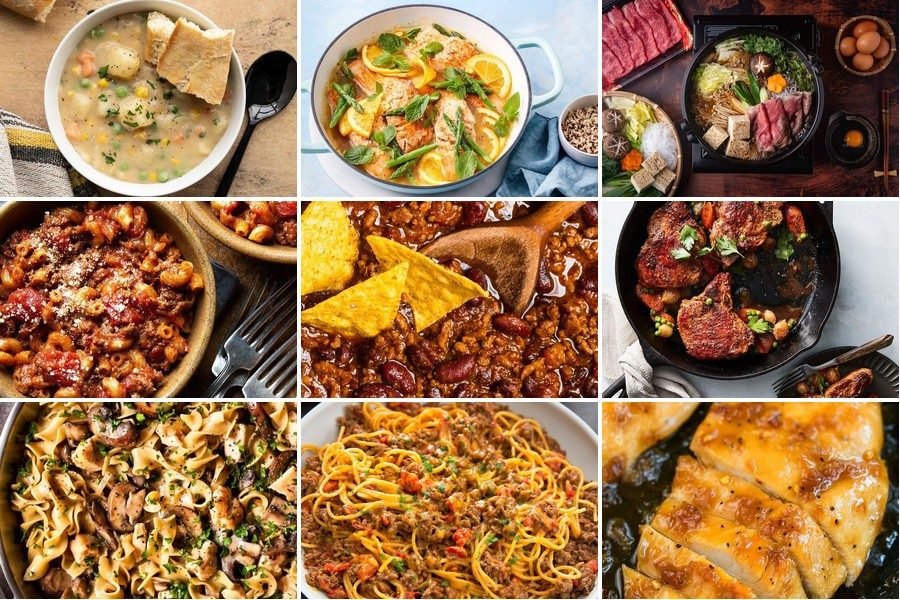
Weeknight dinner at my house used to mean either takeout or a sink full of dishes I resented. Then I committed to one-pot cooking for a month, and the revelation was not just fewer dishes. It was that constraint breeds creativity: one pot forces flavors to mingle in ways that multi-pot cooking never achieves.
What are the best one-pot dinners for busy weeknights? The ones with short ingredient lists, 30-minute timelines, and formulas you can riff on forever. Here are eight, plus the underlying patterns.
What Are the Best One-Pot Dinners for Busy Weeknights?
The weeknight one-pot formula: brown a protein, soften aromatics, add grains or starch plus liquid, simmer until done, finish with something fresh. Nearly every great one-pot dinner follows this arc. Chicken and rice (brown thighs, onion, garlic, rice, broth, 25 minutes), sausage and white bean stew (browned sausage, beans, kale, broth), beef chili (the classic, better the next day), coconut curry with chickpeas (curry paste, coconut milk, vegetables, 20 minutes), and pasta e fagioli all run on this engine.
My eight reliable rotations: (1) Lemon chicken and rice with peas. (2) Turkey chili with black beans. (3) Coconut red curry with chickpeas and spinach. (4) Sausage, white bean, and kale stew. (5) Beef and barley soup. (6) Shrimp and grits (grits in the same pot, shrimp seared last). (7) Chicken tortilla soup. (8) Pasta with sausage and broccoli rabe, the pasta cooking in the sauce. What are the best one-pot dinners for busy weeknights for picky eaters? The deconstructed ones: taco bowls and pasta bakes where components stay identifiable.
- Protein + aromatics + starch + liquid. The universal one-pot arc. Learn it, riff forever.
- Brown first, always. Browning builds the flavor base. Do not skip or rush it.
- One pot = layered flavor. Ingredients share liquid and time. The sum exceeds the parts.
- Finish fresh. Lemon, herbs, cheese, hot sauce at the end. Brightness against richness.
- Rice needs the right ratio. 1:1.5 rice to liquid for absorption methods. Trust the simmer.
- Beans: canned for speed. Rinse them. Dried beans need planning; canned need opening.
- 30-minute ceiling. If it takes longer, it is a weekend pot. Weeknights have limits.
- Double it for lunch. One-pot meals reheat beautifully. Cook once, eat twice.
Equipment notes: a heavy Dutch oven or deep saute pan with a lid handles 90% of one-pot cooking; the heavy base prevents scorching during the simmer phases. A 5-7 quart size feeds a family with leftovers. Nonstick is fine for egg-based one-pots but unnecessary otherwise; the fond (browned bits) from stainless or enameled cast iron is flavor you want, deglazed with broth or wine.
The Cleanup Myth and Other Objections
People assume one-pot means compromised results. The opposite is often true: risotto-style rice dishes, braises, and curries are better one-pot because the starches and flavors concentrate. The real objections are practical: some ingredients overcook while others finish (solution: stagger additions by cooking time, hardy vegetables first, delicate greens last), and serving from the pot feels casual (it is; embrace it, or transfer to a serving dish in ten seconds).
The freezer angle: most one-pot dinners freeze beautifully in portion containers, which means a double batch on Sunday is three future weeknight dinners. The busiest weeks are handled by the calmest Sundays. This is the real one-pot lifestyle: not just fewer dishes tonight, but dinner solved for days.
Quick Answers to Common Questions
What is the easiest one-pot dinner?
Chicken and rice: brown thighs, soften onion and garlic, add rice and broth, simmer 25 minutes. Five ingredients, one pot, endlessly variable.
Can I make one-pot dinners healthy?
Easily. Lean proteins, lots of vegetables, whole grains, and broth-based liquids. The format suits healthy cooking; richness is optional, not required.
Do I need a Dutch oven for one-pot cooking?
It is ideal but not required. Any heavy pot with a lid works. The heavy base prevents scorching; the lid enables the simmer-braise that defines the method.
How do I prevent one-pot meals from being bland?
Brown aggressively, season in layers (not just at the end), use broth instead of water, and finish with acid or fresh herbs. Blandness is under-seasoning, not a format flaw.
My One-Pot Checklist
- Brown the protein first. Fond = flavor. Do not rush this step.
- Aromatics next. Onion, garlic, spices in the fat. 2 minutes.
- Starch + liquid, simmer. Right ratios, lid on, low heat.
- Finish fresh and bright. Lemon, herbs, cheese. Contrast matters.
- Double the batch. Freeze portions. Future dinners solved.
What I Would Do Next
A month of one-pot weeknights changed our evenings: dinner in 30 minutes, one pot to wash, flavors that actually improved from the constraint. The Dutch oven has earned its counter space permanently. When someone asks what I cook on busy nights, the answer is always a variation of the formula, and it never gets old because the combinations are endless.
What are the best one-pot dinners for busy weeknights? The ones built on the brown-aromatics-starch-liquid arc: chicken and rice, chili, curry, hearty soups. Learn the pattern and the recipes write themselves.
One pot, thirty minutes, dinner done. The weeknight deserves nothing less.
The sheet-pan cousin deserves mention for nights when even one pot feels like too much: the same formulas work on a sheet pan, with protein and vegetables roasting together while a pot of quick-couscous cooks alongside. It is technically two vessels, but the effort profile is identical, and the caramelization from roasting adds a flavor dimension that stovetop simmering cannot. Sheet-pan fajitas, sausage with peppers and potatoes, and miso salmon with broccoli all follow the one-formula logic.
For families with varied tastes, the topping-bar approach saves the one-pot dinner from becoming a compromise nobody loves: cook the base (rice, pasta, or grain bowl components) and set out proteins, vegetables, and sauces buffet-style. Everyone builds their own, the cook makes one base, and the picky eater problem dissolves. It is the weeknight diplomacy that keeps one-pot cooking sustainable for years rather than weeks.
Related reading: How Do I Reseal a Driveway without Hiring a Contractor.
Related reading: How Can I Make a Small Bathroom Look Bigger.
Related reading: How Can I Add Storage to a Small Laundry Room.
For official guidance, check out USDA food safety guidance and the USDA MyPlate nutrition resources.



