
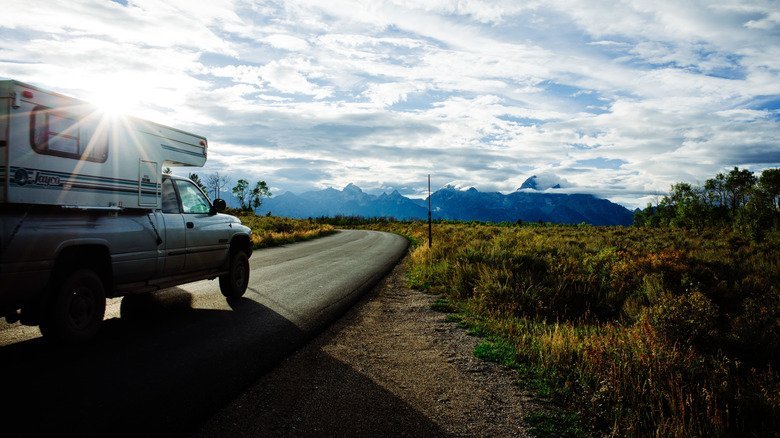
America’s national parks are the best travel deal on earth — where else does $80 buy a year of the most spectacular scenery on the continent? But the trip around the parks (lodging, food, gas) can quietly double your budget if you don’t plan. I’ve done park road trips for under $100 a day and I’ve watched friends spend triple that on the same parks. When I set out to “plan a national park road trip on a budget,” the single biggest savings came from one decision: going in September instead of July.
Planning a national park road trip on a budget comes down to five levers: the pass, the bed, the food, the fuel, and the timing. Pull all five and the parks become what they should be — accessible to everyone.
Here’s the complete budget playbook.
The Pass and the Timing (Your Two Biggest Savers)
Buy the America the Beautiful pass ($80/year) if you’ll visit 3+ parks — it pays for itself almost immediately ($35 per park entry otherwise) and covers everyone in your vehicle. Time your trip for free-entrance days (MLK Day, National Park Week in April, Juneteenth, Veterans Day, and others — the National Park Service publishes them yearly) if the pass doesn’t make sense. But don’t skip the pass to save $80 and then pay $35 three times — do the math.
Timing is the master lever: shoulder seasons (late spring, early fall) mean cheaper lodging, thinner crowds, and often better weather than summer. Summer is peak pricing everywhere near parks — gateway town hotels double, campsites sell out in minutes. If you must go in summer, book lodging 6+ months ahead and embrace the early-morning strategy (crowds sleep in; be at trailheads by 7 a.m.).
Build the route efficiently: cluster parks geographically (the Utah Mighty 5, the California loop, the Colorado cluster) to minimize driving days — every transit day is a day of gas and food with no park. Our Southwest road trip routes guide has pre-built efficient itineraries.
Sleep Cheap: Camping, Dispersed, and Gateway Towns
Camping is the budget superpower: park campgrounds run $20–$35 a night versus $150–$300 for gateway hotels. Reserve on Recreation.gov the instant windows open (popular parks sell out in minutes — set alarms). If park campgrounds are full, national forest land surrounding most parks allows free dispersed camping — download offline maps, follow Leave No Trace, and you’ve got a free site under the stars.
Gear doesn’t have to be expensive: borrow, rent (REI rents complete kits), or buy used. A $200 basic setup pays for itself in two nights versus hotels. For non-campers: gateway town motels (not lodges — the price difference is 2–3x), vacation rentals split among friends, and the occasional lodge night as a splurge. Mix strategically: camp most nights, hotel every third night for showers and laundry.
Book park lodges only if it’s the experience you want — they’re wonderful and wildly overpriced. The money you save camping buys a lot of park experiences: ranger programs (free and excellent), guided walks, and the gas to reach the remote corners most visitors miss.
Food, Fuel, and the Daily Budget
Food is the silent budget killer: park restaurants are pricey and mediocre. The cooler strategy — a good cooler, grocery runs in gateway towns, breakfast and lunch from camp, one restaurant dinner per park — cuts food costs by two-thirds. A $50 grocery run feeds two people for 3–4 days of breakfasts and lunches. Bring a camp stove ($30) and the world of hot meals opens up. Ice is cheap; eating out three times daily is not.
Fuel: budget it honestly — park road trips involve serious miles. Use GasBuddy for cheapest stations, keep the tank above half in remote areas (some park stretches have 100+ miles between stations), and maintain steady speeds — park roads punish aggressive driving with terrible mileage. Our car emergency kit is essential for remote park driving.
Daily budget reality check: camping + cooler food + pass = $60–$90/day for two. Motels + mixed dining = $150–$200/day. Lodge + restaurants = $300+/day. Same parks, same views, wildly different costs. The parks don’t care what you paid to get there — the sunset is identical. For weekly rental car math, see our California car rental breakdown.
Plan a National Park Road Trip on a Budget: The Shoulder Season Secret
Shoulder season is the budget traveler’s superpower in the parks, and it goes beyond cheaper hotels. Late September in the Utah parks: daytime 70s, nighttime 40s, cottonwoods turning gold, crowds at half of summer’s, campsites actually available, and the light — the low golden light of fall in red rock country is the most beautiful light these parks get. Late April/May offers the mirror image: wildflowers in the desert parks, waterfalls at peak in Yosemite, bears emerging in Yellowstone. The parks in shoulder season aren’t the consolation prize; they’re arguably the main event.
The practical side: shoulder season means you can be spontaneous. Summer requires booking campsites the minute windows open and planning around timed-entry lotteries; September lets you decide Tuesday to leave Friday. That flexibility is worth real money — no premium for the only available hotel, no settling for the expensive lodge because everything else sold out. Check each park’s specific shoulder window (it varies — the desert parks’ shoulder differs from the mountain parks’), watch for early snow at elevation, and pack layers. The budget trip and the best trip turn out to be the same trip.
Budget Park Trip Cheat Sheet
- America the Beautiful pass: $80/year (pays for itself at 3 parks)
- Go shoulder season: cheaper lodging, fewer crowds
- Camp ($20–$35/night) or dispersed camp (free) on forest land
- Reserve campsites the instant Recreation.gov windows open
- Cooler + grocery strategy: cuts food costs by two-thirds
- Camp stove ($30) opens up hot camp meals
- Cluster parks geographically to minimize driving days
- GasBuddy for fuel; tank above half in remote areas
- Free ranger programs — the best value in the parks
- Daily budget: $60–$90 (camp) / $150–$200 (motel) / $300+ (lodge)
The Parks Are for Everyone
The national parks were created as America’s best idea — public wonder, open to all. The budget trip isn’t a lesser version; in many ways it’s the truer one. Campfire mornings, trailhead sunrises, the Milky Way from a free dispersed site — money can’t buy better than that.
Plan the route, pack the cooler, buy the pass. The parks are waiting, and they’re the best deal in travel.


1 Comment