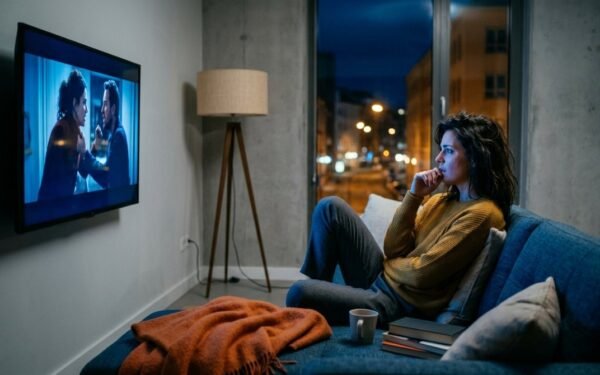
Rain is already running down the kitchen windows at 7:40 on a Saturday, the school district has cancelled the outdoor tournament, and the day that was supposed to be spent at the fields has collapsed into the house. By 9:30 the announcement arrives, delivered flat on the couch with a phone in hand: bored, completely bored, nothing to do. Screens have already taken the first three hours, breakfast dishes are still in the sink, and there are nine more hours of rain ahead. What saves a day like this is not a list of crafts produced with a bright smile. It is a sequence that respects how teenagers actually work: autonomy first, friends in the mix, food with real stakes, and long stretches where adults provide the supplies and then get out of the way.
Morning: The Slow Start That Actually Works
The day starts by not starting anything. Maya, fifteen, stays in pajamas, makes hot chocolate for herself and her younger brother, and scrolls while the rain does its worst against the gutters. The adult in the house resists the urge to fill the silence with suggestions. Instead, the kitchen gets quietly stocked: tortillas, eggs, cheese, frozen berries, brownie mix, popcorn, and whatever odd ingredients are already in the fridge. A board game with a short setup goes on the table without comment. A pile of old magazines, scissors, and glue appears near it. Nothing is announced as an activity.
By 10:15, boredom does the work that nagging never does. Maya opens the fridge, spots the mismatched ingredients, and proposes a cooking contest to her brother, mostly to prove she can beat him. That is the opening. The rule for the adult is simple: say yes to the shape of the idea, set two ground rules about heat and cleanup, and leave the judging criteria to them. They invent categories on the spot: best use of a weird ingredient, best presentation, biggest disaster that still tastes good. Phones come out for photos, not for zoning out. The kitchen gets loud, flour gets everywhere, and the first two hours of real engagement happen without anyone calling it a plan.
Late morning settles into lower gear after the food. Maya’s friend Lena, stuck in the same rain three streets away, joins by video call, and the two of them fall into a bad-movie riff session. They pick a famously cheesy film neither has finished, keep the call open, and talk back to every dramatic pause. It works because it is social, slightly rebellious, and entirely chosen by them. Nobody assigned a movie. Nobody wrote discussion questions. The screen is still on, but now it is a shared joke instead of a solo trance.
Midday: Friends Arrive and the House Gets Louder
Around 1 p.m. the rain eases to a drizzle for twenty minutes, just long enough for Lena and one more friend to arrive with wet shoes and a bag of thrift-store clothes bought the week before. The plan they bring with them is a flip session: cut, pin, paint, and remake one item each before dinner. A folding table becomes the work station. Fabric paint, old denim, patches, and a sewing kit that rarely sees daylight cover it in minutes.
This is where a rained-out Saturday finds its center. Each teenager works on something they will actually wear, music plays from a shared playlist where everyone gets veto power twice, and the conversation wanders the way it only does when hands are busy. The adult role shrinks to three jobs: keep snacks appearing, settle the one argument about the good scissors, and admire results when invited. Attempts to turn the session into a lesson about sustainability or creativity would end it. Left alone, it runs for two solid hours and produces one painted jacket, one cropped hoodie, and one skirt that needs a parent-level rescue stitch at the end, which gets requested with surprising politeness.
Parents comparing notes on what tends to work at this age will notice the pattern lines up with Common Sense Media’s teen activity and media guides: choice, peer connection, and hands-on making beat scheduled entertainment almost every time.
Afternoon: The Challenge Hour
By 3:30, energy dips. The flip session is done, the rain is back in full force, and the phones start creeping up again. This is the moment when a challenge with a clock works better than an open-ended suggestion. Maya sets it herself, after spotting a phone stand: a three-minute short film, shot entirely in the house, edited before 5 p.m., with the rule that every person must appear and one kitchen item must be treated as a priceless artifact. The group writes a plot in six minutes that makes sense to no one outside the room. A ladle becomes a royal scepter. The brother is cast as a villain because he owns the deepest voice.
Filming takes over the whole house. Furniture moves, a hallway becomes a palace corridor, and the bathroom mirror gets used for a dramatic confession scene that collapses into laughter four takes in a row. Editing happens shoulder to shoulder on one phone, with heated debate about music and a title card. The finished film is objectively rough and, to its makers, perfect. It gets sent to two relatives and Lena’s older sister, whose replies become part of the reward.
Notice what the afternoon did not include: a tournament organized by an adult, a prize bought in advance, or a theme imposed from outside. The stakes were social. Show the film, beat the clock, make each other laugh. Teenagers who would reject a family activity at noon will give full effort to a dare they invented at three.
After the premiere, the group splits by mood, and the house handles that well because the morning setup left options lying around. Lena and Maya start a two-player card tournament with a running score on the fridge. The brother retreats happily to a solo building project at the kitchen table, earbuds in, rebuilding a model he had abandoned in September. Nobody needs the whole group to do the same thing for the day to count as shared. Parallel activity in the same house, with people drifting between rooms, is the natural shape of a good teen day indoors.
Evening: Food, a Rematch, and the Wind-Down
Dinner becomes the second cooking event of the day, with lower stakes and better skills. Homemade pizzas solve the problem of different tastes without argument: small bases, bowls of toppings, and a rule that each person must try one slice invented by someone else. The morning’s contest winner claims the best spot by the oven as a prize nobody planned. While pizzas bake, the group builds a playlist battle for later, each person adding three songs the others have probably never heard, with skips allowed only after the first chorus.
After dinner, the day finds its closing rhythm in the living room. The playlist battle runs first, loud and argumentative in the best way. Then comes a proper group game, chosen from the same shelf that holds ideas families rotate for fun things to do at home on a Friday night: a social deduction game where lying well is the whole point, played in a circle with snacks in the middle and phones face down by agreement, not by confiscation. The agreement holds because the game is genuinely better without interruptions, a reason teenagers accept far more readily than a rule about screen time.
The last hour is quiet on purpose. The friends who need rides home get them. Maya, back on the couch where the day began, does the thing that would have been unthinkable at 10 a.m.: she asks to watch one episode of an old favorite show with the family, the kind of slow comfort viewing that only lands after a full day. The brother falls asleep before it ends. Rain is still on the windows, lighter now.
What Made the Day Work
Look back at the shape of it and the lessons are plain. The adult stocked the kitchen, left materials visible, set a small number of real rules about safety and cleanup, invited the friends, and then stayed mostly out of frame. Every major activity was chosen or invented by the teenagers themselves: the cooking contest, the flip session, the film with the ladle scepter, the playlist battle. Each one had at least one of three ingredients: friends involved, something real to make or eat, or a challenge with a clock or a judge.
The day also left room for drift. Solo time in the afternoon was not treated as failure, and the slow first hour was not treated as a problem to fix. Thirty minutes of honest boredom early on is what pushed Maya toward the fridge and the contest idea. Fill every gap and teenagers never get to invent anything. Leave the whole day empty, though, and the phones win by default. The balance that worked here was raw materials plus patience.
Rain cancelled the tournament and gave back a different kind of day: one with flour on the floor, a painted jacket drying over a chair, a ridiculous three-minute film saved on a phone, and no one asking when it would stop raining. That is the realistic goal for a rained-out Saturday with teenagers. Not a perfect schedule. A house full of possible things, friends within reach, and adults wise enough to let the day belong to the people who have to live it.