
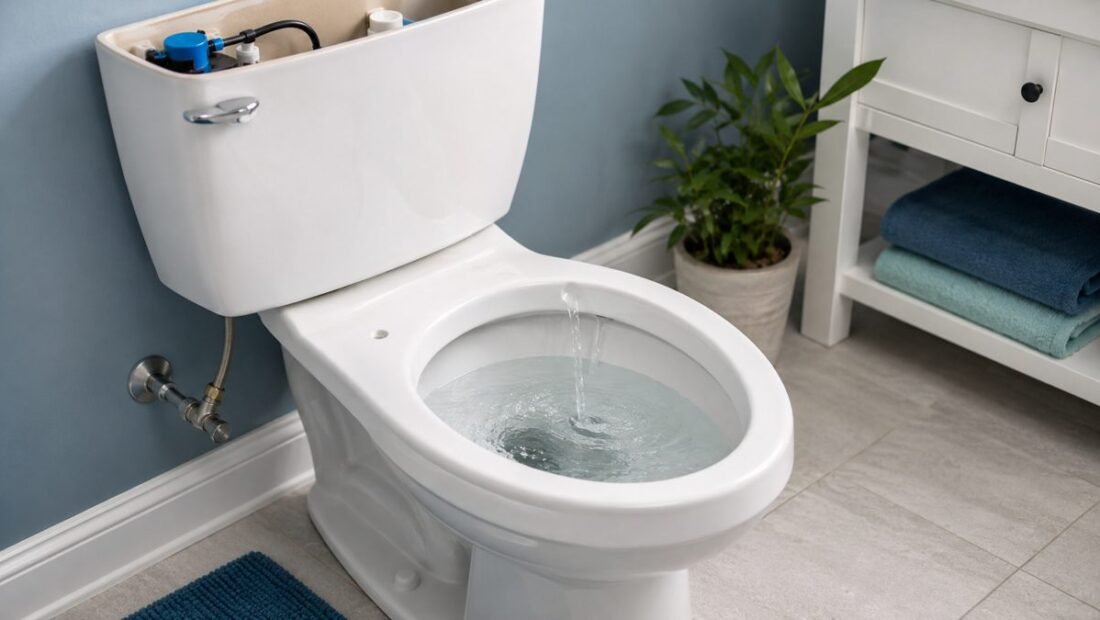
Our toilet ran continuously for a week before I looked into the tank, and what I found was almost insulting: a $5 rubber flapper that had warped with age, letting water leak into the bowl forever while the fill valve worked overtime. A running toilet wastes up to 200 gallons a day, which showed up on our water bill like a second mortgage.
How to fix a running toilet that will not stop is a 20-minute job in 90% of cases, and the diagnosis takes two minutes. Here is the whole thing.
How Do I Fix a Running Toilet That Will Not Stop?
Open the tank lid and look. The diagnosis is visual: if water is flowing into the overflow tube, the water level is too high (fill valve issue). If the water level is fine but you hear running, the flapper is leaking (flapper issue). If the handle feels loose or the chain is tangled, that is the third classic. These three causes cover nearly every running toilet in existence.
The flapper fix is the most common. How do I fix a running toilet that will not stop when the flapper is the culprit? Turn off the water at the wall valve, flush to empty the tank, unhook the old flapper from the overflow tube pegs, and snap on the new one ($5 to $10, universal flappers fit most toilets). Reconnect the chain with about half an inch of slack; too tight and it cannot seal, too loose and it tangles. Turn the water back on and watch: the tank fills, the flapper seals, silence. Total time: ten minutes.
- Diagnose by looking. Water into overflow tube: fill valve. Phantom running: flapper. Loose handle: chain.
- Flapper swap: $5-$10. Unhook, replace, half-inch chain slack. Ten minutes.
- Adjust the fill valve. Water level should sit 1 inch below the overflow tube. Turn the adjustment screw or clip.
- Replace a faulty fill valve: $10-$15. If adjusting does not hold, swap the whole valve. Twenty minutes, no special tools.
- Check the chain. Tangled or too-tight chains prevent sealing. Simplest fix of all.
- Clean mineral buildup. Hard water crusts on the flapper seat prevent sealing. Scrub the seat with a cloth.
- Test with food coloring. Drop dye in the tank; color in the bowl without flushing proves a flapper leak.
The fill valve fix is the second classic. If the water level is too high or the valve hisses constantly, adjust the float down so water stops an inch below the overflow tube. If adjustment does not hold, replace the fill valve: turn off water, flush, unscrew the old valve (one nut underneath, one clip inside), drop in the new one, reconnect the water line. Fifteen minutes, $12, and the most satisfying silence in home repair.
What That Running Is Costing You
A running toilet wastes 200+ gallons per day, which is 6,000 gallons a month. At average US water rates, that is $50 to $150+ monthly, literally money flushing away. The $5 flapper pays for itself in hours. There is also the wear: a constantly cycling fill valve burns out faster, and the phantom water flow can mask real leaks elsewhere. Fix it this weekend; the math is absurd.
While the tank is open, look at everything. Corroded bolts, a cracked overflow tube, or a disintegrating flush handle are all cheap parts and easy swaps. The tank is the most accessible plumbing in your house; a two-minute inspection every year prevents every toilet emergency.
Quick Answers to Common Questions
Why does my toilet run every few minutes?
The flapper is leaking slowly, the tank drains to the trigger point, and the fill valve tops it up. This phantom flushing is the classic warped-flapper symptom. Replace the flapper.
How much water does a running toilet waste?
Up to 200 gallons per day for a continuously running toilet. Even a slow flapper leak wastes thousands of gallons monthly. It is one of the biggest hidden water wasters in a home.
Can I fix a running toilet without turning off the water?
For diagnosis, yes. For part replacement, turn off the wall valve; it takes five seconds and prevents a geyser. If the wall valve is stuck, use the main shutoff.
When should I call a plumber for a toilet?
If the wall shutoff valve will not budge, if the tank itself is cracked, or if multiple fixtures have pressure problems (indicating a supply issue). Flappers and fill valves are firmly DIY territory.
My Toilet Fix Checklist
- Lift the lid and diagnose. Overflow flow, phantom running, or chain issue. Two minutes.
- Flapper: $5-$10 swap. Half-inch chain slack. Ten minutes.
- Fill valve: adjust, then replace. $10-$15. Fifteen minutes if needed.
- Food coloring test. Confirms the flapper seal. Definitive diagnosis.
- Inspect the whole tank. Bolts, handle, tube. Two-minute annual prevention.
What I Would Do Next
Our water bill dropped $60 the month after the flapper swap, and I still think about the week we paid to water the sewer. The toilet is silent now, the tank internals are all new, and I have fixed two friends’ running toilets since, because once you have done it, you cannot un-know how easy it is. Twenty minutes, five dollars, done.
How to fix a running toilet that will not stop: diagnose by looking, swap the $5 flapper or adjust the fill valve, and confirm with the food coloring test. Twenty minutes, basic parts, blessed silence.
Open the tank today. The fix is almost certainly staring at you.
One upgrade worth considering while you are in the tank: a dual-flush converter kit ($25) replaces the standard flapper with a two-button system that uses less water for liquid waste. It installs like a flapper swap and can cut toilet water use by 20-30%. Since you are already turning off the water and reaching into the tank, the incremental effort is ten minutes for years of savings.
Related reading: How Can I Make Iced Coffee Taste Like a Coffee Shop.
Related reading: How Much Does It Cost to Repaint a 3-bedroom House Interior.
Related reading: How Can I Make My Garage More Organized and Useful.
For official guidance, check out EPA guidance on indoor air quality and This Old House how-to articles.




1 Comment