
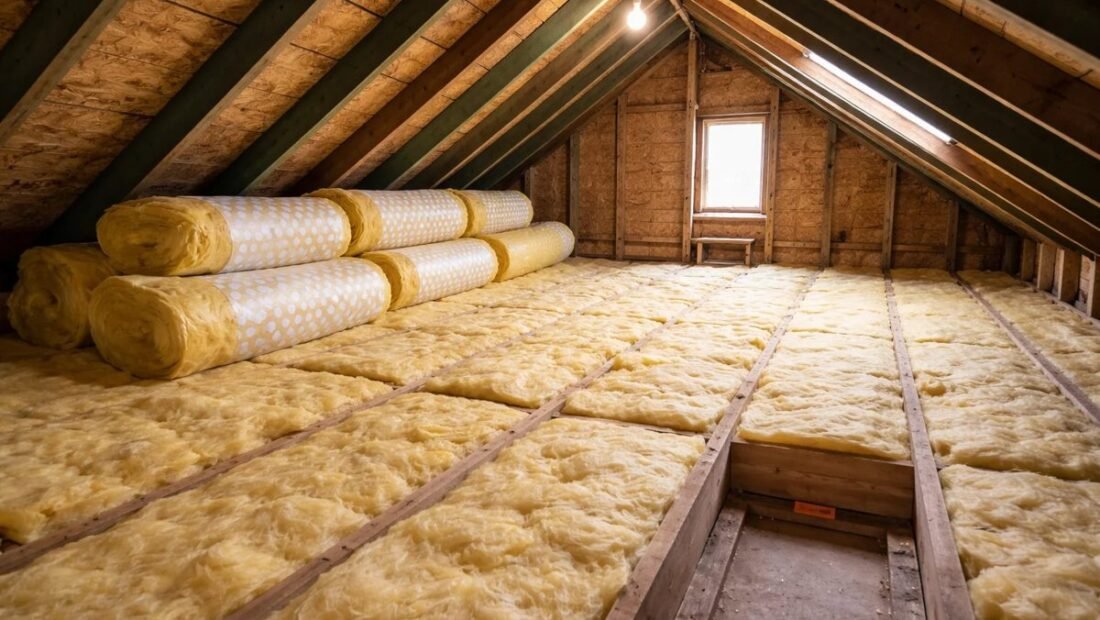
Our heating bills dropped 25% the winter after we insulated the attic, and the project cost $600 in materials and one dusty weekend. The attic is where home energy goes to die: heat rises, and an under-insulated attic is essentially a chimney for your money.
What is the best way to insulate an attic on a budget? Blown-in cellulose over the existing insulation, DIY with a free machine rental. Here is why, and how.
What Is the Best Way to Insulate an Attic on a Budget?
First, know your target. The Department of Energy recommends attic insulation of R-38 to R-60 in most US climate zones, which translates to roughly 12 to 20 inches of blown insulation depending on material. Most older homes have R-19 or less, sometimes just a few inches of ancient fiberglass. Measure your current depth; every inch below target is money leaking upward.
The budget champion is blown-in cellulose: $0.50 to $1.00 per square foot in materials, made from recycled paper treated with fire retardant, and installable DIY in a day. What is the best way to insulate an attic on a budget with cellulose? Buy 15+ bags at a big-box store and the blower machine rental is typically free for 24-48 hours. One person feeds the machine below, one person sprays the attic above, and a 1,000 square foot attic takes about 4 hours. Fiberglass batts are the alternative ($0.50-$1.50/sq ft), simpler to install solo but harder to fit perfectly around obstacles, and gaps kill performance.
- Air seal first. Caulk and foam every penetration: pipes, wires, light fixtures, the attic hatch. Insulation over air leaks is a sweater over a screen door.
- Target R-38 to R-60. 12-20 inches of blown insulation in most climates. Measure current depth first.
- Blown cellulose: cheapest effective. $0.50-$1/sq ft, free blower rental with bulk purchase. Two-person, half-day job.
- Do not block soffit vents. Use rafter baffles to keep airflow from eaves to ridge. Blocked ventilation causes moisture and ice dams.
- Insulate and weatherstrip the hatch. The attic access is a giant uninsulated hole. Foam board on the hatch plus weatherstripping.
- Wear protection. Respirator, goggles, long sleeves, headlamp. Attics are nasty; dress for it.
- Work on boards, not joists. Lay plywood planks to kneel on. One foot through the ceiling erases all savings.
- Check for rebates. Utilities and states often subsidize insulation. Check before buying; free money is the best budget.
Air sealing deserves its reputation as the unsexy prerequisite. Insulation slows heat transfer; air leaks bypass insulation entirely. A tube of caulk and cans of expanding foam ($30 total) sealing every pipe, wire, and fixture penetration can improve attic performance as much as several inches of insulation. Do the sealing Saturday morning, blow insulation Saturday afternoon. The combination is what produces the 25% bill drops.
What Not to Do
Common attic mistakes that waste money or cause damage: installing insulation over knob-and-tube wiring (fire hazard; get an electrician’s assessment first), blocking soffit vents (traps moisture, rots the roof), compressing insulation (crushed fiberglass loses R-value; never store boxes on it), and insulating without air sealing (the sweater-over-screen-door problem). Also, do not insulate the attic floor if you are finishing the attic as living space; then you insulate the rafters instead, which is a different project with different rules.
Vermiculite insulation in older homes may contain asbestos. If your attic has gray-brown pebble-like insulation, do not disturb it; get it tested ($30-$50) before doing anything. This is the one attic scenario where DIY stops immediately.
Quick Answers to Common Questions
How much does it cost to insulate an attic?
DIY blown cellulose: $500-$1,000 for a typical home. Professional installation: $1,500-$3,500. Air sealing supplies add $30-$50. Utility rebates can cut these significantly.
Can I add new insulation over old?
Yes, if the old insulation is dry and in decent shape. Add the new layer perpendicular to the old for best coverage. Remove or address any wet, moldy, or vermiculite insulation first.
Is blown-in or batt insulation better?
Blown-in fills gaps and voids better, making it superior for attics with obstacles. Batts are easier for solo DIYers and simpler to remove later. Performance is similar when properly installed; installation quality matters more than material.
How much will attic insulation save?
The DOE estimates 10-25% heating and cooling savings for under-insulated attics. Payback is typically 2-5 years, among the fastest of any home improvement.
My Attic Insulation Checklist
- Measure current depth. Know your starting R-value. Target R-38 to R-60.
- Air seal every penetration. Caulk and foam. $30. Do it first.
- Install rafter baffles. Keep soffit vents breathing. Prevents moisture damage.
- Blow cellulose to target depth. Free machine rental, two people, half a day.
- Insulate the hatch. Foam board + weatherstripping on the access.
What I Would Do Next
Two winters later, the house holds heat like a thermos, the upstairs bedrooms are the same temperature as downstairs for the first time ever, and the $600 project has saved roughly that much every single year since. Attic insulation is the rare home improvement that is cheap, fast, DIY-friendly, and pays you back forever. The dusty weekend was worth it a hundred times over.
What is the best way to insulate an attic on a budget? Air seal first, then blow cellulose to R-38+ with a free rental machine. $600, one weekend, 25% lower bills.
The heat is already rising. Catch it before it leaves.
Related reading: What Is the Easiest Homemade Bread Recipe for Beginners.
Related reading: How Long Does Cooked Chicken Last in the Fridge.
Related reading: How Can I Make Iced Coffee Taste Like a Coffee Shop.
For official guidance, check out the Department of Energy home efficiency guides and EPA guidance on indoor air quality.



