
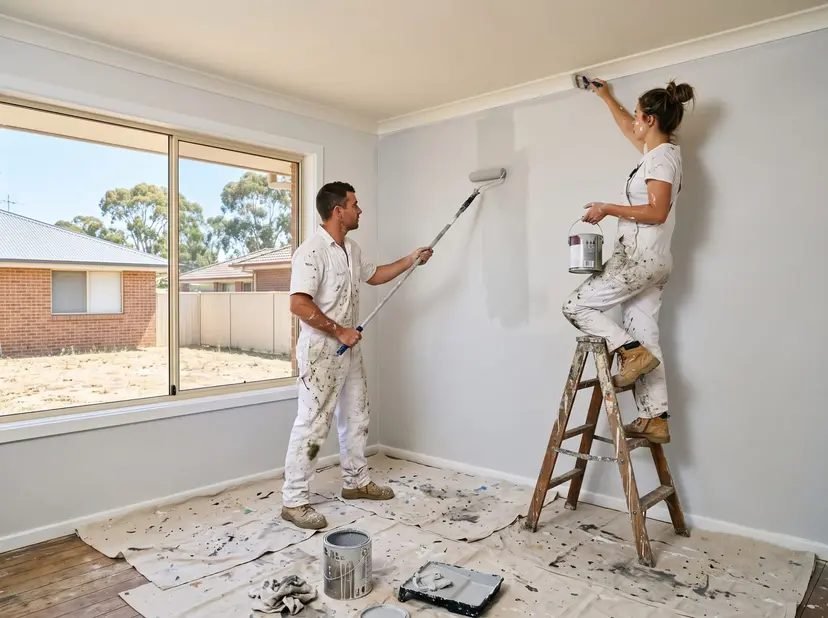
When we got quotes to repaint our 3-bedroom house, they ranged from $2,800 to $7,500, and every painter swore their number was the reasonable one. That spread taught me that interior painting costs are not mysterious; they are just driven by factors most homeowners never think to ask about.
So how much does it cost to repaint a 3-bedroom house interior? The honest range: $3,000 to $6,000 professionally painted in most US markets, or $500 to $1,000 doing it yourself. Here is what moves you up or down that range.
How Much Does It Cost to Repaint a 3-Bedroom House Interior?
The math starts with size. A typical 3-bedroom home has 1,200 to 1,800 square feet of living space, which translates to roughly 3,500 to 5,000 square feet of paintable wall and ceiling surface. Professional painters charge $2 to $6 per square foot of floor space for walls only, or $3,000 to $6,000 total for the whole house including ceilings and trim in average markets. High-cost cities like New York, San Francisco, or Boston run 30 to 50% higher; smaller Midwest markets can come in under $3,000.
What actually drives the price is prep work, not paint. How much does it cost to repaint a 3-bedroom house interior when the walls are in good shape with one color throughout? Near the bottom of the range. Add wall repairs, heavy patching, wallpaper removal, drastic color changes requiring extra coats, high ceilings, intricate trim, or painting kitchen cabinets, and you climb fast. Paint itself is $40 to $70 per gallon for quality paint, and a whole house needs 10 to 15 gallons; the paint is rarely more than 15% of a professional quote. You are paying for labor and prep.
- Get at least three quotes, and make them itemized. Quotes should separate prep, paint, coats, and rooms. A lump sum hides padding; itemization reveals it.
- Ask about the paint brand and line. Contractor-grade paint in a premium quote is a red flag. Quality paint covers better and lasts longer, which is worth the $20 per gallon difference.
- Decide on colors before the painter arrives. Color changes mid-job cost you in extra coats and delays. Test samples on the wall and live with them for a few days.
- Clear the rooms yourself. Moving furniture and taking down curtains is easy money saved. Most painters charge for it or do it rushed.
- Consider doing ceilings and trim separately. If the budget is tight, fresh walls alone transform a house. Trim and ceilings can wait for phase two.
- Check reviews and ask for recent references. Painting is the trade with the lowest barrier to entry, which means the widest quality spread. Recent local references matter more than years in business.
- Time it for the off-season. Late fall and winter are slower for painters, and you may negotiate 10 to 15% off peak-season pricing.
The DIY math is compelling: $500 to $1,000 in paint and supplies for the whole house, versus $3,000 to $6,000 hired out. The catch is time. A 3-bedroom interior takes a careful DIYer 40 to 60 hours including prep, and the quality gap between amateur and pro shows most in the cutting-in at ceilings and trim. My take: DIY the bedrooms, hire out the high-visibility living areas if your cut lines are shaky.
What a Good Quote Looks Like
A professional quote should specify: rooms and surfaces included, prep work detailed (filling, sanding, caulking, priming), number of coats, exact paint brand and product line, timeline, payment schedule, and warranty. Red flags include quotes given without seeing the house, demands for large upfront deposits (10 to 20% is normal; 50% is not), no insurance proof, and prices dramatically below the others, which usually means skipped prep.
And get everything in writing. The painting industry runs on handshakes, and handshakes are how color disputes and scope arguments start. A one-page written scope protects both sides.
Quick Answers to Common Questions
How long does it take to repaint a 3-bedroom house?
A professional crew typically needs 3 to 5 days for walls, ceilings, and trim. A DIYer should plan two to three weekends. Drying time between coats and prep work set the pace more than the rolling itself.
How many gallons of paint do I need?
Roughly 10 to 15 gallons for walls in a 1,200 to 1,800 square foot home, plus 3 to 5 for ceilings. One gallon covers about 350 square feet per coat; two coats is standard.
Should I paint the ceilings too?
If they are discolored, yes, it makes the biggest visual difference after wall color. White ceiling paint is cheap and brightens everything. If ceilings are clean and white already, skip them.
Is it cheaper to paint in winter?
Often yes. Painters are less booked in late fall and winter, and some offer off-season discounts. Interior painting is unaffected by weather, so there is no quality downside.
My Painting Project Checklist
- Measure your space and count gallons. 10-15 gallons for walls is typical. Buy 10% extra.
- Get three itemized quotes. Prep, paint brand, coats, timeline. In writing.
- Test colors on the wall first. Samples in morning and evening light before committing.
- Clear rooms and remove outlet covers. Easy prep you do yourself saves real money.
- Confirm insurance and payment schedule. 10-20% deposit is normal. Never 50% upfront.
What I Would Do Next
We ended up paying $4,200 for ours: mid-range market, good prep, quality paint, one accent wall. Three years later it still looks fresh, which is the real test. The cheapest quote we got was $2,800, and I am fairly convinced it would have needed redoing by now. With painting, you are buying years, not gallons.
How much does it cost to repaint a 3-bedroom house interior? Budget $3,000 to $6,000 for pros, $500 to $1,000 for DIY, and remember that prep work is what you are really paying for.
Get the itemized quotes, pick your colors calmly, and hire the painter whose prep description is the most detailed. Future you, staring at crisp cut lines, will be grateful.
Related reading: What Should I Do About Mold in My Bathroom.
Related reading: How Do I Make Crispy Fried Chicken at Home.
Related reading: How Long Does Cooked Chicken Last in the Fridge.
For official guidance, check out the Department of Energy home efficiency guides and EPA guidance on indoor air quality.




1 Comment