
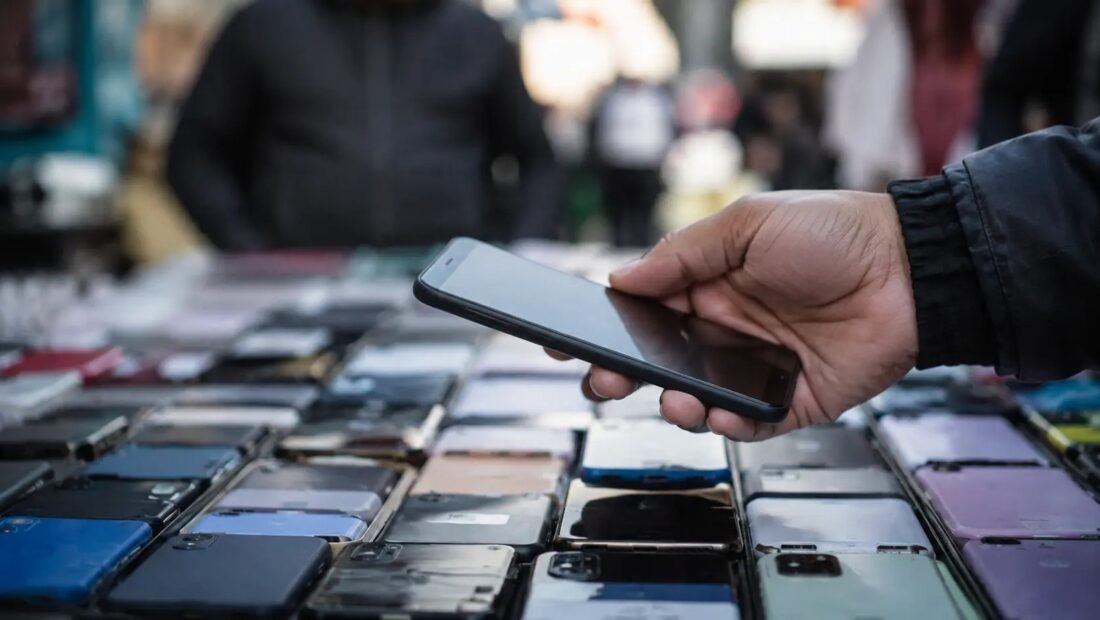
Open the junk drawer in almost any kitchen and there is a phone in it — last year’s model, still working, still worth somewhere between $200 and $500. Selling it should be simple. And yet everyone knows someone with a story: the buyer who paid with a fake screenshot, the “shipping agent” who needed a gift card, the stranger who wanted to meet in a parking lot at midnight. The phone in your drawer is worth real money, but only if you sell it the careful way. Here is the whole job as one checklist; the sections after it explain the steps where people actually get hurt.
The Safe-Selling Checklist
- Choose the channel by risk, not just price — trade-in (safest, least money), a verified marketplace (middle), or a local private sale (most money, most risk).
- Back up everything, then sign out of everything — photos, messages, and especially your Apple ID or Google account.
- Factory reset, and remove the SIM and any memory card.
- Photograph the phone honestly — every scratch, in good light.
- Price it from sold listings, not asking prices — then price 5 percent below the average for a fast, clean sale.
- Take payment only through the platform, or cash in person in a public place. Nothing else. Ever.
- Ship only to the address on the order, with tracking — or meet at a safe location in daylight.
- Keep screenshots of the listing, the chat, and the tracking number until the money is final.
Step One: Pick Your Channel With Clear Eyes
There are three honest ways to sell a phone, and they trade money against safety in a straight line. At the safe end, Apple, Samsung, and carrier trade-in programs give you the least — often $50 to $150 less than a private sale — but there is zero scam risk, zero haggling, and zero meeting strangers. You mail the phone, they credit you, done.
In the middle sit dedicated device marketplaces such as Swappa, where listings are checked, IMEI numbers are verified, and payment runs through the platform. Prices there run close to true market value — typically 15 to 25 percent more than trade-in offers — and scam rates are far lower than on general classifieds, because the platform stands between you and the buyer.
At the far end, Craigslist and Facebook Marketplace can get you the most money and carry the most risk, because there is no middleman at all: no verified payment, no dispute process, no one to call. Plenty of people sell safely there every day — but every classic scam in the next section lives on those platforms, so the rules below matter most exactly there. As a rough guide to what you are pricing: last year’s flagship in good condition fetches $300–$500, two-year-old models $150–$300, and older phones usually under $100.
Step Two: Leave Nothing of Yours on the Phone
This is the step sellers rush, and it is the one that can cost you your photos, your accounts, or worse. Back the phone up first — full backup to iCloud or Google, and check the backup actually completed by opening it on another device or computer. Then sign out. On an iPhone, sign out of iCloud and turn off Find My; a phone still linked to your Apple ID is worthless to a buyer (activation lock) and a red flag in any listing. On Android, remove your Google account before resetting, for the same reason.
One more preparation that pays for itself: charge the phone fully and leave it on while you list it. Buyers ask for screenshots of the battery health screen and a photo of the phone working, not dark — and a listing that already contains those two images answers the most common questions before they are asked, which shortens the whole sale and keeps the conversation with real buyers short and businesslike. If the phone has a case and a screen protector that have been on since new, say so in the listing; a phone that lived its life protected is worth a small premium and buyers know it.
Only then do the factory reset, and do it from the settings menu so it wipes cleanly. Take out your SIM card and any microSD card — the SD card is the one people forget, and it can carry years of photos. Finally, a detail almost nobody does: go through the accounts that were on that phone — banking, email, password manager — and check “signed-in devices” for the old phone, signing it out anywhere it still appears. Five minutes, total peace of mind.
Step Three: A Listing That Repels Scammers
Scammers hunt for vague listings from careless sellers. A careful listing does the opposite. Photograph the phone in daylight from every side, screen on and screen off, and include any scratch or ding in its own close-up — honest photos of flaws build the trust that gets a phone sold and kill the buyer’s excuse to renegotiate later. Include the original box and a decent cable if you have them; they genuinely add value. Write the storage size, the battery health if your phone reports it, and the exact reason you are selling (upgraded — always fine). Price from completed, sold listings for the same model and storage, not from what people are asking, and consider pricing about 5 percent under that average: the small discount buys you a fast sale with fewer time-wasters.
Step Four: The Transaction Is Where It Happens
Nearly every phone-selling scam attacks the payment, not the phone. Learn the shapes. A buyer offers more than your price and asks you to ship quickly — the “payment” will be a fake email or screenshot. A buyer sends a check or a payment notice and asks you to refund the “extra” — the original payment evaporates days later. Someone insists on gift cards, wire transfers, or a “shipping agent” who needs a fee. A local buyer wants to meet somewhere isolated, or late. The FTC’s guidance on shopping and selling online covers these patterns, and they have not changed in years because they keep working.
The defenses are boring and total. Inside a platform, never move the conversation or the payment off it — “text me instead” is the first line of almost every scam. Locally, meet in daylight in a public place; many police stations offer a safe-exchange zone in their parking lot for exactly this. Cash, counted, or an instant payment you watch arrive in your own app — not a screenshot of theirs — before the phone leaves your hand. Shipping? Only to the address attached to the paid order, never an address sent later by message, and always with tracking. If you are ever pressured with urgency — “my son’s birthday is today, just ship it” — that pressure is the tell. Walk away; there is always another buyer. Fraud that does land can be reported to the FBI’s Internet Crime Complaint Center, which is worth doing even when the money is gone, because those reports are how patterns get shut down.
Deposits, Holds, and Haggling: The Small-Talk Traps
Three friendly-sounding requests deserve automatic suspicion. The first is the deposit: “I can send $50 now to hold it, just send me your payment details.” On classifieds, this is often the opening move of a fake-payment scam — the “deposit” confirmation is forged, and it arrives with a story about why you should hand over the phone against the rest. A real local buyer does not need to hold a phone with a deposit; they come and see it, like everyone else.
The second is the courier story: “My shipping agent will collect it, I have added their fee to my payment, please pass it to them.” No legitimate buyer pays you extra so you can pay their courier in gift cards or cash. Any arrangement where money flows from you back toward the buyer, at any point, for any reason, is a scam wearing a logistics costume. The third is softer: the endless haggler who agrees a price, views the phone, then discovers “faults” worth half the asking price. Your honest listing photos are the defense — point at them, restate the price, and be visibly willing to let them leave. Condition is worth rehearsing before you list, too: a phone with a cracked screen or a tired battery is worth meaningfully less than a clean one, and pricing it as if it were clean just attracts this exact negotiation. Price the phone you actually have.
The Bottom Line
Sell the drawer phone — it is losing value every month it sits there. Just do it in order: pick the channel knowing the price-versus-safety trade, strip your digital life off the device completely, list it with honest photos and a sold-listing price, and treat every payment shortcut as the scam it almost certainly is. Do that, and the safest way to sell a phone is also a perfectly profitable one. Buyers should be just as careful, by the way — if you are on the other side of this transaction, our checklist of things to check before buying a used device applies to phones almost word for word.


1 Comment