
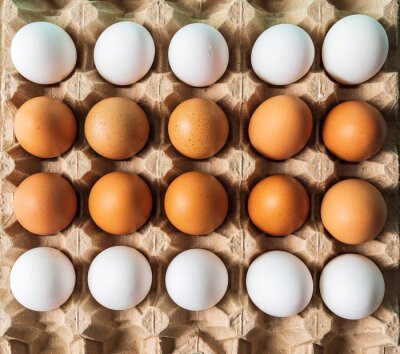
The brown carton costs a dollar or two more, the eggs inside look identical once cracked, and the yolks sit in the pan the same shade of yellow. So what is the extra money actually buying?
Short answer: Shell color comes from the hen’s breed, and nothing else. White eggs and brown eggs of the same size and type have essentially the same nutrition, taste, and cooking behavior. Brown eggs cost more because the hens that lay them are bigger birds that eat more feed. The differences worth paying attention to are diet, freshness, and size, not color.
Where Shell Color Comes From
A hen lays the shell color her breed is built to lay. Hens with white feathers and white earlobes, such as Leghorns, tend to lay white eggs. Hens with red or brown feathers and red earlobes, such as Rhode Island Reds, tend to lay brown eggs. Earlobe color is a handy clue, though breed is the true driver.
For brown eggs, pigment is added near the end of shell formation, on the outer surface. Cut a brown shell and the inside of the shell is pale. The white, the yolk, and the structure of the egg form the same way regardless of that outer tint. Blue and green eggs from certain breeds follow the same principle, with pigment placed differently, and they are no more or less nutritious for their color either.
That is why shell color cannot signal quality. Color says something about the bird’s genetics and nothing reliable about what the bird ate, how fresh the egg is, or how the egg will taste scrambled, boiled, or baked. A recipe that works with a large white egg works with a large brown egg in the same quantity.
Why Brown Eggs Cost More
The price gap starts at the feed trough. Brown-egg breeds are generally larger hens. A larger bird needs more feed every day to maintain her body and keep laying, and feed is a major cost in egg production. Farmers pass that cost along, and stores price brown cartons higher as a result.
Marketing adds a second layer. Brown shells look rustic to many shoppers and get linked in the mind with farm stands and natural food, even when the brown eggs in a supermarket carton come from a large commercial operation and the white eggs beside them come from a similar one. When a shopper is willing to pay more for that image, the higher price holds. None of that premium buys extra protein, extra vitamins, or a richer yolk by itself.
Regional habit plays a role too. In some areas brown eggs are the local norm and white eggs are the less common choice, and pricing can reflect local supply rather than any quality ranking. Price, on its own, is a poor guide to what is inside the shell.
What Does Not Differ: Thickness, Taste, and Yolk Color
Shell thickness does not split neatly by color. Shell strength depends far more on the hen’s age and diet, especially calcium, than on pigment. Young hens tend to lay eggs with firmer shells. Older hens tend to lay larger eggs with thinner shells, white or brown.
Taste does not follow color either. In a blind tasting with eggs of the same freshness and production type, white and brown eggs are effectively indistinguishable. Any real taste gap between two cartons usually traces back to freshness or to what the hens ate, not to the shell.
Yolk color follows feed, not shell. Hens that eat feed rich in yellow and orange plant pigments, or that forage on greens and insects, lay eggs with deeper orange yolks. Hens on a paler grain diet lay paler yolks, whatever the shell color. A deep yolk looks rich and can signal a varied diet, but yolk shade alone does not prove higher nutrition across the board. Pale yolks are not defective, and dark yolks are not automatically superior in every nutrient.
Cooking behavior stays the same as well. White and brown eggs whip, set, and bake alike. For reliable results with either color, a method such as how to make perfect scrambled eggs every time depends on heat and timing, not on the carton shade chosen at the store.
What Actually Differs Between Cartons
Diet of the hen. Feed changes the egg. Hens given feed enriched with flaxseed or other omega-3 sources lay eggs with more omega-3 fats, and the carton will say so. Hens with access to pasture and varied forage can produce eggs with a flavor many people notice, along with deeper yolks from the plants and insects in the diet. Those are diet effects, and they can appear in a white shell or a brown one.
Freshness. A fresher egg of either color beats an older egg of either color. Fresh whites stand up thick around a firm, raised yolk. Older whites spread thin and watery, and the yolk flattens and breaks more easily. For poaching and frying, freshness shapes the result in the pan far more than shell color ever could. Check the pack date and best-by date on the carton and choose the freshest stock available, turning cartons to see dates rather than grabbing the front box by habit.
Size grade. Large, extra-large, and jumbo describe weight per dozen, not quality or color. Most recipes are written for large eggs. Swapping in jumbo eggs without adjusting count can add too much liquid to a batter, and using medium eggs can leave a bake short. Matching the size a recipe expects matters more than matching a shell color.
For clear definitions of grades and handling, the American Egg Board’s egg facts and handling guidance covers shell eggs without leaning on color myths.
Labels Decoded: None of Them Is About Shell Color
- Cage-free: Hens are not kept in cages and can move around inside a barn, but the label does not guarantee outdoor access.
- Free-range: Hens have some access to the outdoors. How much space and how much time outside vary, so the term covers a wide range of conditions.
- Pasture-raised: Hens spend time outdoors on pasture. This label generally points to the most outdoor access of the common terms, and cartons often carry a higher price for that reason.
- Organic: Hens receive organic feed grown without most synthetic pesticides and fertilizers, and the label carries rules on antibiotics and outdoor access. It describes feed and production standards, not shell color.
- Omega-3 enriched: Hens received feed with omega-3 sources such as flaxseed. The eggs carry more omega-3 than standard eggs from hens on regular feed.
- Grade AA and Grade A: Grades reflect shell condition and the firmness of the white and yolk at packing. Grade AA is the firmer, higher grade. Both are safe and useful, and neither is tied to brown versus white.
Reading labels this way shifts spending to things that can change the egg: feed, outdoor access, and freshness. Paying extra for brown alone buys pigment. Paying extra for a defined label buys a defined production choice, which is a clearer trade.
Storage and Freshness Checks That Work
Store eggs in the fridge in their original carton, on a shelf rather than in the door. The door warms and cools each time it opens, and those swings age eggs faster. The carton also shields the shells from strong fridge odors, since shells are porous, and it keeps the pack date visible. Keep eggs away from raw meat and store them with the pointed end down if they are transferred to another container, which helps keep the yolk centered, though the original carton handles the job well on its own.
American shell eggs are washed during processing, which removes the natural protective coating, so steady refrigeration matters. Use eggs by the best-by date on the carton for the best quality, and crack any questionable egg into a separate small bowl first. A spoiled egg announces itself with a strong sulfur smell that needs no test to interpret. Discard it without tasting.
The Float Test and Its Limits
The water float test gives a rough age clue. Fill a bowl with water and lower the egg in. A fresh egg sinks and lies on its side. An older egg stands on one end or floats. That happens because the air cell inside the shell grows as moisture and air move through the shell over time, making the egg more buoyant.
Floating means old, not automatically unsafe. An older egg that floats can still be usable if it smells normal once cracked and has been stored cold, though the white will be thin and the quality lower. A fresh egg that sinks can still be spoiled in rare cases, which is why smell and appearance after cracking remain the deciding checks. Treat the float test as a sorting tool for using older eggs in hard cooking rather than as a safety verdict.
Hard-cooked eggs offer one freshness quirk in the opposite direction. Very fresh eggs are harder to peel cleanly after boiling, since the white clings to the membrane. Eggs that are a week or two old peel more easily, so buying ahead for deviled eggs or egg salad is practical.
Short Questions, Straight Answers
Are brown eggs healthier than white eggs?
No. With size and production type matched, protein, fat, cholesterol, and vitamin content are essentially the same. Health related differences come from feed, such as omega-3 enrichment, and those eggs come in both colors.
Do brown eggs taste better?
Not because of the shell. Fresher eggs and eggs from hens on varied feed can taste better, and those factors have nothing to do with pigment. A fresh white egg will taste better than a stale brown egg.
Why do some yolks look deep orange and others pale yellow?
Feed pigments and forage set yolk color. Greens, marigold, corn, and insects deepen the shade. Shell color plays no part in it.
Which eggs are best to buy?
Choose the size recipes expect, usually large, pick the freshest dates on the shelf, and pay for labels that match personal priorities, such as pasture-raised or omega-3 enriched, only when those priorities matter. Ignore color as a quality signal.
Once color drops out of the decision, the egg case gets simpler. Breed paints the shell. Feed, freshness, and size shape the egg on the plate, and those are the details worth the money.



1 Comment