
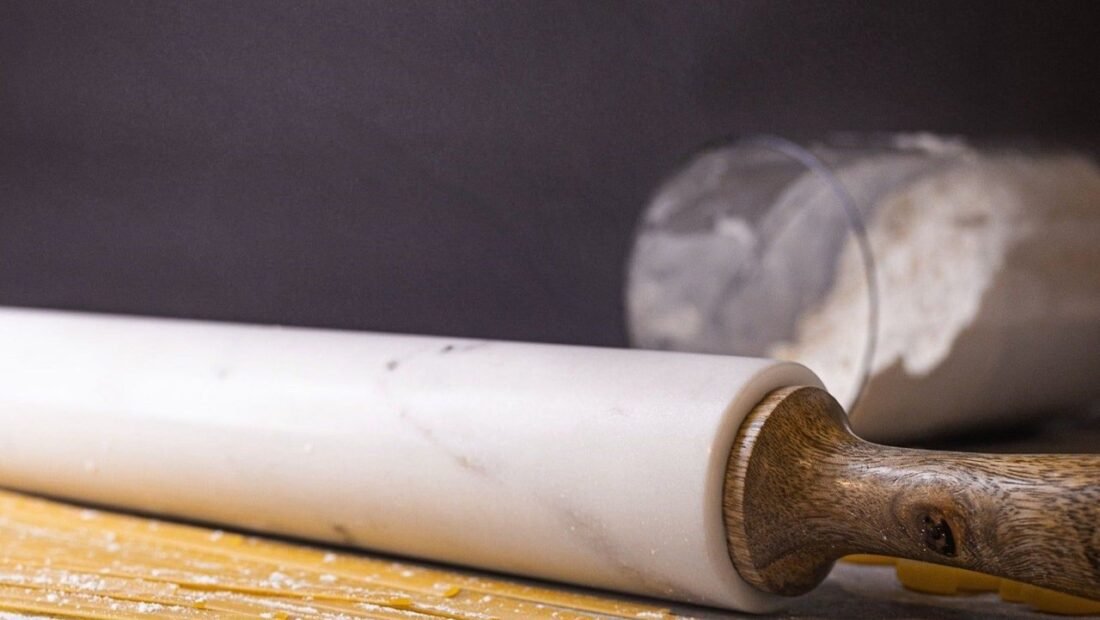
A pasta machine is nice to have. It is absolutely not required. People made pasta by hand for centuries before anyone extruded anything, and the hand-rolled kind has a texture — slightly uneven, beautifully sauce-gripping — that machines struggle to replicate. All you need is flour, eggs, a rolling pin, and about an hour.
I’ve made pasta both ways, and I reach for the rolling pin more often than you’d expect. There’s something deeply satisfying about transforming two ingredients into dinner with your own hands, and the result genuinely tastes better than dried pasta from a box. Here’s the full method for homemade pasta without a machine, including the mistakes to avoid.
The Only Dough Recipe You Need for Homemade Pasta Without a Machine
The classic ratio is simple: 100 grams of flour per large egg, plus a pinch of salt. For two generous servings, that’s 200 grams of flour (about 1⅔ cups, spooned and leveled) and 2 eggs. Use all-purpose flour and you’ll get tender pasta; use half ’00’ flour or semolina and you’ll get pasta with more bite. Honestly, all-purpose works great for beginners — don’t overthink the flour on your first attempt.
Mound the flour on a clean counter, make a well in the center like a volcano, crack the eggs into it with the salt, and beat the eggs with a fork, gradually pulling in flour from the walls. When it gets shaggy, ditch the fork and knead by hand for 8 to 10 minutes until smooth and elastic — it should feel like firm playdough. Then wrap it tightly and rest it 30 minutes at room temperature. That rest relaxes the gluten and makes rolling dramatically easier. Skip it and you’ll fight the dough the whole time.
Rolling by Hand: The Technique
Divide the rested dough into quarters (keep the rest covered so it doesn’t dry out). Flatten one piece with your palm, then roll from the center outward with a long rolling pin, rotating the dough a quarter turn every few rolls to keep it even. You’re aiming for translucent-thin — thin enough to see your hand’s shadow through it. This takes a few minutes per piece and some elbow grease. Dust very lightly with flour if it sticks, but go easy: too much flour makes tough pasta.
For cutting, you have options. Loosely roll the sheet up like a scroll and slice it into ribbons for tagliatelle — ¼ inch for fettuccine-width, wider for pappardelle. Unroll the ribbons and toss with a little flour or semolina so they don’t stick. Or cut squares for farfalle (pinch the centers), or leave wide sheets for lasagna. Fresh pasta cooks fast — 2 to 4 minutes in aggressively salted boiling water — so have your sauce ready before the pasta goes in.
Reference: King Arthur Baking’s fresh pasta guide.
Reference: Serious Eats on making fresh pasta by hand.
Hand-Rolled Pasta Success Checklist
The details that separate silky pasta from a frustrating workout:
- Weigh your flour if you can. The 100g-per-egg ratio is forgiving, but weighing removes all guesswork.
- Knead a full 8 to 10 minutes. Under-kneaded dough tears when rolled thin; properly kneaded dough stretches like silk.
- Rest the dough 30 minutes, minimum. This is the most-skipped step and the most important one.
- Roll thinner than you think. Pasta roughly doubles in thickness when cooked, so aim for nearly see-through.
- Keep unused dough covered with a damp towel or plastic wrap — exposed dough forms a dry skin in minutes.
- Salt your cooking water until it tastes like the sea. This is your only chance to season the pasta itself.
- Sauce the pasta in the pan, not in a bowl. Toss just-drained pasta with sauce over heat for a minute so they marry.
Sauces That Deserve Fresh Pasta
Fresh pasta’s delicate texture shines with simple sauces that dried pasta can’t carry as well. A classic: brown butter with sage and parmesan — nutty, fast, transcendent. Or cacio e pepe, where the starchy pasta water becomes the sauce. A simple fresh tomato sauce with basil lets the pasta’s eggy richness star. Save the heavy, long-simmered ragù for dried pasta, which has the structure to stand up to it.
And here’s a truth worth knowing: fresh pasta isn’t ‘better’ than dried in any absolute sense. They’re different ingredients. Dried pasta (especially bronze-die) has a firm chew and porous surface that’s ideal for hearty sauces. Fresh pasta is tender, rich, and quick. Make both, love both, and you’ll never look at the pasta aisle the same way.
Frequently Asked Questions
What if I don’t have a rolling pin?
A wine bottle works perfectly — it’s smooth, heavy, and about the right diameter. In a real pinch, a clean broom handle or even a sturdy water bottle does the job. The pasta doesn’t care about your equipment; it cares about even pressure and patience. Some of the best hand-rolled pasta in history was made with a broom handle.
Why is my pasta dough too dry or too crumbly?
Flour absorbs moisture differently depending on humidity, brand, and how you measured. If the dough won’t come together, wet your hands and keep kneading — then add water literally a teaspoon at a time. If it’s sticky, dust lightly with flour. Eggs also vary in size; large eggs are the standard the ratio assumes. Adjust, don’t panic — dough is forgiving.
How do I store fresh pasta if I’m not cooking it right away?
For a few hours: dust cut noodles generously with semolina or flour, nest them loosely on a floured tray, and cover with a towel. For longer: freeze the nests on a tray until solid, then bag — cook straight from frozen, adding a minute. Don’t refrigerate fresh pasta uncovered; it dries out and cracks. And never store it piled wet — it fuses into a single dumpling.
More from Daily USA Post
- how can I discover new indie artists before they blow up — what you need to know
- Keep reading: what is the difference between white and brown eggs
- Related: how do I make a smoothie that actually keeps me full
Homemade pasta without a machine needs just flour, eggs, and a rolling pin: mix 100g flour per egg, knead 10 minutes, rest 30, roll paper-thin, and cut into ribbons. It cooks in under 4 minutes and tastes like a different food from the boxed stuff. Try it once on a lazy Sunday — you’ll be amazed what your hands can do, and dinner guests will think you took a class.



