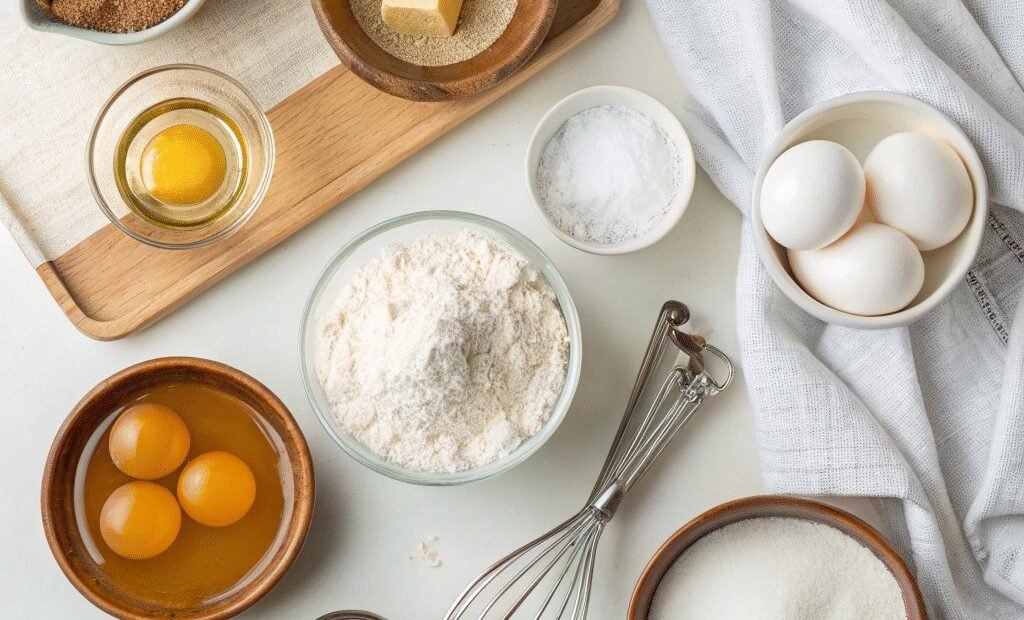
The cake batter is half mixed, the oven is heating, and the egg carton is empty. Or the clock says six, a vegan guest arrives at seven, and the recipe you planned calls for three eggs. In both cases the problem is the same: you need something to do the work eggs were supposed to do, and you need to pick it before the butter melts and the moment passes.
Eggs are not one ingredient with one job. In baking they bind loose batter into a set crumb, trap air and add lift, bring moisture, and add richness and color. No single substitute does all of that well. The right choice depends on which job matters most in the recipe in front of you. A swap that saves a muffin can ruin a sponge cake. Read the recipe first, decide what the eggs are really doing there, and then pick the substitute built for that task.
First, name the job the egg is doing
Binding is the most common job in everyday baking. In cookies, muffins, quick breads, and many snack cakes, the egg mostly holds the batter together as it bakes so the finished crumb does not fall apart. Moisture is the second job. In brownies and dense cakes, eggs keep the crumb tender and stop it from drying out. Lift and foam are the third job, and they are the hardest to replace. In light cakes, meringues, and soufflés, beaten eggs hold air in a foam that sets in the oven. If that foam fails, the whole structure fails.
Count the eggs, too. Most options below handle one egg well and two with care. Past that point a direct swap becomes a gamble.
For binding: flax egg
Use: 1 tablespoon ground flax plus 3 tablespoons water per egg. Stir and let it rest for 5 minutes until it thickens into a gel.
A flax egg is a binder first. The ground seed forms a sticky gel that holds batters together in much the same way a beaten egg does in simple recipes. It suits muffins, pancakes, quick breads, hearty cookies, and banana bread, where the crumb is meant to be moist and a little dense. The flavor is mild and slightly nutty, and it blends in well when the bake has other strong flavors like spice, chocolate, or whole grains.
It will not whip, and it adds almost no lift on its own. If the recipe also needs rise, make sure baking powder or another leavener is present and active. Use ground flax, not whole seeds. Whole seeds do not form the same gel and will pass through the batter without doing the binding work.
For binding: chia egg
Use: 1 tablespoon chia seeds plus 3 tablespoons water per egg. Stir and rest for 5 minutes until thick.
A chia egg does nearly the same job as a flax egg, through the same gel-forming trick. The seeds absorb water and create a thick mixture that binds cookies and muffins well. The flavor is even milder than flax, which makes chia a good pick when you do not want any nutty note at all. The tiny seeds can leave a slight texture in pale, smooth batters, so flax is often the neater choice for light-colored cakes. For dark batters, bars, and whole-grain bakes, that texture is rarely noticed.
Pick flax or chia based on what you have. Neither will foam or give a high, airy rise by itself.
For moisture: unsweetened applesauce
Use: 1/4 cup unsweetened applesauce per egg.
Applesauce brings water, a little natural pectin, and gentle sweetness. It keeps cakes and brownies moist and tender, and it works best in recipes that are already rich or dense and do not need much lift from the egg. Chocolate cakes, spice cakes, and brownies are strong fits. Because applesauce adds liquid without fat, the crumb can turn slightly gummy if you replace too many eggs or if the recipe is already very wet. Stick to one or two eggs, and use unsweetened sauce so you do not push the sugar out of balance. If all you have is sweetened applesauce, cut the sugar in the recipe a little to compensate.
For moisture with flavor: mashed ripe banana
Use: 1/4 cup mashed ripe banana per egg.
Banana does what applesauce does, with one clear trade-off: it tastes like banana. That is a plus in banana muffins, oatmeal cookies, pancakes, and chocolate bakes where the flavor fits. It is a problem in a plain vanilla cake or a delicate lemon loaf, where the banana will take over. Banana also adds sweetness and density, so the crumb will be moist and a bit heavier than an egg-based version. Use a ripe banana with plenty of brown spots for the best sweetness and the smoothest mash. A pale, firm banana will be starchy and harder to blend in.
For lift and foam: aquafaba
Use: 3 tablespoons aquafaba per egg. Whip it when the recipe needs foam.
Aquafaba is the liquid from a can of chickpeas. Its mix of proteins and starches lets it whip into soft and even stiff peaks, much like egg whites. That makes it the standout choice for meringue-style uses: meringue toppings, mousses, marshmallow-style frostings, and light foams where no other substitute on this list will work at all. Unwhipped, 3 tablespoons can also stand in for a whole egg in some cakes and mayonnaise-style sauces, though the result is lighter and less rich.
Use liquid from canned chickpeas for the most consistent result. Home-cooked liquid varies in thickness and may need reducing until it feels like raw egg white. Aquafaba is not a strong binder for heavy batters.
For lift in quick bakes: baking soda and vinegar
Use: 1 teaspoon baking soda plus 1 tablespoon vinegar per egg.
This pair works by making gas. When the acid in the vinegar meets the baking soda, it releases bubbles that help a batter rise. It suits quick breads, muffins, and simple cakes that bake right away, while the bubbles are still active. Add the vinegar near the end of mixing and get the pan into the oven promptly. If the batter sits, the lift is lost.
This swap gives lift but almost no binding or richness, so it works best when the recipe has other structure from flour and fat and only needs a push upward. Use a mild vinegar such as white vinegar or apple cider vinegar. In most bakes the sharp smell cooks off, but in a very plain batter a strong vinegar can leave a faint tang. If leavening is the part you are unsure about, it helps to be clear on the difference between baking soda and baking powder, because the two are not interchangeable and each needs different conditions to work well.
For dense, rich bakes: silken tofu
Use: 1/4 cup silken tofu, blended smooth, per egg.
Blended silken tofu adds moisture, protein, and body without a strong flavor of its own. It shines in dense bakes that are meant to be rich rather than airy: brownies, dense chocolate cakes, cheesecake-style bars, and some quick breads. The crumb will be tender and close-textured. That same density is why tofu is a poor pick for a light sponge or any cake that should rise tall and stay fluffy. Use silken tofu, not firm tofu. Firm tofu will not blend smooth enough and can leave small curds in the batter. Blend it fully before you measure and add it, so it spreads evenly.
For convenience: commercial egg replacers
Use: Follow the package amount per egg, usually a measured spoon of powder mixed with water.
Commercial replacers are typically starch-based powders, often built on potato or tapioca starch with leavening added. Their strength is consistency. They are neutral in flavor, shelf-stable, and mixed to a standard ratio, which makes them reliable for cookies and cakes that call for one or two eggs where the egg is not the main structure. If you bake egg-free often for an allergy, a replacer removes the guesswork of choosing between flax, fruit, and tofu each time.
Their limit is the same as most swaps. A starch gel can bind and add a little lift, but it cannot foam like egg white or set a custard. Read the package notes, as some products are for baking only. If you bake egg-free often, King Arthur Baking’s egg substitution guides are a useful reference, especially for cakes.
Where substitutes reach their limit
Be direct about the recipes that do not swap well. Angel food cake depends entirely on whipped egg white foam. A soufflé does the same. Quiche and baked custards depend on eggs to set into a smooth, sliceable gel. In each case the egg is not a helper ingredient. It is the structure itself. A binder or a fruit puree cannot copy that, and the result will be a different dish, often a failed one. For those foods, use a recipe that was developed to be egg-free from the start, with its own tested structure, rather than adapting a classic and hoping.
The same caution applies to egg count. Replacing one egg in a muffin recipe is low risk. Replacing two eggs in a sturdy cake is often fine with the right match. Replacing three or more eggs in one recipe gets risky for almost every substitute, because too much of the binding, lift, and set came from the eggs. If a recipe calls for many eggs, split the difference only if you are willing to experiment, or choose a different recipe that fits the ingredients you have.
Recommendation: match the swap to the job
For most home bakers, keep three options ready and you will cover almost every urgent case. Keep ground flax for binding in muffins, cookies, and quick breads. Keep unsweetened applesauce for moisture in cakes and brownies. Keep aquafaba in mind for any recipe that needs whipping, because nothing else on the list can do that job. Add baking soda plus vinegar when a quick bake needs extra lift, silken tofu when the bake should be dense and rich, and a commercial replacer when you want the most neutral, repeatable result for cookies and simple cakes.
Start with the recipe’s main need, pick the substitute built for that need, and keep the swap to one or two eggs. Do that and an empty carton or a vegan guest at seven stops being a crisis. It becomes a simple choice you can make with confidence, and the cake still comes out of the oven looking and tasting like cake.