
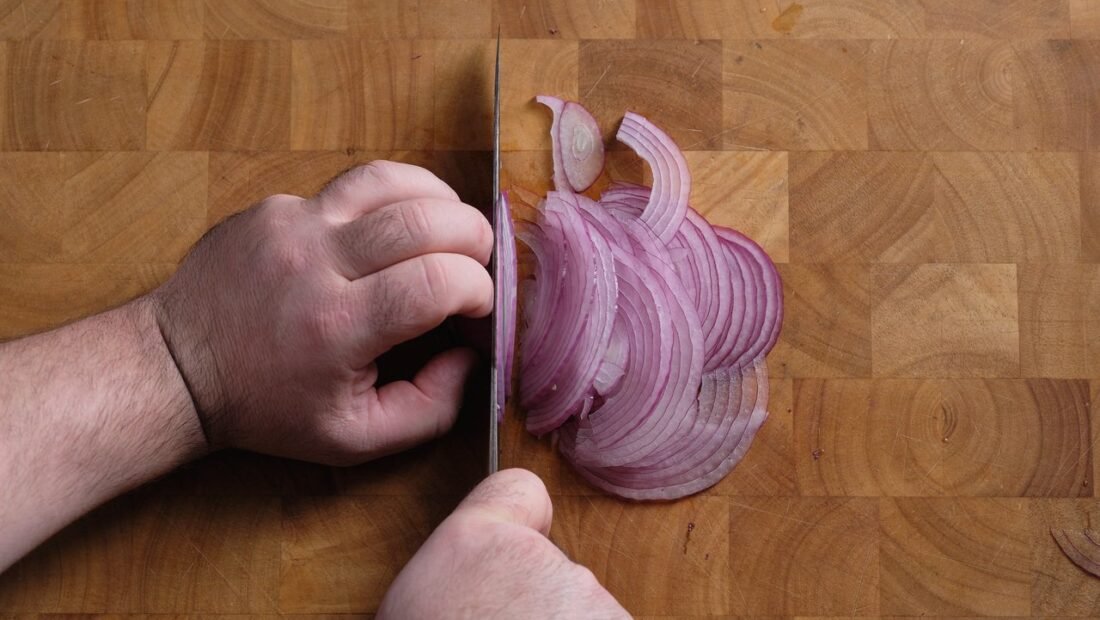
Every cook knows the sting: thirty seconds into dicing an onion, your eyes are streaming, your nose is running, and you’re questioning your life choices. I’ve tried every folk remedy out there — bread in the mouth, goggles, chanting — and most of them are nonsense. But a few methods genuinely work, and the science behind them is surprisingly simple.
Onions make you cry because cutting them releases enzymes that create a gas called syn-propanethial-S-oxide. That gas drifts up, hits your eyes, and your tear glands respond. So every real solution does one of two things: it reduces the gas the onion produces, or it keeps the gas away from your eyes. Here’s what actually delivers on both fronts.
Methods That Actually Let You Cut an Onion Without Crying
Chilling the onion is the single most effective trick. Pop it in the fridge for 30 minutes (or the freezer for 10 to 15) before cutting. Cold slows the enzyme reaction that creates the tear gas, so measurably less of it reaches your eyes. This isn’t folklore — it’s basic chemistry, and it makes the biggest difference of any method I’ve tested.
Second: use a very sharp knife. A sharp blade slices cleanly through cell walls, while a dull one crushes them, releasing far more of the irritating compounds. If your knife squishes the onion more than it cuts, that’s your problem right there. Third, cut under running water or next to a small fan. Water dissolves the gas before it rises; a fan blowing across your cutting board pushes it away from your face. Any one of these helps — combine all three and you can dice a whole bag of onions tear-free.
The Science of the Onion’s Tear Gas
Here’s what’s happening at the microscopic level. An intact onion keeps its sulfur compounds and enzymes in separate cells. Your knife breaks those walls, the enzymes convert the compounds into sulfenic acids, and those rearrange into the volatile gas that attacks your eyes. The root end concentrates the most enzymes, which is why many cooks cut it off last — or leave a bit of it attached while dicing to hold the onion together.
Sweet onions like Vidalias genuinely make you cry less because they contain fewer sulfur compounds — that’s the whole reason they taste sweet. Red and yellow storage onions are the worst offenders. So if you’re particularly sensitive, choosing a sweet variety is a legitimate strategy, not a cop-out.
Reference: Harold McGee’s food science writing on alliums.
Reference: USDA onion handling and storage tips.
Tear-Free Onion Cutting: The Full Playbook
Stack these techniques for the best results:
- Chill the onion 30 minutes in the fridge or 10 to 15 in the freezer before cutting — the biggest single difference-maker.
- Sharpen your knife. A sharp edge crushes fewer cells and releases less gas. Hone it before onion duty.
- Cut the onion in half through the root, peel, then slice with the cut side down — stable and efficient.
- Leave the root end intact while dicing; it holds the layers together and contains the highest enzyme concentration.
- Run the tap or position a small fan to blow across the board, carrying the gas away from your face.
- Try sweet onions (Vidalia, Walla Walla) for raw applications — fewer sulfur compounds means fewer tears.
- Wear glasses or sunglasses if you’re sensitive; they create a physical barrier the gas can’t easily cross.
Myths You Can Safely Ignore
Let’s clear out the folklore. Holding bread in your mouth does nothing — the gas targets your eyes, not your mouth, and there’s no mechanism by which bread helps. Chewing gum is equally useless. Lighting a candle nearby is supposed to burn off the gas, but a candle flame is far too small to matter. Onion goggles do work, technically, but chilling the onion plus a sharp knife gets you 90% of the benefit with zero ridiculousness.
The one semi-myth with a grain of truth: cutting under water. It works because the gas dissolves in water — but it’s awkward and slightly dangerous with a sharp knife on a slippery onion. A fan or running tap nearby gives you the same chemistry with all ten fingers intact. I’ll take that trade every time.
Frequently Asked Questions
Does putting bread in your mouth really stop onion tears?
No — it’s pure folklore. The irritating gas targets your eyes, not your mouth, and there’s no mechanism by which bread helps. The methods with actual science behind them are chilling the onion (slows the enzyme reaction), using a sharp knife (crushes fewer cells), and moving air across the board (carries gas away). Skip the bread; sharpen the knife.
Why do some onions make me cry more than others?
Sulfur content. Storage onions (yellow, red) are high in the sulfur compounds that become tear gas; sweet onions like Vidalias are bred for low sulfur, which is why they taste sweet and sting less. Spring onions and shallots are milder too. If you’re sensitive, choosing sweet varieties for raw applications is a legitimate strategy.
Will wearing contacts protect my eyes from onions?
Interestingly, yes — somewhat. Contact lenses create a partial barrier that slows the gas reaching your eyes, and many contact wearers report crying less over onions. Glasses and sunglasses work the same way. It’s not complete protection, but combined with a chilled onion and a sharp knife, it’s a meaningful difference.
More from Daily USA Post
- what are the best board games for adults who hate Monopoly — what you need to know
- Keep reading: how do I plan the perfect game night for couples
- Related: how can I make my backyard movie setup better
To cut an onion without crying, chill the onion first, use a sharp knife, and keep air moving across your cutting board. That’s it — three simple, science-backed steps that beat every folk remedy in the book. The bread-in-the-mouth trick can retire. Your eyes will thank you, and dinner will be ready five minutes sooner because you’re not stopping to wipe your face.




1 Comment