
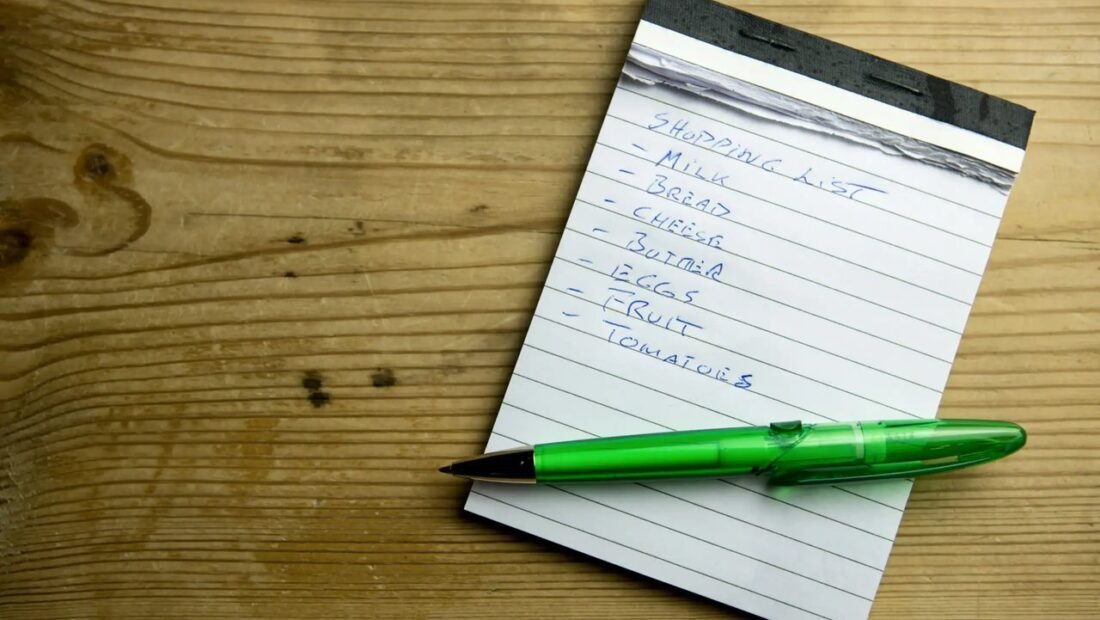
Most grocery lists are wish lists with a pen. They remind you what to buy but do nothing about what you spend — which is why the same people who ‘always make a list’ still walk out $40 over budget. A grocery list that actually saves money is built differently. It’s not a memory aid. It’s a spending plan disguised as a shopping list.
The difference comes down to three things: the list is built from a meal plan (so every item has a job), it’s organized to defeat impulse buys, and it includes prices. I’ve watched this system cut real families’ grocery bills by 20 to 30 percent in the first month. Here’s how to build yours.
Build the List From a Meal Plan, Not From Memory
The number-one reason grocery lists fail is that they’re written from memory — you wander the mental pantry, jot down what occurs to you, and end up buying ingredients for meals you’ll never cook. Flip the order. Plan 5 to 7 dinners first, then list only the ingredients those meals require, plus your standard breakfasts, lunches, and snacks. Every item on the list now has a destination. Nothing is speculative.
Before writing a single item, do a 5-minute pantry and fridge inventory. Check what you already have — the half-bag of rice, the canned tomatoes, the frozen chicken. Crossing off what you own prevents the most expensive grocery sin: buying duplicates of things buried in your own kitchen. I keep a running ‘use first’ note on my fridge for items nearing expiration, and I plan one meal a week around them.
Organize the List to Beat the Store’s Tricks
Grocery stores are designed to make you wander — the milk is at the back, the treats are at eye level, and the end caps scream deals that aren’t deals. Organize your list by store section (produce, meat, dairy, pantry, frozen) in the order you walk the store. You move efficiently, you don’t backtrack past temptation twice, and you spend less time in the danger zones.
Add estimated prices next to big-ticket items. You don’t need exact figures — round numbers from your last receipt are fine. This does two things: it forces a reality check before you shop (that $14 salmon might become $6 chicken thighs), and it turns checkout into a game where coming in under your estimate feels like winning. People who price their lists consistently report spending less, because the budget becomes concrete instead of vibes.
Reference: USDA MyPlate budget shopping tips.
Reference: Consumer Reports on saving money on groceries.
7 Rules for a Money-Saving Grocery List
Tape these to the fridge until they’re habit:
- Never shop without eating first. Hunger is a $20 surcharge — studies consistently show hungry shoppers buy more, especially snacks and prepared foods.
- Put quantities on everything. ‘Chicken’ becomes impulse-prone; ‘2 lbs chicken thighs’ is a precise mission with no room for drift.
- List the store brand explicitly for staples. If you write ‘oats,’ you’ll grab the $5 box; write ‘store-brand oats’ and you’ll grab the $3 bag.
- Include a ‘do not buy’ line for your weakness items. Naming the temptation (chips, bakery cookies) makes it easier to walk past.
- Shop the sales flyer before finalizing the list. If pork is on deep discount, swap it into the meal plan and adjust the list once — not in the aisle.
- Cap the list at one ‘fun’ item per trip. Total deprivation breeds rebellion spending; one controlled treat keeps the system sustainable.
- Review the receipt against the list at home. Circle every unplanned purchase and its price — that feedback loop is where the real savings learning happens.
The 10-Minute Weekly System
Here’s the full routine, start to finish. Sunday (or whatever day you shop): spend 10 minutes planning dinners, checking the pantry, and writing the section-organized, priced list. Shop once, list in hand, on a full stomach. When you get home, spend 5 minutes doing quick prep — wash produce, portion snacks, marinate tomorrow’s protein. That prep is what turns the list into actual cooked meals instead of good intentions rotting in the crisper.
Midweek, do a 2-minute fridge check. Anything wilting gets promoted to tonight’s dinner or tomorrow’s lunch. This tiny habit kills the average family’s $1,500-a-year food waste problem more effectively than any app. The list got the right food into your house; the midweek check makes sure it gets eaten.
Frequently Asked Questions
How much can a good grocery list really save me?
Most families report 20–30% savings in the first month — that’s $150–$300 monthly on a typical family grocery bill. The savings come from killing impulse buys (the average unplanned trip adds $15–$30), preventing duplicate purchases, and actually using what you buy instead of wasting it. The list is the highest-ROI habit in home economics.
Should I use a paper list or an app?
Whichever you’ll actually use consistently. Apps win for shared household lists (everyone can add items in real time) and for carrying your price book. Paper wins for speed and for people who find phones distracting in stores. The system matters infinitely more than the medium — a disciplined paper list beats a neglected app every time.
How do I stop impulse buys at the store?
Shop full, shop with the list as a contract, and give yourself exactly one ‘fun item’ per trip — total deprivation backfires. The priced list helps enormously: when you see the running total, the $7 impulse cheese becomes a conscious decision rather than an accident. And skip the aisles you don’t need; every aisle is a temptation gauntlet.
More from Daily USA Post
- Related: what are the best new video games for casual players
- what are the best science fiction books of all time, explained in detail
- Also see: how do I get tickets to a sold-out concert
A grocery list that actually saves money starts with a meal plan, gets organized by store section, carries estimated prices, and ends with a receipt review. It’s maybe 15 minutes of weekly effort, and it attacks every leak at once: impulse buys, duplicate purchases, forgotten food, and vague budgets. Try it for one month and compare receipts. The numbers will convince you faster than any article can.




1 Comment