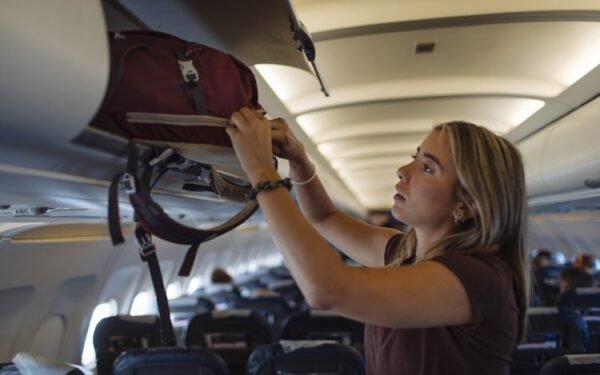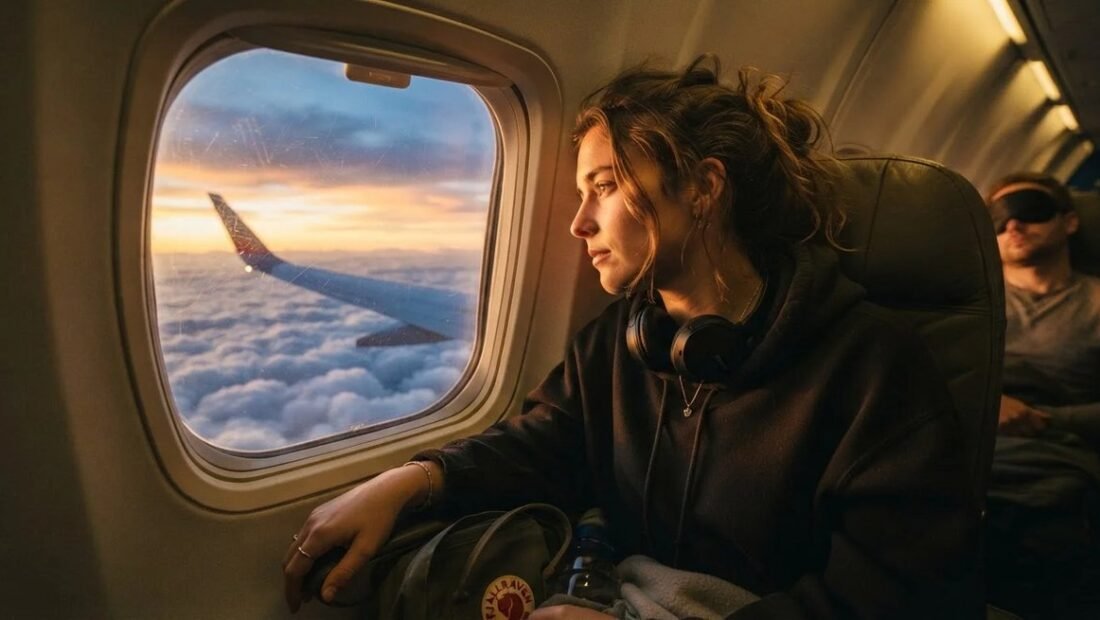
You land at eight in the morning, local time, and your body is quite certain it is two in the morning — it has paperwork: your last three nights of sleep, kept on home time. Jet lag is not tiredness. It is your internal clock, a roughly 24-hour cycle steered mostly by light, running several hours out of sync with the city around you — which is why willpower does nothing for it and a sleep-in makes it worse. The good news is that the clock can be moved, deliberately, about an hour to an hour and a half a day, and the moving is done with a handful of levers: light at the right hours, sleep at the right hours, and a little help from caffeine and melatonin used like tools rather than habits. What follows is the full protocol, in the order you will actually use it.
What you need
Nothing exotic: sunglasses for controlling light (your secret weapon), a sleep mask and earplugs or a white-noise app for the plane and the hotel, caffeine you can schedule, and optionally low-dose melatonin (0.5–1 mg) for the first two or three nights. A jet-lag app such as Timeshifter, which builds a personalized light-and-sleep plan for your exact itinerary, is genuinely useful on trips of six time zones or more; on shorter hops the rules below cover it. Those fundamentals are backed by the CDC’s jet lag guidance — light timing, sleep hygiene, caution with sleep aids — and it is worth a read before a long trip.
Step 1: Start shifting three to four days before you fly
The clock moves slowly, so start it early. Three to four days before departure, shift your sleep schedule one to two hours per day toward destination time: for an eastward trip, go to bed and wake earlier; for westward, later. Even a partial shift helps — arriving two hours pre-adjusted on an eight-hour change cuts the worst day down considerably. Arrive at the airport already well rested; starting a long-haul trip sleep-deprived doubles the damage and blurs the line between jet lag and plain exhaustion for days. On the last evening at home, set your watch and phone to destination time as you board. From that moment, eat, sleep, and take light by the new clock, not the old one — the plane is a time machine, so behave like you have already arrived.
Step 2: On the plane, sleep only when it is night where you are going
This is the rule that does the most work and gets broken the most. If it is nighttime at your destination, sleep on the plane — mask on, earplugs in, screen off, even if you do not feel tired; resting in the dark still nudges the clock. If it is daytime at your destination, stay awake: light, movement, conversation, a film, a walk down the aisle every hour or two. Hydrate steadily (cabins are brutally dry), go easy on alcohol — it fragments exactly the sleep you are trying to protect — and use caffeine only during destination daytime hours, cutting it off at least eight hours before your planned destination bedtime. What you do on the aircraft decides whether you land with a two-zone problem or an eight-zone one, which is why the same discipline pairs so well with the booking and kit choices in our guide to how to sleep comfortably on a long-haul flight.
Step 3: On arrival, anchor with light first
Light is the master switch — the strongest signal your body clock takes — and timing it is most of the strategy. The simplified rule: flying east, get bright outdoor light in the morning at your destination and avoid bright light late in the evening; flying west, seek the late-afternoon and evening light and shield your eyes in the early morning. Sunglasses are the control tool when the light is wrong. Get outside and get moving on day one — a long walk does more for your adjustment than any nap — and stay outdoors as much as the day allows. Expect to adjust at roughly one to one and a half days per time zone crossed going east, a little faster going west; with this protocol most travelers feel functional by day two even after shifts of eight hours or more. Plan the trip’s demands accordingly: nothing that requires brilliance on day one after an eastward red-eye.
Step 4: Sleep, meals, and melatonin on the new schedule
Eat on destination time from the first meal after landing — meal timing is a secondary clock signal and it is free. Protect the first nights: a dark, cool room, the mask if dawn comes early, a consistent bedtime even if sleep is light at first. Melatonin, used precisely, helps: 0.5–1 mg taken at destination bedtime for the first two or three nights can anchor the new schedule; it is the most evidence-supported supplement for jet lag, but timing is everything — take it at the wrong hour and it can push the clock the wrong way, so follow your app’s plan or take it 30 minutes before target bedtime, never in the middle of the day. Naps are a trap with one exception: if you are dangerously sleepy, take twenty minutes, no more, and before 2 p.m. A three-hour afternoon nap on day one is how jet lag gets a second week.
East is harder than west — and other asymmetries
Direction matters because your clock drifts late more easily than it advances early: most people can stay up two extra hours far more easily than they can fall asleep two hours early, which is why flying west (a longer day) usually feels gentler than flying east (a compressed one). Eastward trips over six zones deserve the full pre-shift treatment starting four days out; westward trips often need only the light rules and first-day discipline. Short trips get their own exception: for a trip of two days or less across many zones, adjusting fully is a losing bargain — many frequent flyers deliberately stay near home time, scheduling meetings for their home-clock mornings and sleeping with the mask and melatonin to hold the home schedule. The protocol is a tool with settings, not a religion; match its intensity to the length of the trip and the hour of your first real obligation on the ground.
Children, older travelers, and the return trip
Kids adjust faster than adults once light and sleep are managed — get them outdoors in the destination morning, keep bedtime sacred for three nights, and expect grumpiness rather than true jet lag by day two. Older travelers often adjust more slowly and should budget an extra recovery day on trips over six zones, skip the alcohol entirely on travel day, and be stricter about the first nights’ sleep hygiene. And do not forget the return: jet lag is a round-trip tax, and the homecoming version often bites harder because the trip’s excitement is over and work is waiting. Run the same protocol in miniature on the way back — shift toward home time on the last day abroad, sleep on the plane by the home clock, and land with one buffer day if the calendar allows any mercy at all. The travelers who swear jet lag “doesn’t affect them anymore” have usually just automated these steps; the steps are available to everyone.
Step 5: Use the layover, do not just endure it
A long layover can be drafted into the plan. A six-to-ten-hour stop in the right direction lets you pre-shift before you even arrive: spend a daylight layover somewhere bright and active if your destination clock wants you awake, or find the airport’s quiet zone or a transit hotel and sleep if it wants you asleep. Eat the layover meal on destination time. The travelers who treat the connection as dead time arrive with their clock untouched; the ones who use it arrive half-adjusted, and half-adjusted, on an eight-zone trip, is the difference between a ruined first day and a merely slow one. Land ready, not wrecked — it is a procedure now, not a hope.
Print the checklist version and keep it in the passport wallet: three to four days out, shift sleep an hour or two a day; board well rested; watch and phone set to destination time at boarding; sleep on the plane only when it is night there; light at the right hours on arrival, sunglasses when it is the wrong light; meals on the new clock; caffeine for destination daytime only; melatonin 0.5–1 mg at destination bedtime for two or three nights; no alcohol on travel day; no naps after 2 p.m., twenty minutes maximum before it; first day outdoors and active; nothing important scheduled on day one. Twelve lines, and the worst travel tax in long-haul flying drops to a manageable fee. Your body clock is not your enemy — it is a slow, honest instrument that does exactly what light and sleep tell it to do. Tell it the right things, in the right order, and it will be keeping destination time before your bags are unpacked.